


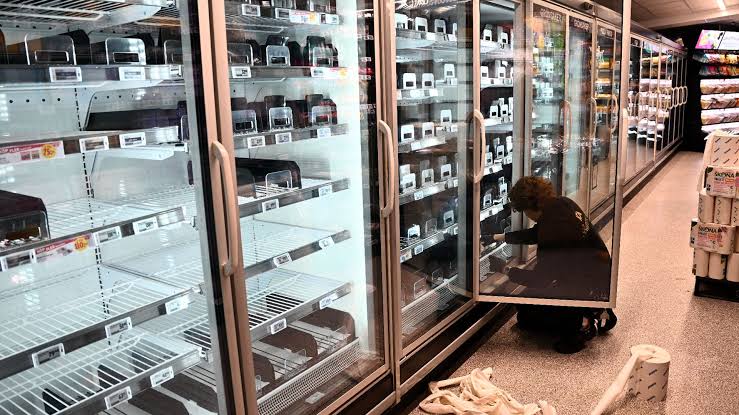
The United Kingdom has completed an emergency security operation involving thousands of refrigeration controllers after researchers discovered a vulnerability that could have allowed hackers to disrupt supermarket cooling systems.
The operation followed a series of cyberattacks across Europe in which attackers reportedly manipulated commercial refrigeration equipment, causing temperatures to climb as high as 50 degrees Celsius.
The attacks damaged food supplies and affected supermarkets, warehouses, and other facilities that depend on controlled temperatures.
Although British supermarkets initially appeared unaffected because they used different refrigeration equipment, security researchers discovered a separate vulnerability in controllers widely deployed across the UK.
Government cybersecurity specialists, food safety authorities, refrigeration consultants, and supermarket technology teams subsequently coordinated efforts to secure the affected systems.
The manufacturer has confirmed that it found no evidence of malicious activity involving its controllers during the security operation.
UK Researchers Discover Serious Flaw in Refrigeration Controllers
The British security response began after refrigeration consultancy Omega Solutions identified a vulnerability in late October 2026.
The issue affected refrigeration control equipment manufactured by Resource Data Management, a British company whose systems are widely used in commercial refrigeration installations.
These controllers help businesses monitor and manage cooling equipment in supermarkets, warehouses, and other facilities.
The vulnerability involved authentication security, potentially allowing unauthorized access under certain conditions.
Researchers determined that the weakness was similar in nature to the security problems exploited during attacks elsewhere in Europe.
However, the manufacturer emphasized that exploiting its equipment would require a specific hardware component.
Although that requirement introduces an additional obstacle, the necessary hardware is commercially available.
The discovery raised concerns because an attacker who gained unauthorized control over refrigeration systems could potentially alter their operation and damage temperature sensitive products.
The consequences could extend beyond individual supermarkets to warehouses containing substantial quantities of food.
Thousands of Refrigeration Controllers Were Disconnected From the Internet
After the vulnerability was identified, British authorities and industry specialists began coordinating protective measures.
The National Cyber Security Centre, Department for Environment, Food and Rural Affairs, and Food Standards Agency became involved in the response.
As an immediate precaution, thousands of affected refrigeration controllers were blocked from accessing the internet.
These devices were responsible for managing tens of thousands of refrigerators and freezers across the country.
In some locations, supermarket technology teams had to physically disconnect equipment from networks by removing cables.
This approach reduced the possibility of attackers reaching vulnerable systems remotely while security updates and other protective measures were implemented.
The operation was carried out with limited public attention, helping organizations address the issue before information about the vulnerability became widely available.
The affected systems have since undergone security improvements intended to prevent similar incidents.
European Cyberattacks Forced Fridge Temperatures to 50 Degrees Celsius
The British response followed damaging incidents involving commercial refrigeration systems in several European countries.
Attacks initially emerged in France during October 2026 before spreading to additional locations.
Supermarkets in France, Belgium, and other countries experienced disruptions after attackers reportedly manipulated refrigeration controls.
In some cases, the equipment entered defrosting conditions that caused temperatures to reach approximately 50 degrees Celsius.
Such temperatures can rapidly compromise refrigerated and frozen products, especially when equipment is supposed to preserve food at consistently low temperatures.
The incidents resulted in spoiled food and interruptions to normal business operations.
Further attacks reportedly affected refrigeration equipment associated with blood storage facilities and a United States military installation.
These incidents demonstrated that connected refrigeration systems could become targets beyond ordinary retail environments.
However, the equipment and vulnerabilities involved in those attacks were not identical to the controllers subsequently secured in Britain.
A Successful Attack Could Have Caused Major Supply Chain Disruption
The potential financial consequences of the British vulnerability were substantial.
Commercial refrigeration is essential to food storage and distribution.
Large warehouses can contain products worth millions of pounds, including meat, dairy products, frozen foods, and other items that require temperature controlled environments.
If attackers were able to manipulate cooling equipment across several facilities, the resulting damage could affect both stock availability and business operations.
A supermarket worker familiar with the situation warned that an attack could have caused extensive disruption and losses.
Beyond spoiled products, businesses could have faced costs associated with replacing inventory, inspecting equipment, and restoring normal operations.
The effects could also have reached other parts of the food supply chain if major distribution centers were unable to maintain safe storage conditions.
For food retailers, refrigeration failures can become particularly expensive because affected products may need to be discarded even after temperatures return to normal.
Manufacturer Reports No Evidence of Successful Attacks in the UK
Resource Data Management has confirmed that no malicious activity was detected on its controllers during the security operation.
This distinction is important because the discovery of a vulnerability does not necessarily mean attackers have exploited it.
The British measures were preventive, intended to address a potential weakness before it could lead to widespread disruption.
The manufacturer also maintained that exploiting the vulnerability would require additional hardware, distinguishing it from some of the attacks reported elsewhere in Europe.
However, security researchers considered the weakness sufficiently serious to warrant a coordinated national response.
The successful isolation and protection of affected devices reduced the risk of unauthorized access.
The incident also illustrates how vulnerabilities in specialized industrial equipment can require cooperation between manufacturers, cybersecurity authorities, and the organizations operating the systems.
France Has Accused Iran of Involvement in the European Attacks
Responsibility for the refrigeration attacks across continental Europe remains disputed.
No organization has publicly accepted responsibility for the incidents.
French authorities have attributed the attacks to Iran, but the Iranian government has denied involvement.

The allegations have not been independently established in the information currently available.
The attacks nevertheless demonstrate the potential consequences of targeting internet connected industrial systems.
Unlike conventional data breaches, interference with refrigeration equipment can cause immediate physical and financial damage.
The systems involved may appear less prominent than corporate servers or consumer devices, but their reliability is essential to everyday business operations.
Connected Refrigeration Systems Face Growing Cybersecurity Risks
Modern commercial refrigeration equipment often includes network connectivity for remote monitoring, maintenance, and temperature management.
These capabilities allow businesses to monitor large numbers of refrigerators and respond to technical problems without inspecting every device individually.
However, network access can also create security risks if authentication controls are insufficient or equipment is exposed to unauthorized connections.
The British operation highlights the importance of protecting operational technology, particularly systems responsible for maintaining physical conditions.
Restricting unnecessary internet access, applying security updates, and separating industrial control networks from other systems can reduce exposure.
The UK has now implemented protective measures across thousands of affected controllers, and the manufacturer reports no evidence that attackers successfully compromised its devices.
The wider European incidents remain a reminder that cyberattacks can affect physical infrastructure and essential supplies, creating consequences that extend well beyond compromised computers or stolen information.



Discussion (0)
Be the first to comment.