



A mysterious AMD processor believed to belong to the upcoming Gainsborough family has appeared in benchmark records, raising speculation about the hardware that could power Valve's next generation Steam Deck.
The engineering sample features six CPU cores, 12 threads, and 24GB of LPDDR5 memory operating at 9,600 MT/s. Its configuration suggests a substantial upgrade over the existing Steam Deck, which uses a four core AMD Zen 2 processor and 16GB of memory.
The processor may also use AMD's upcoming Zen 6 architecture, although its exact CPU design remains unconfirmed.
The appearance of the chip in testing records has attracted attention because Gainsborough has previously been associated with a possible Steam Deck successor.
However, neither AMD nor Valve has officially confirmed that the processor is intended for the Steam Deck 2.
AMD Gainsborough APU Features Six CPU Cores and 24GB LPDDR5 Memory
The unidentified AMD processor appeared in OpenBenchmarking records under the engineering sample number 100-000001930-12_Y.
Testing was conducted using an AMD GBR-FF6-SKT validation motherboard, which appears to be an internal development platform.
The chip includes six CPU cores and supports 12 processing threads, with the sample operating at a reported clock speed of 2.4GHz.
Its memory configuration is also notable.
The testing system uses four SK Hynix memory packages, each providing 6GB of capacity. Together, they deliver 24GB of LPDDR5 memory running at 9,600 MT/s.
This represents a significant increase in memory capacity and transfer speed compared with the current Steam Deck.
The benchmark configuration suggests that AMD is evaluating the chip with hardware suitable for compact computing devices, although the final intended product remains unknown.
Steam Deck 2 Could Receive a Major Hardware Upgrade
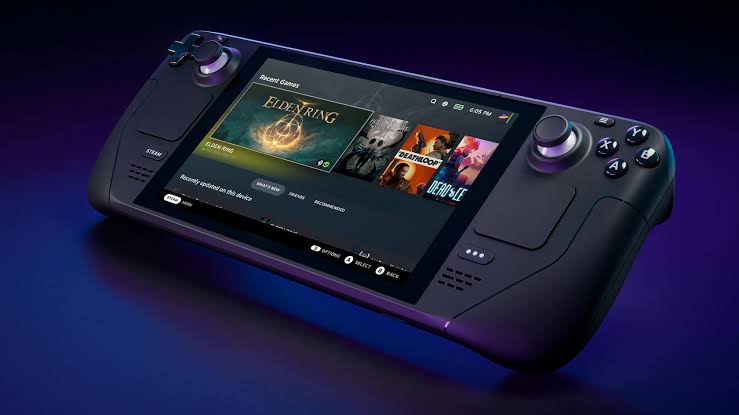
If Gainsborough eventually powers a new Steam Deck, the recorded specifications would represent several improvements over the current handheld.
The existing Steam Deck uses an AMD Zen 2 processor with four CPU cores and eight threads.
It also includes 16GB of LPDDR5 memory, with the OLED model operating at 6,400 MT/s.
The newly discovered engineering sample increases the CPU core count by 50% and offers 8GB of additional system memory.
Here is how the two configurations compare.
| Specification | Current Steam Deck OLED | AMD Gainsborough sample |
|---|---|---|
| CPU architecture | AMD Zen 2 | Potential Zen 6 |
| CPU cores | 4 | 6 |
| CPU threads | 8 | 12 |
| Reported CPU clock | Up to 3.5GHz | 2.4GHz during testing |
| System memory | 16GB LPDDR5 | 24GB LPDDR5 |
| Memory speed | 6,400 MT/s | 9,600 MT/s |
| Integrated graphics | AMD RDNA 2 | Architecture unknown |
| GPU clock | Up to 1.6GHz | 2.4GHz reported |
| Hardware status | Commercial product | Engineering sample |
The larger memory configuration could be particularly useful for modern games, which increasingly demand more RAM and graphics memory.
Since handheld APUs typically share system memory between the CPU and integrated graphics, higher memory bandwidth can also benefit graphics performance.
However, the specifications do not guarantee that the finished device would deliver a proportional improvement in gaming frame rates.
Linux Kernel Information Suggests AMD Zen 6 Architecture
The processor's architecture has not been officially identified, but information contained in its testing records provides several clues.
The CPU microcode revision reportedly corresponds to AMD Family 1Ah, model DCh.
Changes in the Linux kernel suggest that this model belongs to a range associated with AMD's newer Zen 6 processors.
This has led to speculation that Gainsborough could use Zen 6 CPU cores.
However, it remains unclear whether the processor uses conventional Zen 6 cores or the more compact Zen 6C design.
The distinction could be important for handheld gaming devices.
Compact processors must balance performance, power consumption, and thermal limitations within relatively small enclosures.
A design using more power efficient cores could help AMD achieve higher performance without significantly increasing energy consumption.
However, the benchmark records do not provide enough information to determine how the final chip will manage its power requirements.
AMD APU Records Reveal Early GPU Benchmark Scores
The engineering sample also includes integrated graphics operating at a reported frequency of 2,400MHz.
However, the GPU architecture, compute unit count, and other important specifications remain unknown.
The chip was tested using the GpuTest benchmark suite on Ubuntu 24.04.
Testing took place at a resolution of 1024 × 768, producing the following results.
| Benchmark | AMD Gainsborough score |
|---|---|
| GiMark | 3,871 |
| FurMark | 3,508 |
| TessMark | 9,319 |
The FurMark result is relatively close to scores associated with the original Steam Deck.
However, this does not necessarily indicate that the newer processor offers similar gaming performance.
The engineering sample was tested on development hardware with software that may not be fully optimized.
Additionally, the testing conditions differ from those used to evaluate commercially available Steam Deck systems.
Factors such as power limits, cooling capacity, graphics drivers, and rendering resolution can significantly affect benchmark results.
As a result, these early numbers cannot reliably establish how Gainsborough would perform in demanding PC games.
Gainsborough Could Be Designed for a Future Gaming Handheld
The name Gainsborough has attracted particular interest because of its possible connection to Valve's existing Steam Deck hardware.
Valve's handheld processors have previously used codenames associated with characters from Final Fantasy VII.
The original Steam Deck APU was known as Aerith, while another Steam Deck processor variant used the name Sephiroth.
Gainsborough is the surname of Aerith, which has encouraged speculation that the new AMD chip may be connected to Valve's next handheld.
However, a naming connection alone does not establish its intended use.
AMD also develops processors for multiple gaming handheld manufacturers and other compact computing devices.
The engineering sample could therefore be associated with a different product or a broader family of processors.
Some speculation has also linked the relevant development platform to future AMD Ryzen Z series handheld chips.
Without official confirmation, its final destination remains uncertain.
Valve Has Not Confirmed Steam Deck 2 Specifications or Release Date
Although the benchmark discovery provides an interesting look at AMD's ongoing processor development, it does not confirm that Valve is preparing to launch a Steam Deck successor using this hardware.
The six core configuration and faster memory suggest improvements that would be valuable in a portable gaming system.
However, several important specifications remain unknown, including the GPU architecture, power consumption, graphics compute units, and thermal requirements.
These characteristics will play a major role in determining whether Gainsborough is suitable for a battery powered handheld.
The benchmark records also do not establish a final product configuration, retail price, or launch schedule.
AMD and Valve have not announced an official connection between the Gainsborough processor and Steam Deck 2.
For now, the engineering sample provides evidence of a six core AMD processor being tested with 24GB of high speed memory and integrated graphics.
Whether that processor eventually appears inside Valve's next gaming handheld or another manufacturer's device remains to be seen.



Discussion (0)
Be the first to comment.