



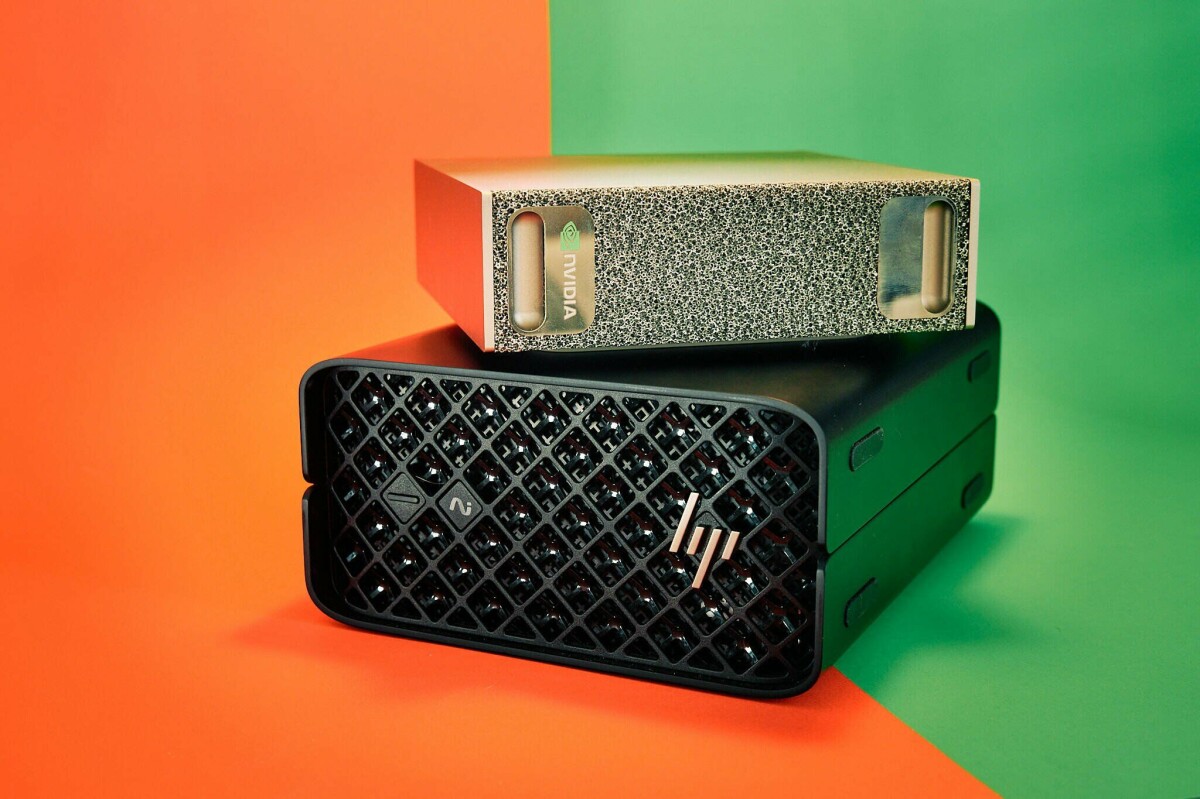
AMD executives are welcoming NVIDIA’s move into the local AI PC space with RTX Spark, but they are also making it clear that they believe AMD already has a strong answer. At Computex 2026, AMD positioned its Strix Halo platform and upcoming Gorgon Halo refresh as serious competitors to NVIDIA’s N1X and N1 systems under the RTX Spark brand.
RTX Spark was one of the biggest consumer PC announcements at the show because it signals NVIDIA’s deeper push into AI focused Windows systems. These devices are aimed at developers, creators, and users who need large local memory pools for AI workloads. AMD says that is exactly the kind of market Strix Halo was built for.
Rahul Tikoo, AMD’s senior vice president and general manager of client business, said he is happy to see NVIDIA enter the category because it validates the direction AMD has already taken. His point is simple: large local memory is becoming more important for agentic AI workloads, and AMD has already shipped products built around that idea.
AMD’s argument starts with hardware. NVIDIA’s RTX Spark configurations are expected to offer up to 128GB of local memory at launch. AMD already offers Strix Halo systems with similar memory capacity, and its upcoming Gorgon Halo chips are planned to push that limit up to 192GB of unified memory.
AMD believes unified memory gives it a strong AI PC advantage
AMD is comparing RTX Spark directly against Strix Halo and Gorgon Halo because all three platforms target a similar class of local AI computing. These are not typical gaming laptops or basic productivity PCs. They are premium systems designed for workloads that need memory capacity, GPU compute, CPU performance, and software support in one machine.
| Platform | Key focus | Memory ceiling | CPU details mentioned | Target user |
|---|---|---|---|---|
| AMD Strix Halo | Local AI and creator workloads | Up to 128GB unified memory | 16 core, 32 thread CPU | Developers and advanced PC users |
| AMD Gorgon Halo | Refreshed Strix Halo platform | Up to 192GB unified memory | Zen 5 based refresh | AI developers and workstation users |
| NVIDIA RTX Spark | AI focused Windows PCs | Up to 128GB local memory initially | 20 core CPU listed | AI developers and premium PC buyers |
AMD’s Andrej Zdravkovic, the company’s chief software officer, also made a strong claim that developers should be choosing Strix Halo notebooks today. That confidence is expected from AMD, but it shows how seriously the company views this new device category.
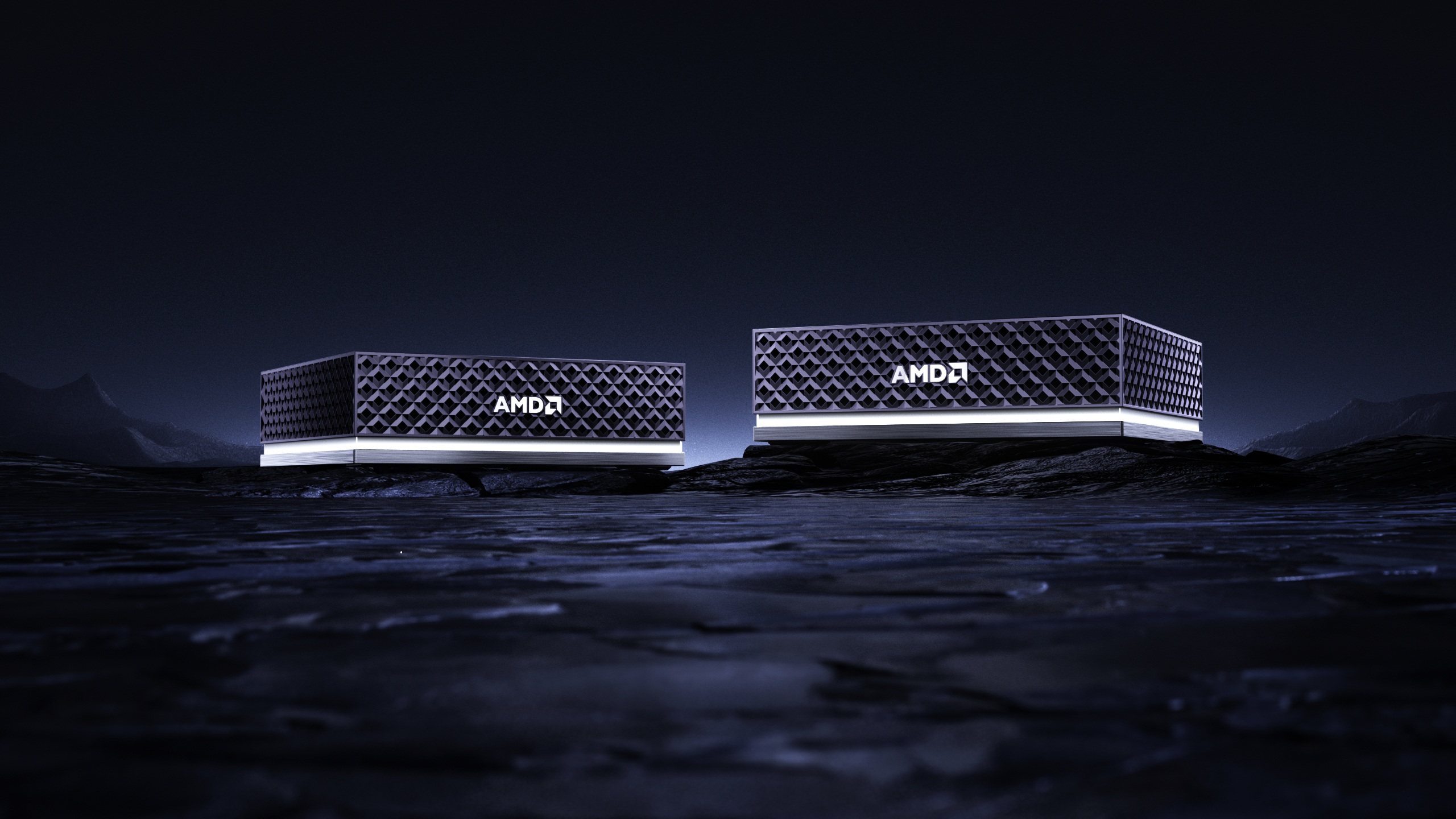
Gorgon Halo is especially important because it will increase AMD’s memory advantage. It is largely a refresh rather than a new architecture, still using Zen 5 CPU cores and RDNA 3.5 graphics, but the jump to 192GB unified memory could matter for local AI models that need as much memory as possible.
The software battle against CUDA remains the harder question
Hardware is only part of the story. NVIDIA’s biggest advantage in AI is still its software ecosystem, especially CUDA. Developers have spent years building around NVIDIA’s tools, libraries, and acceleration stack. That is difficult for any competitor to overcome quickly.
AMD says the gap matters less than it did a few years ago. Zdravkovic argued that ROCm is now much easier for developers to use and that moving between platforms is becoming simpler unless an application depends on very specific NVIDIA commands.
That is an important claim, but it will need to be proven in real workloads. Many AI developers still choose NVIDIA because the software path is more predictable. AMD can win on memory capacity or CPU configuration, but it also needs ROCm support to feel reliable across popular AI tools, models, and frameworks.
This is where RTX Spark could put pressure on AMD. Even if NVIDIA’s hardware specifications do not clearly beat Strix Halo in every area, the CUDA ecosystem could make Spark attractive to developers who want the least friction.
NVIDIA entering the market could help AMD too
AMD also sees a benefit in NVIDIA joining this part of the PC market. Tikoo said NVIDIA’s entry gives the category more credibility and could help the broader ecosystem move faster. That is a fair point. If both AMD and NVIDIA are building local AI PCs, software developers have more reason to optimize for powerful client systems rather than treating all AI work as a cloud only task.
This could push Windows AI PCs beyond basic Copilot features. The real opportunity is local model development, inference, coding assistants, creative tools, automation agents, and professional workflows that benefit from large memory pools and strong GPU acceleration.
However, pricing will likely limit the early audience. RTX Spark systems with 128GB of memory are expected to cost several thousand dollars, and Strix Halo machines are already positioned in premium territory. These are not mainstream laptops yet. They are closer to developer workstations in compact PC form.
That makes the first wave more about proving the category than selling to everyone. If software support improves and memory prices become more manageable, this kind of system could become more common over time.
For now, AMD’s message is clear. It does not see RTX Spark as a threat it cannot answer. It believes Strix Halo is already competitive, and Gorgon Halo will strengthen its position with more unified memory later this year.
The real contest will not be settled by spec sheets alone. NVIDIA has CUDA and strong AI branding. AMD has x86 compatibility, large unified memory, and an expanding ROCm push. Once RTX Spark and Gorgon Halo systems arrive in the same window, the market will get a better look at which platform developers actually choose.



Discussion (0)
Be the first to comment.