



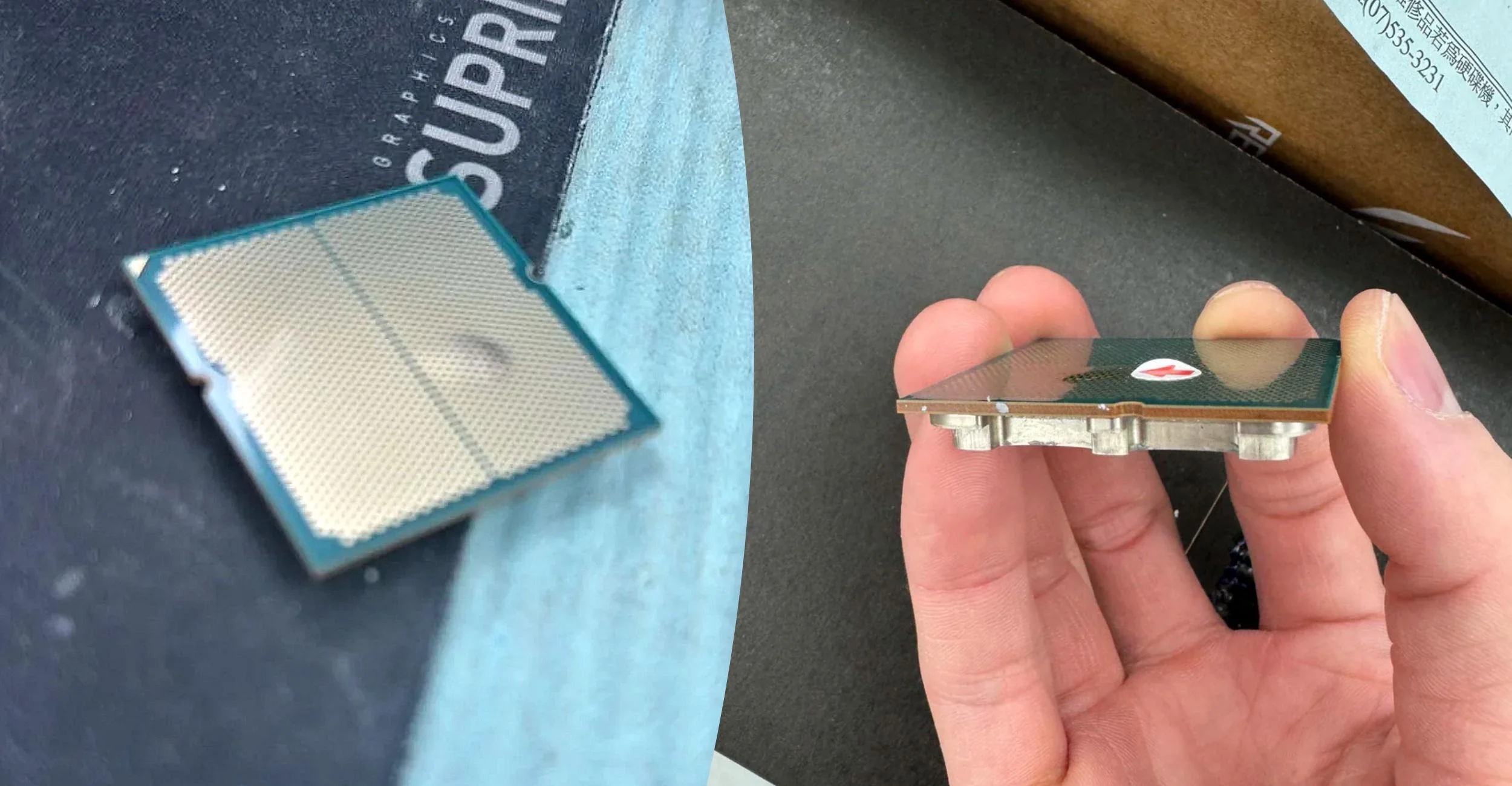
AMD has reportedly rejected a Ryzen 9 7950X3D warranty claim after the processor showed visible swelling on the back of its package. The owner says the system failed while sitting idle, not during gaming, BIOS flashing, manual overclocking, or any heavy workload.
The case is drawing attention because it involves one of AMD’s premium 3D V Cache processors and comes with an unclear failure path. According to the owner, the system was built in May 2023 with a Gigabyte X670E AORUS MASTER motherboard, Kingston Fury Beast DDR5 6000 memory, and a be quiet! Dark Power 13 1000W Titanium power supply. EXPO memory settings were enabled, but the owner says no manual CPU overclocking or manual SoC voltage adjustment was applied.
The system reportedly shut down on April 28, 2026 after a loud pop sound and would not boot again. That alone would be worrying, but the inspection process made the case more complicated. Gigabyte later checked the motherboard and reportedly found corrupted BIOS data. The board was reflashed, the CPU socket pin alignment was adjusted, and the board passed voltage checks and more than 64 hours of stress testing with another Ryzen 9 7950X3D and similar memory.
The power supply was also reportedly tested and passed. That left the processor as the main failed component, but the warranty claim did not go the way the owner expected.
AMD says visible physical damage is not covered
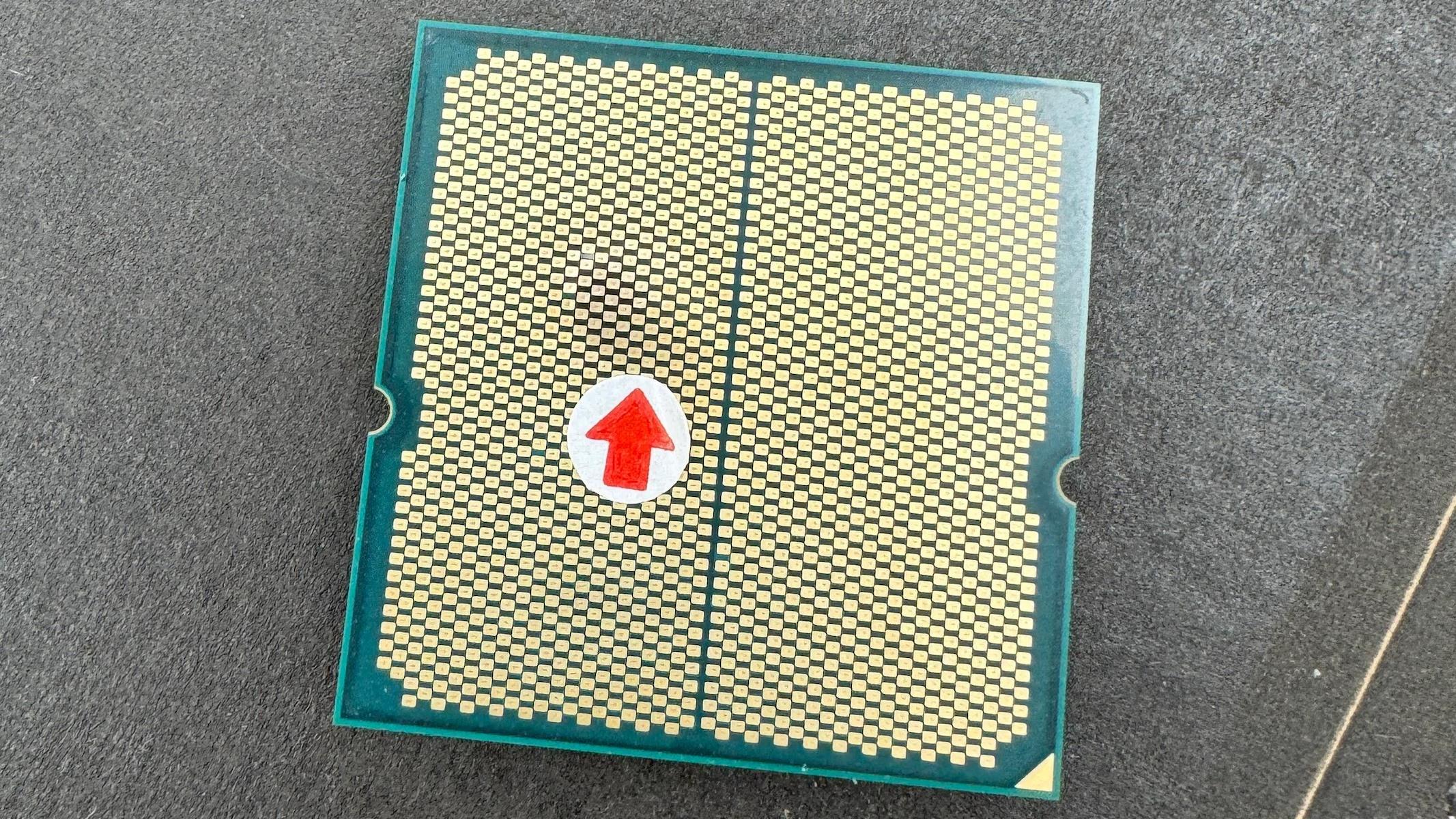
The CPU was first submitted through the local warranty channel, where the claim was rejected due to visible human caused damage. AMD later reviewed photos of the processor and said it observed swelling on the back of the substrate. The company reportedly said physical damage is not covered under warranty.
The owner claims AMD made the decision based on photos rather than a direct physical inspection of the CPU. That is one of the reasons the case remains disputed. A swollen processor substrate can look like physical damage, but the owner argues that the damage happened as part of the failure rather than from mishandling.
| Detail | Reported information |
|---|---|
| CPU | Ryzen 9 7950X3D |
| System built | May 2023 |
| Motherboard | Gigabyte X670E AORUS MASTER |
| Memory | Kingston Fury Beast DDR5 6000 |
| Power supply | be quiet! Dark Power 13 1000W Titanium |
| Failure date | April 28, 2026 |
| Failure condition | System idle, followed by loud pop and no boot |
| AMD response | Warranty rejected due to visible physical damage |
| Reported CPU issue | Swelling on the back of the substrate |
There is no clear public proof of the exact cause. The motherboard and power supply reportedly passed testing, but that does not fully explain what caused the CPU damage. The original BIOS version is also no longer known because the motherboard was reflashed during service. That missing detail matters because the system was built during the early AM5 period, when Ryzen 7000X3D voltage concerns were still a major topic.
The old AM5 voltage issue is relevant, but not proof
Back in 2023, AMD and motherboard vendors responded to reports of Ryzen 7000X3D processor damage by releasing BIOS updates that restricted voltage behavior. AMD later issued updated AGESA firmware for AM5 motherboards with a 1.3V SoC voltage cap and advised users to update their BIOS.
That earlier issue does not prove what happened in this Ryzen 9 7950X3D case. It only makes the timeline important. If the system was still running an older BIOS affected by early AM5 voltage behavior, that could be relevant. But because the original BIOS version is no longer available, there is no easy way to confirm that.
This is why the case is difficult. AMD appears to be treating visible swelling as physical damage. The owner appears to be arguing that the swelling may have been caused internally by the failure event. Without a full public technical report, the outside view remains incomplete.
Ryzen owners should update BIOS and document failures carefully
The practical lesson for AM5 owners is simple: update the motherboard BIOS, especially if the system was built during the early Ryzen 7000 or Ryzen 7000X3D launch period. BIOS updates from motherboard vendors can include voltage limits, stability improvements, memory compatibility updates, and other protections that may reduce risk.
It is also worth keeping records. If a CPU or motherboard fails, photos, BIOS version details, voltage settings, memory settings, purchase invoices, and service reports can all matter during a warranty process. In this case, the missing original BIOS version makes the situation harder to judge.
For AMD, the case raises a customer trust issue. Rejecting warranty claims when physical damage is visible is normal in the industry, but cases involving possible electrical or substrate failure are more sensitive. If the damage is the result of an internal failure rather than user handling, buyers will want a clearer inspection process and better explanation.
For now, there is not enough public evidence to say exactly what caused the Ryzen 9 7950X3D to fail. The owner says the system was idle and not manually tuned. Gigabyte and be quiet! reportedly found no obvious fault with the motherboard or power supply after testing. AMD says the swollen substrate counts as physical damage and rejected the warranty claim.
The case is a reminder that premium hardware failures can become messy when the visible damage appears after the failure. For Ryzen 7000X3D owners, the safest move is to run a current BIOS, avoid unnecessary voltage changes, keep EXPO settings within supported limits, and document system configuration before problems appear.



Discussion (0)
Be the first to comment.