


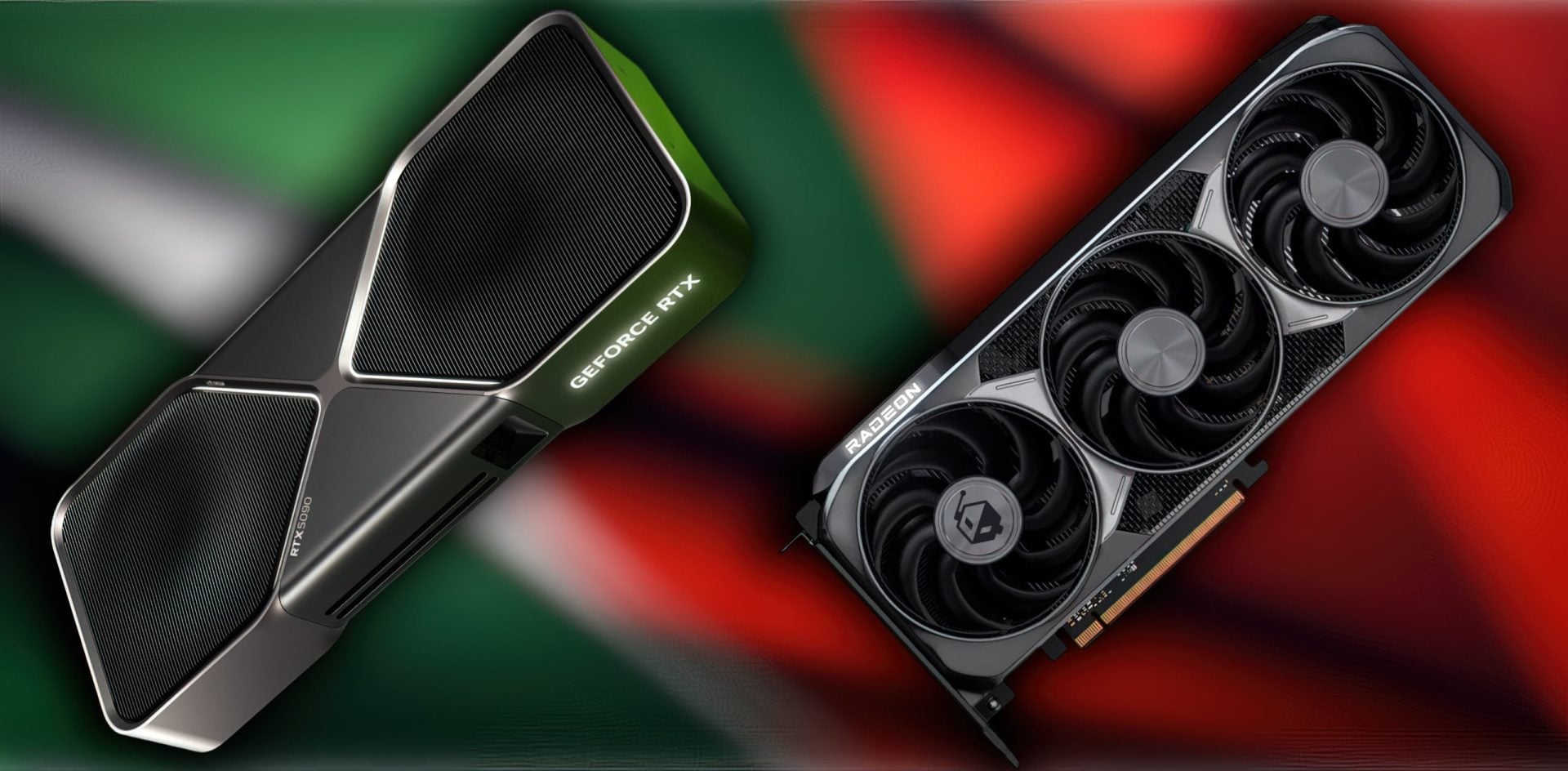
AMD reportedly sold more desktop graphics cards than NVIDIA on Amazon US during October 2026, securing approximately 47.7% of unit sales as buyers increasingly favored more affordable Radeon models.
According to independently compiled retail data, AMD sold approximately 9,200 graphics cards during the month, compared with 8,900 units from NVIDIA.
The difference was relatively small, but the result represents an important development for AMD in a retail channel traditionally dominated by NVIDIA's GeForce graphics cards.
The Radeon RX 9070 XT was the best selling GPU, with approximately 3,300 units sold. NVIDIA's GeForce RTX 5060 Ti followed in second place.
However, NVIDIA continued generating higher revenue because its graphics cards carried significantly higher average selling prices.
Radeon RX 9070 XT Becomes Amazon's Best Selling GPU
AMD's Radeon RX 9070 XT led October sales with approximately 3,300 units, comfortably ahead of competing models.
The GeForce RTX 5060 Ti secured second place with around 2,250 units across its 8GB and 16GB configurations.
AMD's Radeon RX 9060 XT ranked third, recording approximately 2,150 units.
Meanwhile, NVIDIA's RTX 5070 sold fewer than 2,000 units, while the more expensive RTX 5070 Ti reportedly reached only around one third of the RX 9070 XT's sales volume.
| Graphics card | Estimated October sales |
|---|---|
| Radeon RX 9070 XT | 3,300 |
| GeForce RTX 5060 Ti | 2,250 |
| Radeon RX 9060 XT | 2,150 |
| GeForce RTX 5070 | Under 2,000 |
| GeForce RTX 5070 Ti | Around 1,100 |
| Intel Arc A380 | 500 |
| GeForce RTX 5090 | 150 |
The results suggest that pricing and availability played an important role in purchasing decisions.
NVIDIA's RTX 5090, for example, recorded only around 150 sales, with limited availability reportedly contributing to its low volume.
NVIDIA Still Leads in Revenue Despite Lower GPU Sales
Although AMD sold more graphics cards, NVIDIA maintained an advantage in revenue.
The estimated average selling price of an AMD graphics card was $915, compared with approximately $1,313 for NVIDIA.
That represents a difference of nearly $400 per card.
NVIDIA's higher average price was influenced by expensive models such as the RTX 5080 and RTX 5090.
However, rising prices have also made premium GPUs less accessible to buyers working within limited budgets.
AMD's comparatively lower pricing appears to have helped Radeon models attract more customers during October.
Intel Captures More Than 6% of Amazon GPU Sales
Intel also recorded a notable presence in the October figures.
Its Arc B570, Arc B580 and Arc Pro graphics cards contributed to an estimated 6.22% share of GPU units sold.
The Arc A380 alone reportedly sold around 500 units, exceeding the sales volume of NVIDIA's RTX 5090.
Across all three manufacturers, the reported market shares were approximately 47.7% for AMD, 46.1% for NVIDIA and 6.2% for Intel.
These figures cover tracked graphics card sales on Amazon US during October 2026. They should not be confused with worldwide GPU market share or official manufacturer shipment data.
The results nevertheless suggest that graphics card pricing is influencing consumer demand, with AMD benefiting from its comparatively affordable Radeon lineup.
Whether AMD can maintain its lead during the holiday shopping season will depend on future pricing, product availability and demand across competing GPU models.



Discussion (0)
Be the first to comment.