



AMD has confirmed its next generation Ryzen Threadripper platform, codenamed Mustang Peak, and the biggest change is the move away from TR5 to a new TR6 platform. The upcoming chips are expected to use AMD’s 2nm Zen 6 CPU architecture and bring PCIe Gen 6 support to high end desktop and workstation systems.
The confirmation points to a major upgrade over the current Threadripper 9000 series, which is based on Zen 5 and uses the TR5 platform. AMD has not shared full product specifications yet, but early platform information suggests Mustang Peak will bring a new socket, more I/O capability, DDR5 memory support, and a stronger foundation for future workstation hardware.
Threadripper has always been aimed at people who need more cores, more memory bandwidth, and more expansion than a mainstream desktop CPU can provide. That includes creators, engineers, developers, researchers, and workstation buyers who need many PCIe lanes for GPUs, storage, capture cards, networking, and other hardware.
Why TR6 is a major platform shift
The current TR5 platform supported both Threadripper 7000 and Threadripper 9000. That gave AMD a strong workstation base across Zen 4 and Zen 5. Mustang Peak now appears to start a new platform cycle with TR6.
The move to TR6 likely means a new socket and new motherboards. That may disappoint buyers hoping to reuse existing TR5 boards, but it also gives AMD room to add newer platform features.
The biggest confirmed upgrade is PCIe Gen 6. This will matter for future workstation storage, high speed networking, accelerators, and other devices that need more bandwidth than PCIe Gen 5 can offer.
| Platform detail | Mustang Peak expectation |
|---|---|
| CPU architecture | Zen 6 |
| Process node | 2nm class cores |
| Platform | TR6 |
| Socket | Expected sTR6 |
| Memory | DDR5 |
| PCIe support | PCIe Gen 6 |
| Launch window | Expected in 2027 |
Zen 6 should bring more cores and cache
Mustang Peak is expected to use AMD’s upcoming Zen 6 architecture. Zen 6 is set to bring 12 core CCDs, which could allow AMD to increase core counts, cache, and performance compared with Threadripper 9000.
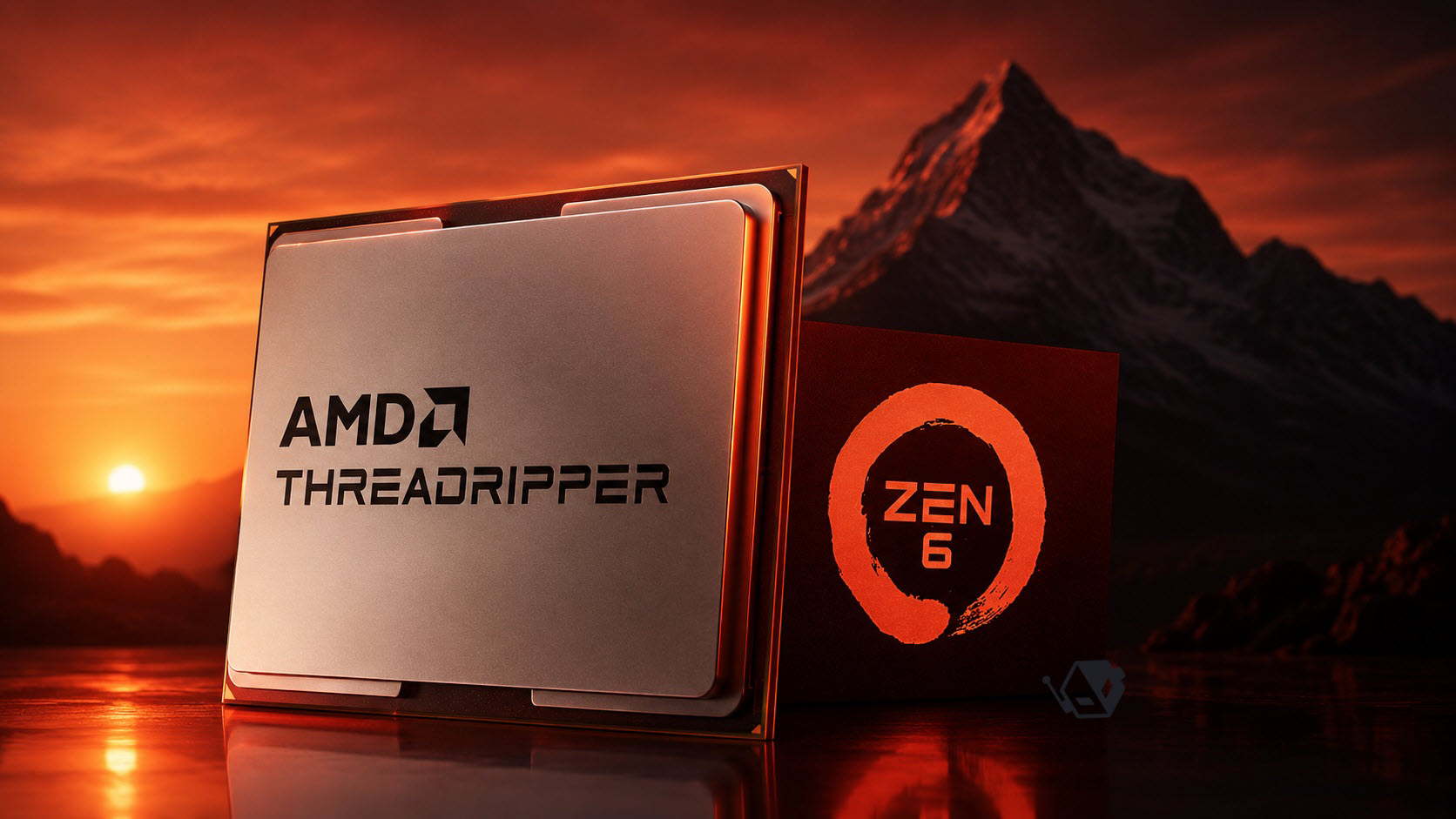
The current Threadripper 9000 family, codenamed Shimada Peak, tops out at 96 cores and 192 threads. AMD has not confirmed the maximum core count for Mustang Peak, but the move to Zen 6 gives the company room to increase performance even if it keeps similar core limits for the workstation lineup.
AMD’s EPYC Venice server chips will be the first Zen 6 products, and those are already expected to scale much higher in core counts. Threadripper usually follows EPYC technology with workstation focused configurations, so Mustang Peak should benefit from many of the same architectural gains.
PCIe Gen 6 could make Threadripper more useful for future workstations
PCIe Gen 6 is one of the most important upgrades for Mustang Peak. Workstations are increasingly limited by data movement, especially in jobs involving AI, 3D rendering, scientific computing, video production, local storage arrays, and multiple GPUs.
PCIe Gen 6 doubles the bandwidth of PCIe Gen 5, giving future SSDs, accelerators, and networking cards more room to scale. That could make TR6 a better platform for systems built to last several years.
For Threadripper Pro buyers, PCIe lanes and platform bandwidth can matter as much as CPU cores. If AMD pairs PCIe Gen 6 with large lane counts and strong memory support, Mustang Peak could become a major upgrade for professional desktops.
How Mustang Peak compares with older Threadripper generations
Threadripper has evolved quickly since its first generation. The early chips focused on bringing more cores to enthusiasts, while modern Threadripper and Threadripper Pro platforms are serious workstation products.
| Generation | Codename | Architecture | Platform | PCIe support |
|---|---|---|---|---|
| Threadripper 1000 | Whitehaven | Zen | X399 | PCIe Gen 3 |
| Threadripper 3000 | Castle Peak | Zen 2 | sTRX4 | PCIe Gen 4 |
| Threadripper 7000 | Storm Peak | Zen 4 | TR5 | PCIe Gen 5 |
| Threadripper 9000 | Shimada Peak | Zen 5 | TR5 | PCIe Gen 5 |
| Next Threadripper | Mustang Peak | Zen 6 | TR6 | PCIe Gen 6 |
This makes Mustang Peak one of the biggest platform changes since TR5 arrived with Threadripper 7000.
Launch timing points to 2027
The next Threadripper lineup is expected sometime in 2027, possibly in the middle or second half of the year. That would follow AMD’s expected Zen 6 EPYC rollout and give workstation motherboard makers time to prepare TR6 boards.
AMD has not announced final SKUs, core counts, TDP ratings, chipsets, or motherboard details yet. Those will matter because Threadripper buyers often plan entire systems around lane counts, memory channels, platform stability, and long term support.
Still, the basic direction is now clear. AMD is preparing a new high end desktop and workstation platform built around Zen 6 and PCIe Gen 6.
Mustang Peak could be a major upgrade for workstation users
For mainstream desktop buyers, Mustang Peak will not matter much. These chips will likely be expensive, power hungry, and aimed at heavy professional workloads. But for people who need extreme CPU and I/O performance, the move to TR6 could be important.
More cores, newer Zen 6 architecture, PCIe Gen 6, and a fresh workstation platform could make Mustang Peak a strong upgrade over Threadripper 9000. The key question is how far AMD pushes the core count and how much platform bandwidth TR6 delivers.
If AMD executes well, Mustang Peak could keep Threadripper at the top of the workstation CPU market in 2027.



Discussion (0)
Be the first to comment.