



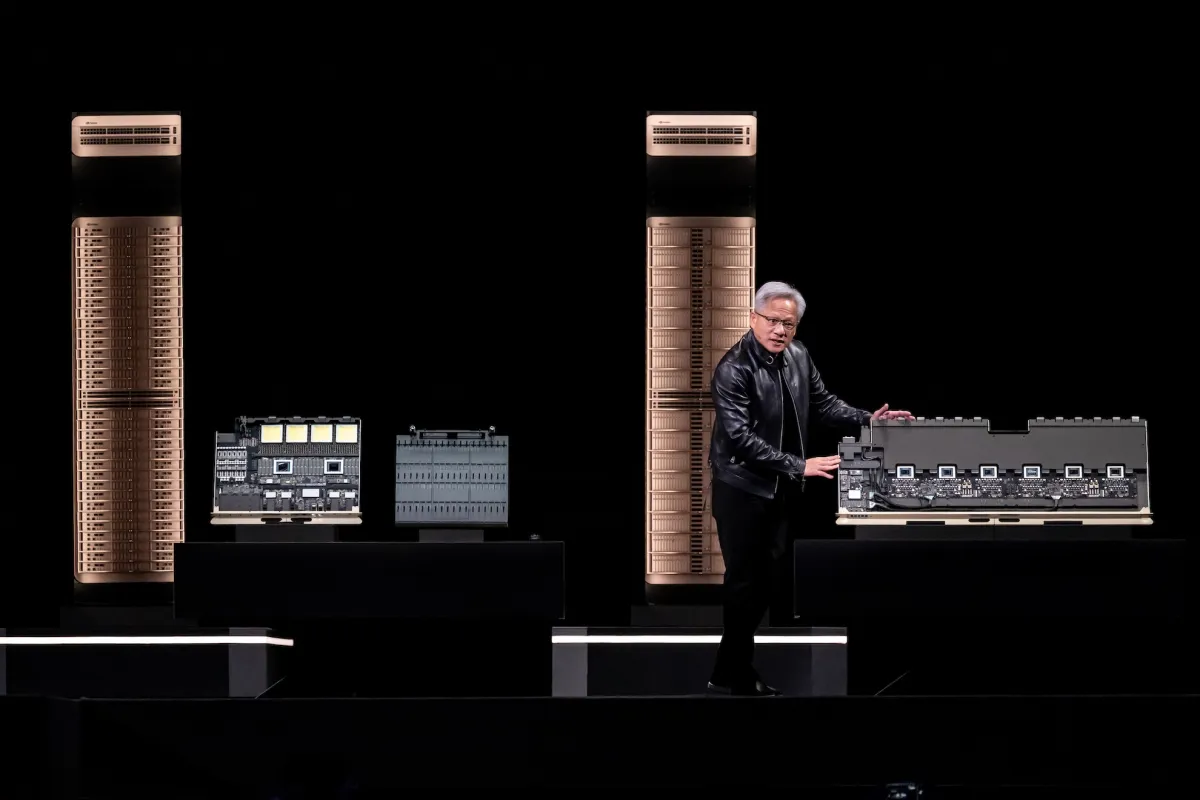
Amazon is significantly expanding its AI infrastructure partnership with NVIDIA, committing to deploy up to 3 million NVIDIA GPUs across AWS while also preparing support for NVIDIA's Vera CPUs.
The expanded agreement triples an earlier commitment announced in March, when Amazon and NVIDIA outlined plans involving 1 million GPUs. The new arrangement adds another 2 million GPUs as demand for large scale AI computing continues to grow.
Amazon plans to use the hardware for workloads including agentic AI, automation, physical AI and other compute intensive applications. The company says NVIDIA hardware will complement its own Trainium accelerators rather than replace them, giving AWS customers a broader selection of infrastructure options.
| Partnership area | Details |
|---|---|
| NVIDIA GPUs | Up to 3 million deployed through AWS |
| Previous commitment | 1 million GPUs |
| Additional GPUs | 2 million |
| Vera CPU | Planned for AWS infrastructure |
| Trainium | Continues as Amazon's custom AI accelerator |
| NVHBM | Planned collaboration for Trainium memory |
| US government allocation | 100,000 GPUs |
| Target workloads | Agentic AI, automation and physical AI |
AWS will also adopt NVIDIA Vera CPUs
The expansion goes beyond accelerators.
Amazon says it is working to bring NVIDIA's Vera CPU architecture to AWS, reflecting the growing role of CPUs in large AI systems. Modern AI infrastructure increasingly relies on tightly integrated combinations of CPUs, GPUs, networking and memory rather than accelerators operating independently.

Vera is designed as part of NVIDIA's next generation AI computing platform and is closely associated with its Rubin accelerator architecture.
Adding Vera to AWS would allow Amazon to offer more complete NVIDIA based computing environments alongside systems built around its own processors and Trainium accelerators.
The strategy gives AWS customers more flexibility to choose between proprietary Amazon silicon and NVIDIA's broader hardware ecosystem depending on the workload.
NVIDIA NVHBM could be used with Trainium
Another important part of the collaboration involves NVIDIA's newly announced NVHBM memory technology.
Amazon plans to work with NVIDIA to make the memory available to Trainium based systems. NVIDIA claims NVHBM can deliver 30 percent more bandwidth while improving power efficiency by 15 percent compared with HBM4E.
Those figures are company claims and have not been independently validated in the supplied material.
Memory bandwidth has become one of the most important constraints in advanced AI infrastructure because large models need enormous amounts of data moved between processors and memory.
Pairing Trainium accelerators with higher bandwidth memory could therefore help Amazon increase performance without relying entirely on higher compute capability.
100,000 GPUs are reserved for US government AI infrastructure
Of the 3 million GPUs included in the broader commitment, 100,000 are expected to be allocated to AI factories designed specifically for the US government.
Amazon says these facilities will support Impact Level 6 security requirements, placing them within highly controlled government computing environments.
That allocation shows that the expansion is not limited to commercial cloud customers. AWS is also targeting government and defense related AI workloads that require more restrictive infrastructure and security controls.
The scale of the deal also highlights how aggressively cloud providers are expanding AI capacity.
Amazon is continuing to develop its own Trainium hardware, but its decision to dramatically increase NVIDIA deployments suggests that customer demand remains strong enough to justify investment in both ecosystems.
With GPUs, Vera CPUs, networking, memory technology and custom Amazon silicon all being combined inside AWS, the next phase of cloud AI infrastructure is becoming increasingly focused on full system integration rather than a single processor type.


Discussion (0)
Be the first to comment.