



Valve has officially revealed Steam Machine pricing, with the entry-level 512GB model starting at $1,049. The compact SteamOS gaming PC will be offered in four versions, with storage capacity and Steam Controller inclusion creating the main differences between each option.
Reservations are now open, while purchase invitations are expected to begin on June 25. Valve says shipping will start on June 29, although orders will be processed through a randomized invitation system rather than a standard first-come, first-served sale.
The confirmed prices are higher than many players expected, but Valve says memory shortages and rising component costs have changed its original plans for the device.
Steam Machine pricing starts at $1,049 for the 512GB model
All four Steam Machine models use the same core hardware. Buyers are choosing between 512GB or 2TB of NVMe storage, whether a Steam Controller is included, and in one case, additional faceplates.
The base model does not include a controller, but it offers the lowest price for anyone who already owns a compatible gamepad or plans to use a keyboard and mouse.
| Steam Machine model | Storage | Steam Controller | Extra faceplates | Price |
|---|---|---|---|---|
| Base model | 512GB | No | No | $1,049 |
| Controller bundle | 512GB | Yes | No | $1,128 |
| Storage upgrade | 2TB | No | Yes | $1,349 |
| Premium bundle | 2TB | Yes | Yes | $1,428 |
The included controller effectively costs $80 in the bundle, compared with its $100 standalone price. The 2TB models also include red fabric and solid walnut faceplates alongside the standard black design.
Every model uses the same AMD hardware
Valve is not changing the processor or graphics hardware between Steam Machine models. Every version includes a semi-custom AMD Zen 4 processor with six cores and 12 threads, paired with an RDNA 3 GPU featuring 28 compute units.
The system also includes 16GB of DDR5 system memory and 8GB of GDDR6 video memory.
| Component | Steam Machine specification |
|---|---|
| CPU | Semi-custom AMD Zen 4, 6 cores, 12 threads |
| GPU | AMD RDNA 3, 28 compute units |
| System memory | 16GB DDR5 |
| Video memory | 8GB GDDR6 |
| Operating system | SteamOS |
| Internal storage | 512GB or 2TB NVMe SSD |
| Storage expansion | microSD card slot |
The Steam Machine is designed as a console-like PC for living room gaming, using Linux-based SteamOS rather than Windows. It should offer access to Steam’s PC game library through a controller-friendly interface similar to the Steam Deck.
Ports and connectivity target living room PC gaming
Valve has included a broad selection of connections for displays, accessories, and wired internet.
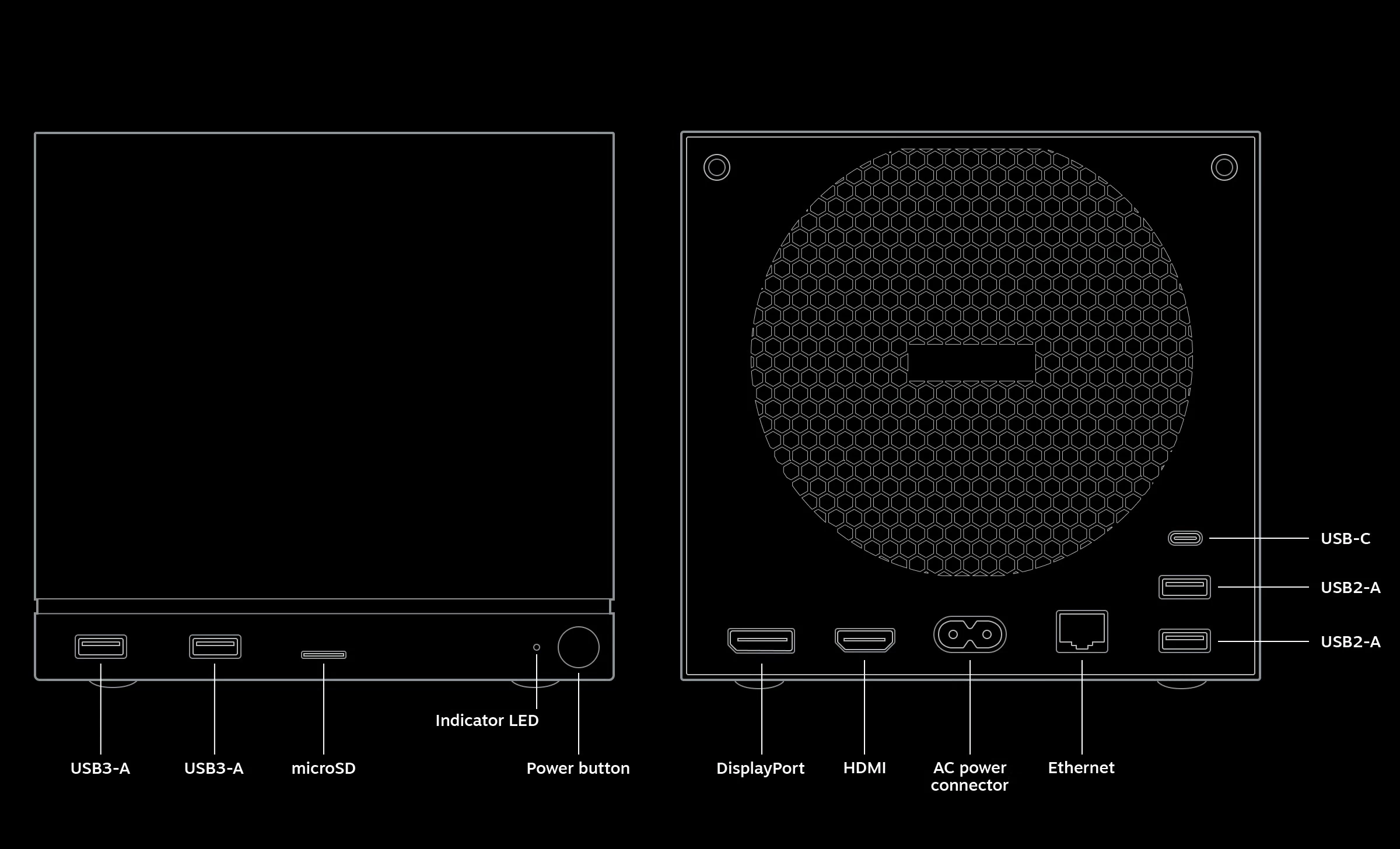
The Steam Machine includes Gigabit Ethernet, DisplayPort 1.4, HDMI 2.0, one USB-C port, and four USB-A ports. This means players can connect it to a television or monitor while still having room for storage devices, controllers, keyboards, mice, and other accessories.
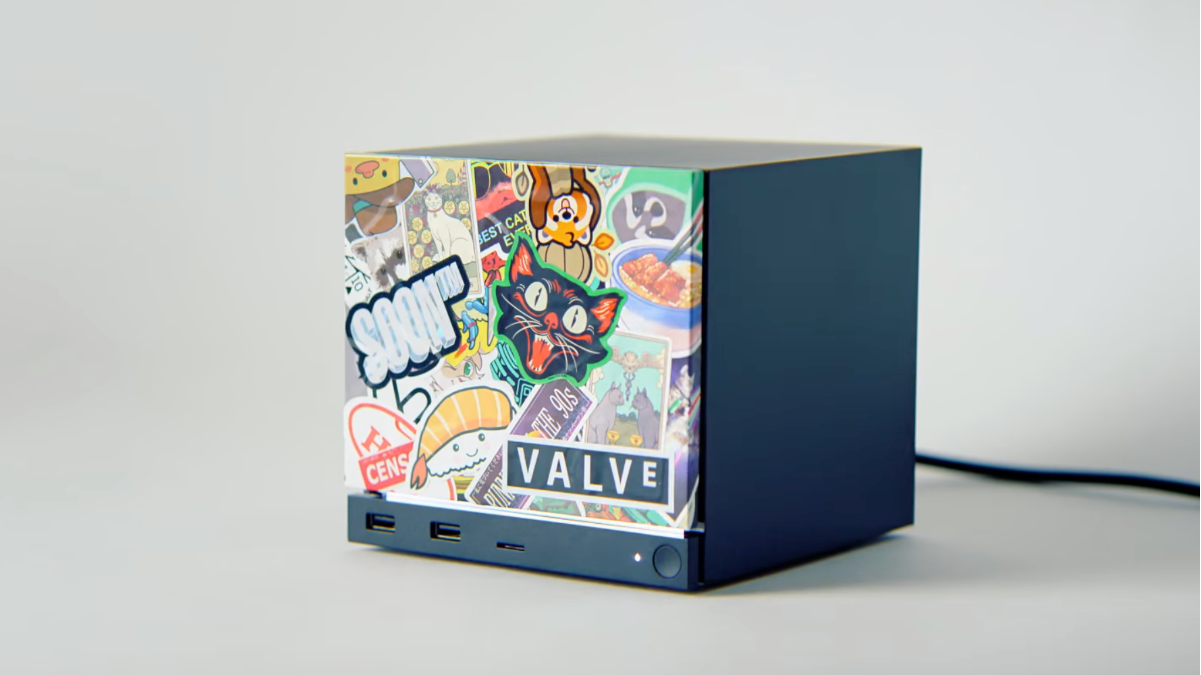
The device’s small form factor could appeal to people who want a gaming PC near their TV without placing a large desktop tower in the living room.
However, its limited upgradeability may concern PC players. Unlike a traditional desktop, the Steam Machine is not being positioned as a system that can easily receive major processor or graphics upgrades later.
Memory shortages reportedly pushed the price higher
Valve says ongoing component shortages and higher memory prices affected the Steam Machine’s final cost. The company had originally hoped to offer the system at a lower price, but said the cost of components secured over the previous six months made that target impossible.
That explanation reflects a wider problem across the PC hardware market, where memory, storage, and other components have become more expensive.
Still, the price could make it difficult for Valve to present the Steam Machine as a mainstream console alternative. At $1,049, the base model costs far more than a PlayStation 5 or Xbox Series X, even before adding a controller.
For players who want a compact SteamOS PC with a living room design, the Steam Machine may still be appealing. But its price means Valve will need to convince buyers that the Steam library, small form factor, and SteamOS experience are worth paying a premium for.



Discussion (0)
Be the first to comment.