




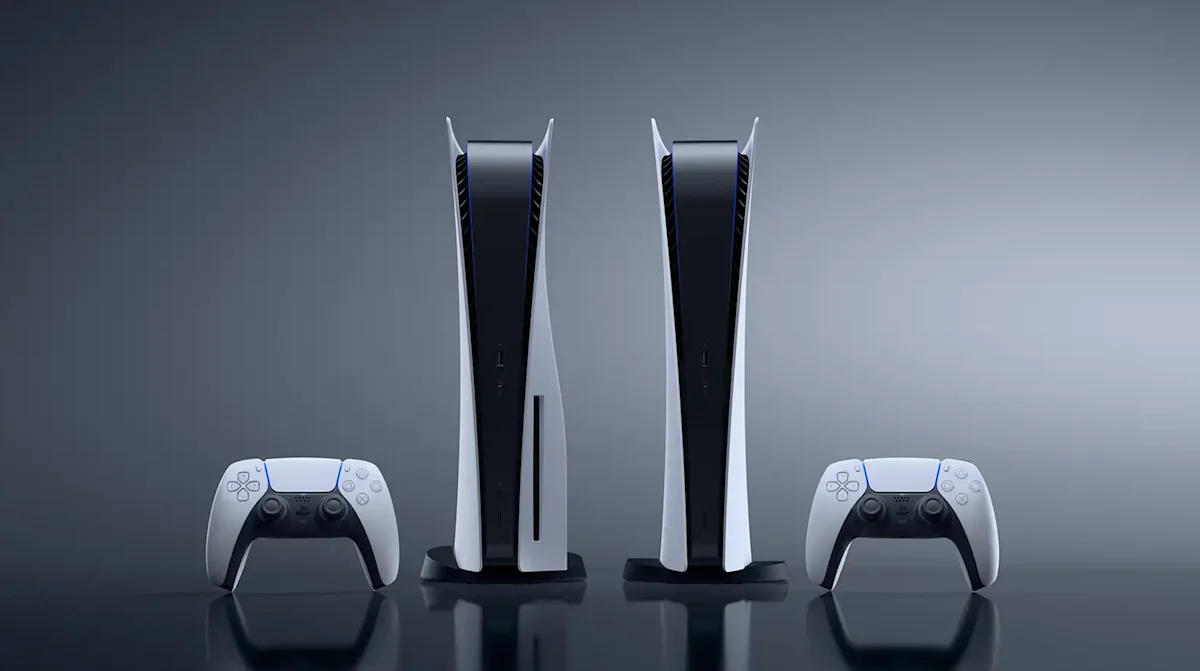
Sony's new QSSR upscaling technology for the standard PlayStation 5 could be relatively easy for developers to add to games that already support PSSR on PlayStation 5 Pro.
Daniel Craig, Principal Engineer for Graphics R&D at Sony Interactive Entertainment, says QSSR is fundamentally designed as a direct replacement for PSSR in supported games. Developers would still need some additional tuning, but the work may take only a few days rather than requiring a major technical overhaul.
That could make QSSR easier to introduce into existing PS5 games, especially those that already have a PSSR implementation on PS5 Pro.
The technology has already appeared in Marvel's Wolverine and Ghost of Yōtei, giving an early look at how Sony plans to improve image quality on the standard PS5 through AI based reconstruction.
QSSR Could Make Existing PS5 Games Easier to Upgrade
According to Craig, the basic QSSR integration process is relatively straightforward for titles that already support PSSR.
The extra work mainly involves adjusting game settings around the new reconstruction system. Developers may, for example, need to change texture streaming behaviour so that higher quality mip levels remain available while QSSR is active.
Sony considers this type of retrofit relatively low risk.
Craig also indicated that future games designed from the beginning with both QSSR and PSSR in mind could make better use of the technologies. That suggests older games may receive QSSR updates, while new releases could be built around both PS5 and PS5 Pro reconstruction systems from the start.
| Technology | Target system | Main purpose | Integration notes |
|---|---|---|---|
| QSSR | PlayStation 5 | AI based image reconstruction and upscaling | Can replace PSSR support with additional tuning |
| PSSR | PlayStation 5 Pro | AI based image reconstruction | Designed for the more powerful PS5 Pro |
| FSR 3 | Multiple platforms | Upscaling and performance support | Already widely used in games |
The main question is how much performance QSSR costs on the base console.
Early testing in Marvel's Wolverine shows that the answer can vary depending on resolution targets and game conditions.
With QSSR targeting a 4K output, demanding cutscenes showed a performance difference of around 8 to 10 frames per second compared with PSSR running on PS5 Pro.
At a 1440p target, the reconstruction workload reportedly adds around 1.5 to 1.8 milliseconds. That can still translate into an 8 to 10 FPS difference in some situations.
Dynamic resolution scaling helps reduce the impact in the game's 60 FPS performance mode because the internal resolution can change when GPU load increases.
These results do not necessarily show how QSSR will perform across every game.
Ghost of Yōtei provides a more encouraging example. In an uncapped performance mode using VRR, QSSR reportedly performed very close to the game's existing FSR 3 implementation.
That comparison still needs more testing because matching input and output resolutions is important when comparing reconstruction techniques. Even so, similar performance to FSR 3 would make QSSR easier for developers to consider.
The standard PS5 often relies on lower internal resolutions in performance modes to reach 60 FPS. That can reduce image quality, particularly in demanding games. A reconstruction system with a manageable GPU cost could improve the final image without requiring developers to sacrifice as much performance.
Sony's broader advantage could come from adoption. If games that already support PSSR can move to QSSR with limited development work, the technology may appear in more existing releases instead of being restricted to new games.
There are still unanswered questions about image quality, performance cost across different engines and how QSSR compares with other reconstruction methods under identical conditions.
The early examples nevertheless show that Sony is trying to bring some of the image reconstruction technology associated with PS5 Pro to the original PS5 hardware.
If developers can retrofit QSSR within a few days and achieve performance close to existing solutions such as FSR 3, the technology could become increasingly common in future PS5 performance modes and in updates for games already on the market.
Clarify the mixed performance comparisonsSeparate reported facts from analysis


Discussion (0)
Be the first to comment.