


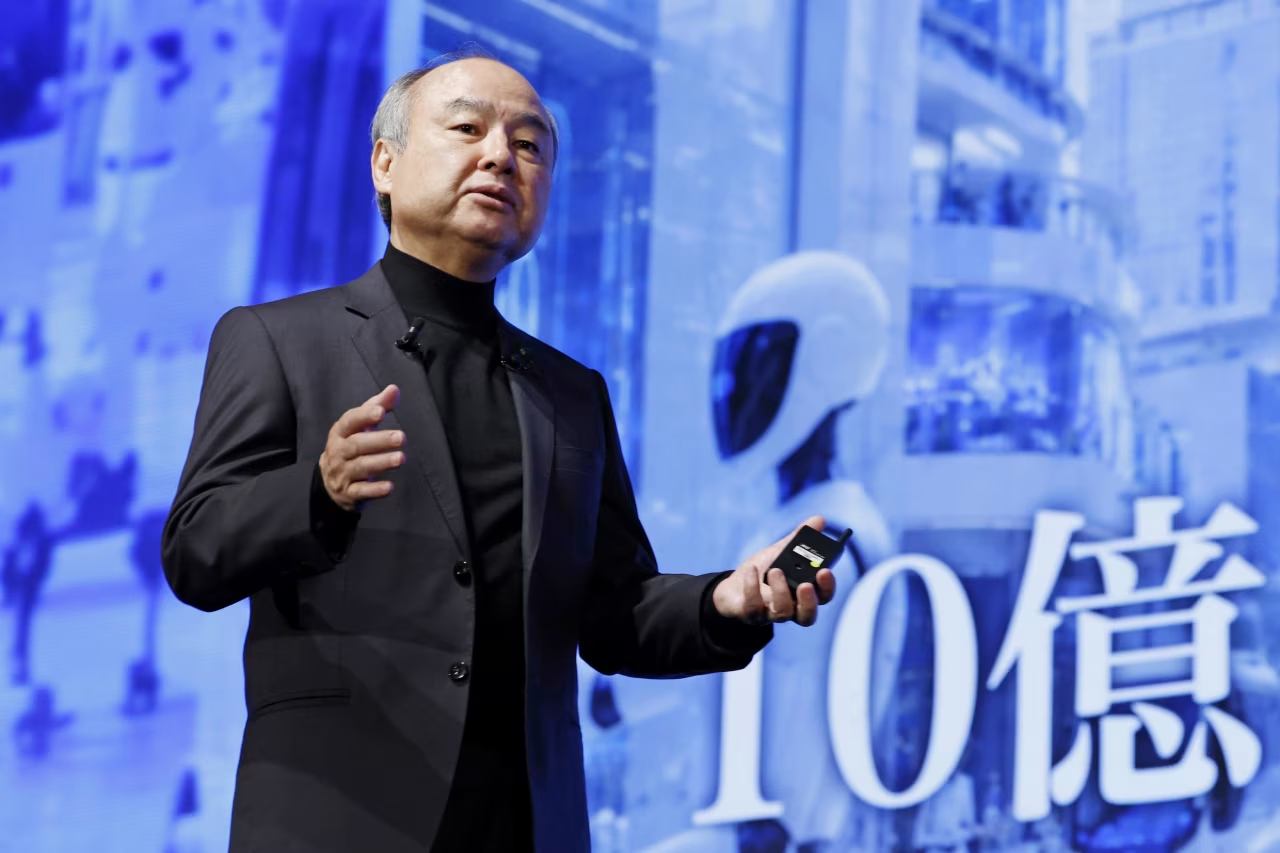
SoftBank has recorded a $3.7 billion loss after canceling excess gas turbine reservations intended to support its expanding artificial intelligence data center infrastructure in the United States.
The Japanese investment company had reportedly secured more than 13 gigawatts of power generation capacity through advance turbine orders, anticipating severe equipment shortages as AI development accelerated.
However, changes to its infrastructure plans have left the company with more reserved equipment than it currently needs.
The decision comes shortly after Elon Musk claimed that SoftBank had defaulted on turbine orders, an allegation the company strongly denied.
SoftBank maintains that the cancellations were part of a deliberate adjustment to its equipment procurement strategy rather than a failure to meet financial obligations.
SoftBank Reserved More Than 13GW of Gas Turbine Capacity
SoftBank began securing large quantities of power generation equipment during 2025 and early 2026, expecting electricity availability to become a major obstacle to AI data center expansion.
Gas turbines are particularly important because they can generate electricity independently of existing power grids, allowing companies to develop facilities in areas with limited grid capacity.
However, manufacturing large industrial turbines requires substantial time, and deliveries can take several years.
SoftBank attempted to address this problem by reserving production capacity well before its planned data centers were ready for construction.
The company reportedly secured more than 13GW of turbine capacity, equivalent to over six times the generating capacity of the Hoover Dam.
These reservations required substantial advance payments, creating financial exposure if SoftBank's infrastructure requirements changed.
That risk has now resulted in a significant financial charge.
Canceled Turbine Orders Result in $3.7 Billion Charge
SoftBank's financial disclosures indicate that the $3.7 billion charge reflects nonrefundable advance payments and costs associated with modifying or settling equipment contracts.
Approximately $2.85 billion relates to advance payments that cannot be recovered, while another $880 million comes from contract adjustments and settlements.

The company had previously committed approximately $9.5 billion in advance payments for power generation equipment and manufacturing capacity.
SoftBank may recover some of the financial impact through rebates on future equipment purchases, although those benefits depend on specific conditions.
The company has reportedly canceled excess reservations involving turbine manufacturer GE Vernova.
However, the 13GW figure represents the broader capacity originally reserved, not necessarily the exact amount canceled.
SoftBank Denies Elon Musk's Default Allegations
The cancellations attracted additional attention after Elon Musk suggested that SoftBank had defaulted on turbine orders.
SoftBank Chief Financial Officer Yoshimitsu Goto rejected the allegation during the company's earnings discussion.
Goto stated that no default had occurred and explained that the company was reviewing equipment procurement as its infrastructure requirements evolved.
The distinction is important because voluntarily canceling contracts and accepting associated financial penalties does not necessarily constitute a payment default.
SoftBank has maintained that its broader AI infrastructure development plans remain on track.
Major Ohio AI Data Center Project Remains in Development
Despite the equipment cancellations, SoftBank continues pursuing a large AI infrastructure project in Ohio.
The development includes a planned 9.2GW natural gas power generation facility intended to supply electricity to a nearby AI data center campus.
The power plant is expected to cost approximately $33 billion, with construction scheduled to begin in early 2027.
The neighboring computing facility is being developed to support OpenAI's infrastructure requirements.
SoftBank has indicated that the Ohio project's planned scale has not been reduced as a result of the turbine procurement changes.
The financial loss nevertheless highlights the risks associated with ordering expensive infrastructure years before the equipment is needed.
As AI computing demand continues growing, companies must balance the need to secure scarce power equipment against the possibility that construction schedules and hardware requirements may change.
SoftBank's $3.7 billion charge demonstrates how costly those adjustments can become when large equipment reservations are made far in advance.


Discussion (0)
Be the first to comment.