


SpaceX is reportedly developing a custom AI computing system called Kessel that combines 72 NVIDIA Rubin GPUs with an unusual circuit board design intended for both conventional and space based data centers.
The project is based on NVIDIA's Vera Rubin NVL72 architecture but replaces the company's standard NVLink cable connections with a large printed circuit board containing 84 layers.
According to industry reports, SpaceX wants greater control over how its AI servers are designed, manufactured and assembled.
The company is also reportedly planning to purchase NVIDIA processors and networking chips directly while sourcing other hardware components from separate suppliers.
This approach could allow SpaceX to adapt its computing infrastructure for specialized operating environments, including orbital deployments.
However, neither SpaceX nor NVIDIA has publicly confirmed the Kessel project, and its production schedule remains unknown.
Kessel Retains 72 Rubin GPUs and 36 Vera CPUs
The reported Kessel configuration maintains the main computing components of NVIDIA's Vera Rubin NVL72 platform.
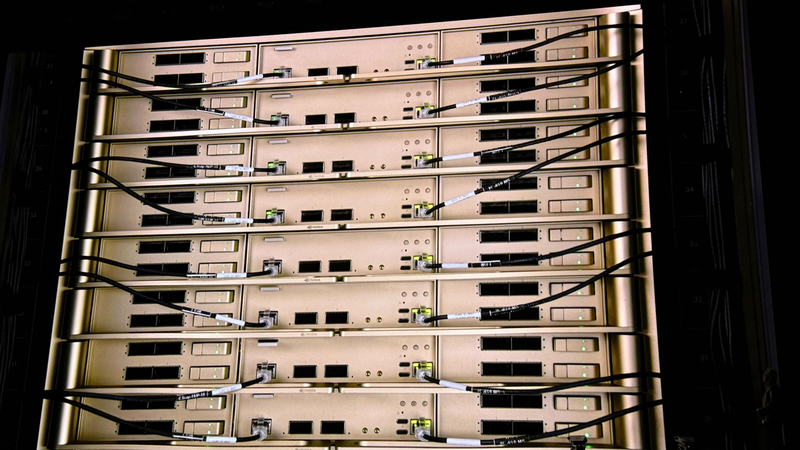
It includes 72 Rubin GPUs, 36 Vera CPUs and nine NVLink switch trays.
The GPUs are distributed across 18 compute trays, with the networking hardware enabling communication between the accelerators.
Rather than using NVIDIA's conventional internal cable arrangement, SpaceX reportedly plans to position the computing and switching trays around a central circuit board.
This board would provide the high speed connections needed for communication between different components.
The arrangement resembles NVIDIA's more ambitious Kyber architecture, although Kessel would operate at a smaller scale.
Custom 84 Layer PCB Replaces Traditional NVLink Cables
One of Kessel's most distinctive features is its proposed 84 layer printed circuit board.
The board reportedly uses advanced M10 copper clad laminate materials designed to support high speed electrical signaling while reducing signal losses.
For comparison, conventional high performance server motherboards often contain approximately 15 to 20 layers.
NVIDIA's previously described Kyber design used a substantially more complicated circuit board containing 156 layers.
Although Kessel uses fewer layers, manufacturing such a complex board would still be challenging.
Precise alignment, signal integrity and manufacturing quality are particularly important because defects inside the board could make the entire component unusable.
Eliminating numerous cable connections could simplify system assembly, but the savings may be offset by the expensive materials and manufacturing processes required for the circuit board.
SpaceX Wants More Control Over NVIDIA Hardware Procurement
Kessel could also change how SpaceX purchases its AI computing equipment.
Instead of buying complete NVIDIA computing boards or assembled server trays, the company reportedly wants to acquire the main processor packages directly.
Other components, including circuit boards and supporting hardware, could then be purchased independently.
This would give SpaceX more freedom to select manufacturers and customize systems for its infrastructure requirements.
However, it would also place greater responsibility on the company for hardware validation, production quality and supply chain management.
For NVIDIA, the arrangement could mean selling fewer complete server assemblies while continuing to supply the valuable processors and networking technology.
Orbital AI Data Centers Remain a Major Engineering Challenge
The reported development is particularly relevant to SpaceX's interest in deploying AI computing infrastructure beyond Earth.
Space based data centers would face substantial engineering challenges involving cooling, radiation exposure, power availability, reliability and communication with ground based systems.
A custom rack architecture could provide additional flexibility when adapting hardware to those requirements.
However, replacing NVLink cables with an 84 layer PCB does not independently resolve the broader challenges of operating high performance AI systems in orbit.
The project's commercial viability will depend on whether its manufacturing complexity can be justified by improvements in system integration, reliability or cost.
For now, Kessel remains a reported development rather than a confirmed commercial product, with no announced pricing, production volume or deployment timeline.

Discussion (0)
Be the first to comment.