



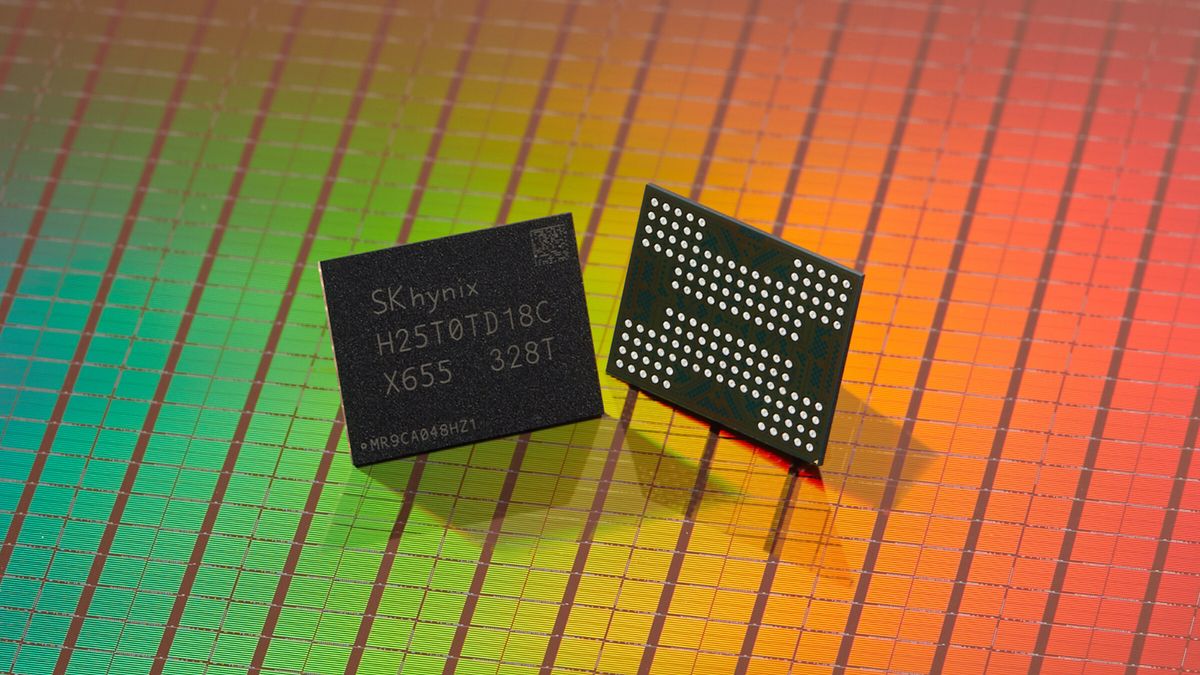
SK hynix is facing heavy demand for memory chips, and some major tech companies are reportedly offering money to help it expand production.
The pressure comes from the AI boom. Large data centers need huge amounts of DRAM and HBM for GPUs, CPUs, and AI accelerators. As AI systems grow, memory has become one of the hardest parts of the supply chain to secure.
According to the report, some customers have offered to invest in dedicated production lines or help SK hynix buy expensive equipment such as EUV machines from ASML. These tools are important for advanced DRAM manufacturing, especially as memory makers move toward newer production methods.
SK hynix is interested in expanding, but it is also being careful. Taking money from customers could lock part of its future supply to specific buyers. It could also force the company to sell chips at lower prices in exchange for long term purchase guarantees.
That is not an easy tradeoff when demand is already far above supply.
One insider said available capacity is basically zero right now. In simple terms, SK hynix does not have extra production it can set aside for one customer, no matter how much that customer wants to invest.
Here is the current situation:
| Area | Status |
|---|---|
| Company | SK hynix |
| Main pressure | Heavy AI driven memory demand |
| Products affected | DRAM and HBM |
| Customer interest | Some tech firms want to invest in production expansion |
| Main equipment need | Advanced EUV tools |
| Spare capacity | Reportedly almost none |
| Main risk | Customer funded expansion could create supply lock in |
| New facility | P&T7 mega fab for next generation HBM |
| Expected timing | Ready by 2028 |
SK hynix is already building its large P&T7 mega fab, which will focus on next generation HBM production. The plant is described as being the size of 32 soccer fields and is expected to be ready by 2028.
The problem is timing. New fabs take years to build and qualify. The memory market needs more supply now, but the biggest expansions will not arrive immediately.
Memory makers have already warned that shortages could last for years. Samsung has also warned that 2027 may be worse than 2026 for DRAM and NAND supply. That matters because AI data centers are still expanding, and new multi gigawatt projects will need even more memory.
SK hynix is also expanding existing production lines, but that may not be enough. The report says DRAM makers may only meet about 60 to 70 percent of demand this year.
For customers, the message is clear. Money alone may not solve the memory shortage quickly. Even if tech companies offer cash, SK hynix still needs equipment, space, time, and yield improvements before it can meaningfully raise output.
For the wider market, this means memory prices may stay high. AI hardware, servers, consumer PCs, smartphones, and GPUs all depend on the same supply chain. If demand keeps rising faster than production, the pressure will likely continue for years.


Discussion (0)
Be the first to comment.