



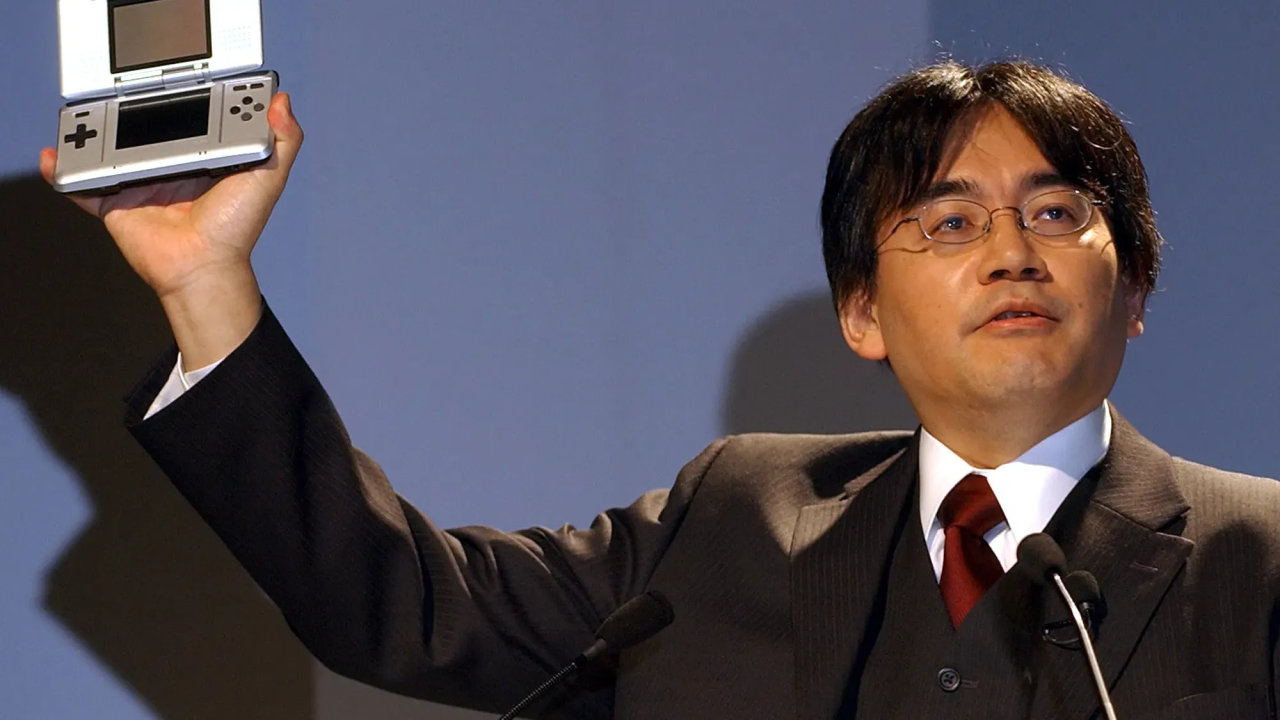
Former Nintendo president Satoru Iwata believed the company should avoid relying too heavily on endless sequels to franchises such as Mario and The Legend of Zelda, arguing that Nintendo needed to keep creating new experiences alongside its established series.
Iwata explained that approach in 2006, at a time when Nintendo was preparing the console that would later become the Wii. His concern was that a company focused only on sequels could eventually be seen as conservative and unwilling to take creative risks.
That did not mean abandoning Mario, Zelda or Nintendo's other major franchises. Instead, Iwata wanted each new entry to introduce meaningful changes while the company also experimented with completely different types of games.
Nintendo wanted familiar franchises and new audiences at the same time
Iwata's comments came during an important transition for Nintendo.
The Nintendo 64 and GameCube had produced highly regarded games such as Super Mario 64, The Legend of Zelda: Ocarina of Time, Super Mario Sunshine and The Wind Waker, but Nintendo was losing ground commercially to PlayStation and Xbox.
At the same time, Nintendo was finding success with the Nintendo DS and games designed for a broader audience, including Nintendogs and Brain Age.
Some longtime players worried that Nintendo's push toward simpler and more accessible experiences meant the company was moving away from traditional games.
Iwata argued that Nintendo could serve both audiences.
| Part of Nintendo's strategy | Approach |
|---|---|
| Mario and Zelda sequels | Continue supporting established fans |
| New entries in existing series | Add meaningful gameplay innovation |
| New types of games | Reach people who did not traditionally play games |
| Nintendo DS software | Expand beyond conventional gaming audiences |
| Wii strategy | Use new control ideas to change how games were played |
He said Nintendo would continue creating traditional Mario and Zelda experiences while also developing games aimed at people who might only play for short periods or had never considered themselves gamers.
That philosophy became especially visible with the Wii.
The console's motion controls encouraged developers to rethink familiar genres and also made gaming easier to understand for people who were unfamiliar with traditional controllers.
Innovation also applied to Nintendo's biggest franchises
Iwata acknowledged that Nintendo had a large audience expecting new entries in its established franchises.
His view was that meeting those expectations should not mean simply repeating the same design.
Each sequel needed to find a way to innovate within the franchise.
Later Nintendo releases provide clear examples of that philosophy.
Super Mario Odyssey retained the basic identity of a 3D Mario platformer while expanding the structure around large explorable environments and Mario's ability to control other characters and objects through Cappy.
The Legend of Zelda: Breath of the Wild changed Zelda more dramatically by moving toward a large open world, reducing traditional progression restrictions and giving players more freedom to experiment with physics, exploration and combat.
Nintendo's history after Iwata's comments was not consistently successful. The Nintendo 3DS had a difficult launch before recovering, while the Wii U became one of the company's weakest performing home systems.
The broader strategy of mixing established intellectual property with unusual hardware and gameplay ideas nevertheless remained central to Nintendo.
The later success of the Nintendo Switch showed how those two sides of the company could work together. Familiar franchises remained important, but many of their largest releases were built around substantial changes rather than straightforward repetition.
Iwata's 2006 comments therefore describe a philosophy that continued well beyond that particular generation. Nintendo could keep making Mario and Zelda games, but the goal was for each major release to justify its existence with new ideas rather than depending only on the strength of a familiar name.

Discussion (0)
Be the first to comment.