



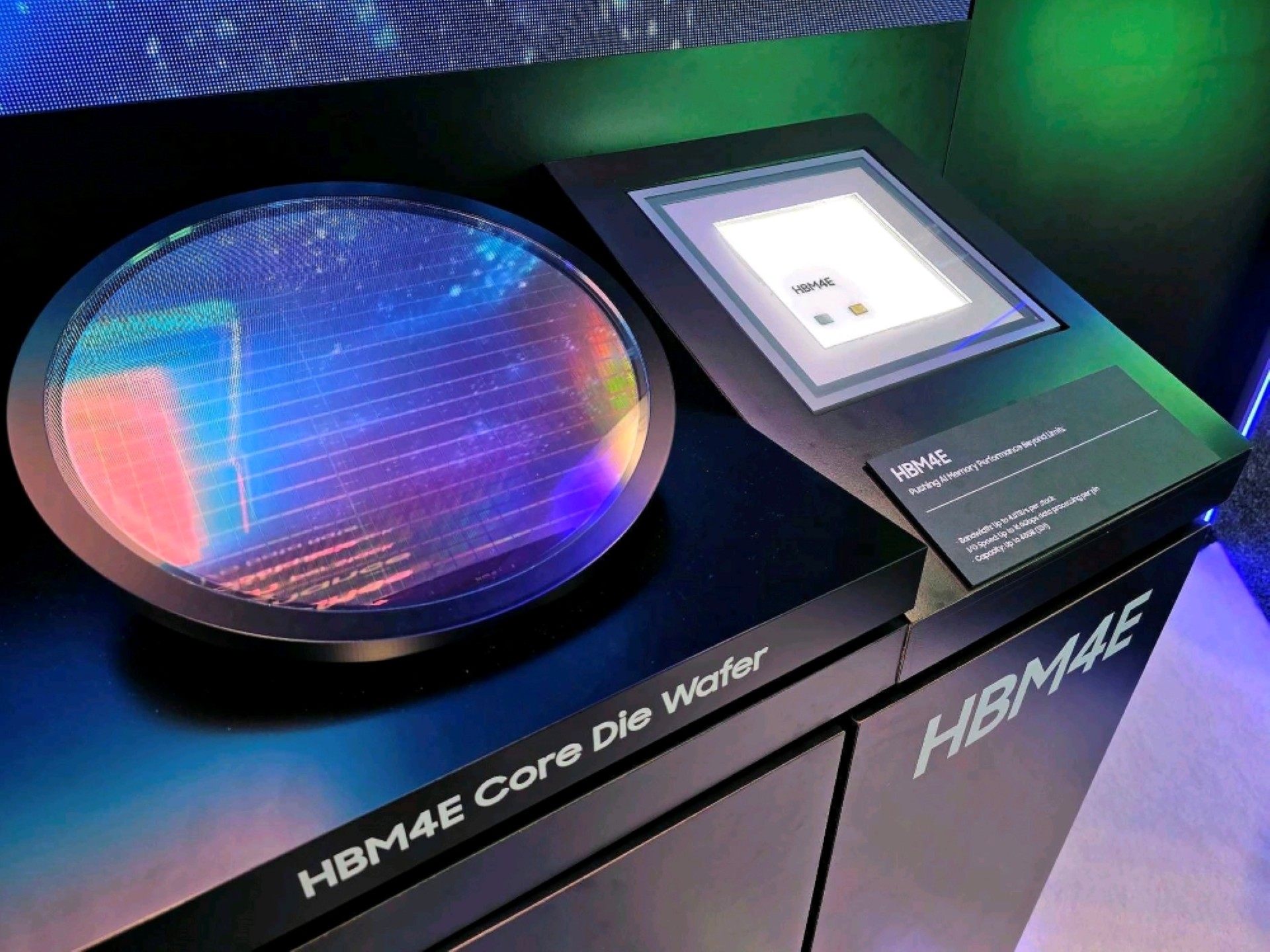
Samsung could significantly expand production capacity for next generation HBM4 memory in 2027 as demand from AI data centers continues to rise.
A new report suggests the company plans to increase procurement of glass carriers used during HBM manufacturing from around 20,000 units per month in 2026 to approximately 50,000 units per month next year.
That would represent a 2.5 times increase and could indicate a substantial expansion in Samsung's HBM4 output.
The figures remain based on industry reporting rather than an official production announcement from Samsung.
Glass carrier orders point to higher HBM capacity
Glass carriers are used during the manufacturing and assembly of HBM memory.
They hold DRAM wafers in place while the wafers undergo processing required before the individual dies are stacked into an HBM package.
Because these carriers can be reused, their procurement does not translate directly into the same number of finished HBM chips. However, a large increase in carrier orders can still provide an indication of expanding production capacity.
| Year | Reported glass carrier procurement |
|---|---|
| 2025 | Around 10,000 units per month |
| 2026 | Around 20,000 units per month |
| 2027 | Around 50,000 units per month |
If the figures are accurate, Samsung will have increased monthly carrier procurement fivefold between 2025 and 2027.
The largest single increase would occur between 2026 and 2027.
HBM4 demand is being driven by AI accelerators
High Bandwidth Memory has become one of the most important components in modern AI accelerators.
Instead of using conventional memory modules placed farther away from the processor, HBM stacks several DRAM dies vertically and places them close to the compute chip.
This provides extremely high memory bandwidth, which is particularly useful for large AI workloads.
HBM4 is the next major generation of the technology and is expected to play an important role in upcoming AI platforms, including NVIDIA's Vera Rubin products.
Growing deployment of these systems is increasing pressure on memory manufacturers to expand capacity.
Samsung is competing with other major memory suppliers for a larger share of this market.
HBM4 requires a more advanced base die
One of the important changes with HBM4 is the growing complexity of the base die positioned beneath the DRAM stack.
The base die handles communication between the stacked memory and the processor.
Samsung is reportedly using its 4 nanometer logic manufacturing technology for HBM4 base dies rather than relying only on processes traditionally associated with memory production.
That matters because 4 nanometer manufacturing capacity is also valuable for logic products such as CPUs and GPUs.
Earlier reports have suggested that HBM4 demand is consuming a substantial portion of Samsung's 4 nanometer foundry resources.
This gives Samsung an unusual position because it operates both a large memory business and its own advanced logic foundry.
Samsung could eventually move HBM base dies to 2nm
Samsung is also reportedly examining the use of more advanced manufacturing nodes for future HBM products.
Reports have suggested that the company is considering its 2 nanometer process for future HBM base dies and has already identified potential production lines.
Using a more advanced process could allow Samsung to improve efficiency, density and functionality within the base die.
It would also increase the integration between Samsung's foundry and memory businesses.
There is no confirmed schedule showing when 2 nanometer HBM base dies would enter mass production, so the technology remains part of Samsung's reported longer term plans.
NVIDIA qualification remains important
Samsung has reportedly supplied HBM samples to NVIDIA as it works to meet the technical requirements of upcoming AI accelerators.
Qualification by major AI chip companies is critical because HBM must meet strict requirements for bandwidth, thermals, reliability and power consumption.
A manufacturer can expand capacity, but that capacity only becomes commercially valuable if its memory passes customer qualification and is selected for large scale accelerator production.
That makes both manufacturing volume and technical performance important as Samsung tries to increase its HBM market presence.
HBM production could continue growing beyond 2027
The report also points toward further growth after the planned 2027 expansion.
Samsung's overall HBM production is expected to rise again in 2028, with one estimate suggesting an increase of around 40 percent.
That outlook reflects expectations that AI infrastructure spending will continue driving demand for increasingly powerful memory systems.
The exact numbers may change depending on customer orders, qualification results and broader semiconductor market conditions.
Still, the reported increase from 20,000 to 50,000 glass carriers per month shows how aggressively Samsung may be preparing for the HBM4 generation.
If the production plans materialize, 2027 could become an important year for Samsung's effort to expand its role in the high bandwidth memory market as AI accelerator demand continues to grow.



Discussion (0)
Be the first to comment.