



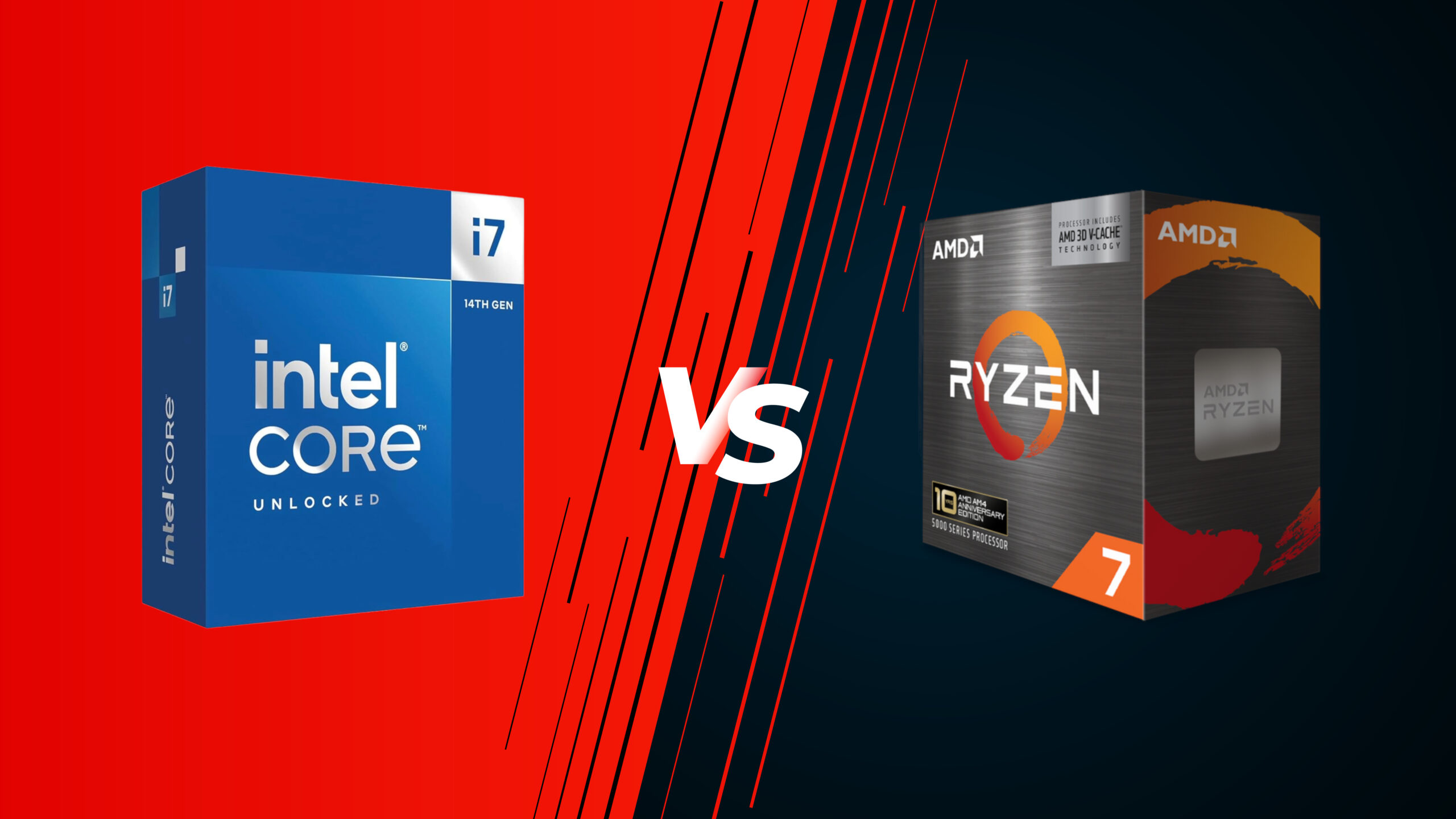
The AMD Ryzen 7 5800X3D and Intel Core i7 14700K remain two capable choices for people trying to avoid the high cost of a full DDR5 upgrade in 2026. The better option depends on whether you are upgrading an existing system, focused mainly on gaming, or need stronger performance for creative and productivity work.
The Ryzen 7 5800X3D is still one of the simplest upgrades for an AM4 gaming PC. It uses DDR4 memory, runs efficiently, and benefits from AMD’s large 3D V Cache design. The Core i7 14700K is the more powerful processor overall, especially in demanding multi core workloads, but it needs more power, stronger cooling, and expensive DDR5 memory to deliver its best results.
For a new build, the decision is less straightforward because both AM4 and LGA 1700 are older platforms. However, current RAM prices make the cost of moving to DDR5 far more difficult to justify than usual.
Intel Leads When Paired With DDR5 Memory
The Core i7 14700K has a clear technical advantage. It combines eight performance cores with 12 efficiency cores for a total of 20 cores and 28 threads. The Ryzen 7 5800X3D has eight cores and 16 threads.
When tested with DDR5 memory, Intel’s processor delivered higher average frame rates in a 16 game benchmark suite. It also had a substantial lead in video encoding, rendering, and other heavily threaded workloads.
The gap becomes much smaller when the 14700K uses DDR4 memory. In gaming, the 5800X3D can match or slightly outperform it in several titles, thanks to its much larger cache.
| Category | Ryzen 7 5800X3D | Core i7 14700K |
|---|---|---|
| Cores and threads | 8 cores, 16 threads | 20 cores, 28 threads |
| Memory support | DDR4 only | DDR4 and DDR5 |
| Gaming with DDR4 | Very competitive | Close, but often slightly behind |
| Gaming with DDR5 | Strong | Faster on average |
| Productivity work | Limited by lower core count | Much faster |
| Power efficiency | Excellent | Much higher power draw |
| Overclocking | Core overclocking unavailable | Fully unlocked |
The Ryzen 7 5800X3D Is Better for Existing AM4 Systems
For someone already using an AM4 motherboard and DDR4 memory, the 5800X3D remains the more sensible upgrade. You can keep your motherboard, RAM, and often your existing cooling setup while gaining excellent gaming performance.
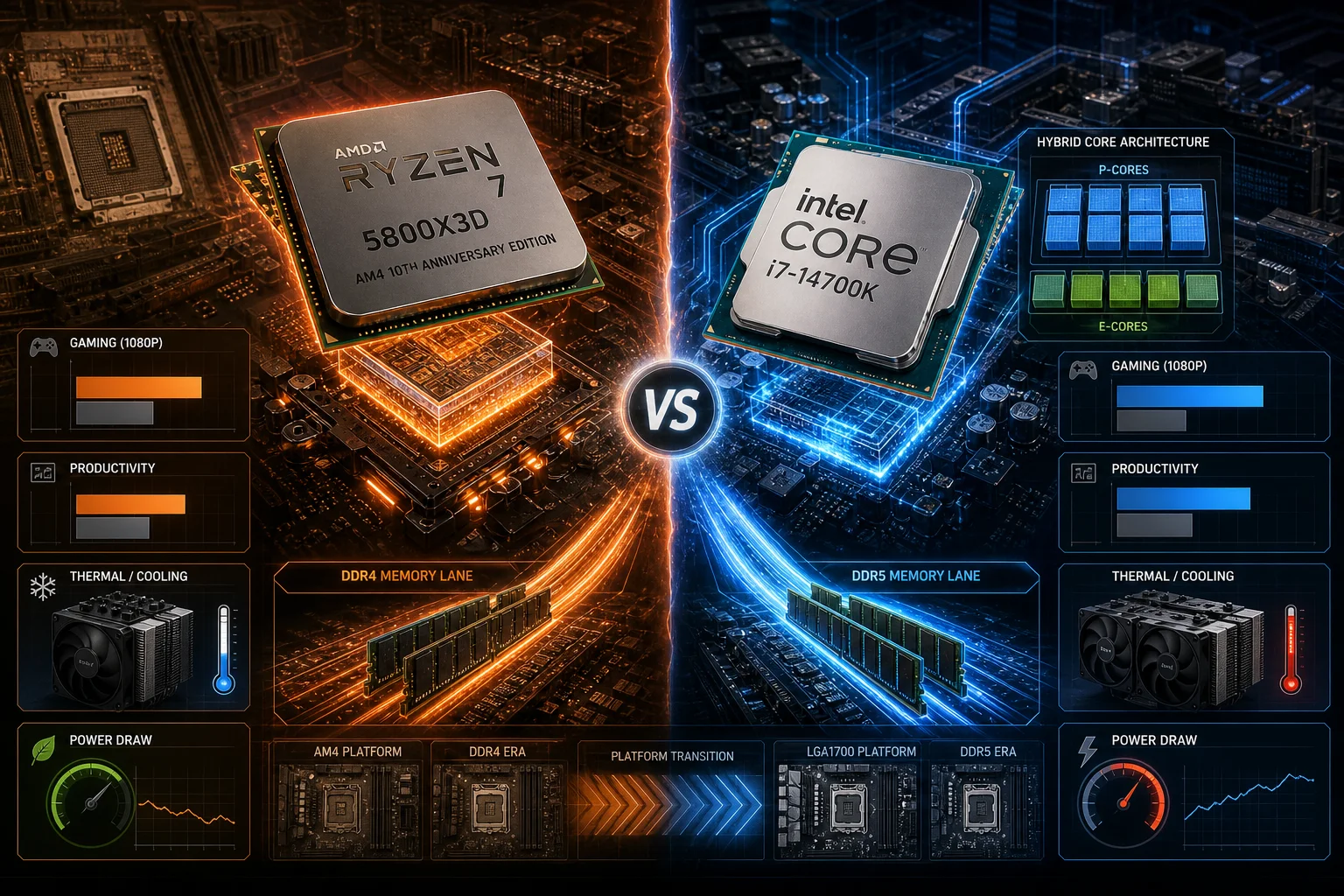
Its efficiency is another major advantage. In gaming tests, the 5800X3D consumed much less power and ran cooler than the Core i7 14700K. That can reduce noise and make it easier to use in smaller cases.
The chip is also a practical choice during the current RAM shortage. A 32GB DDR4 kit costs far less than a comparable DDR5 kit, so upgrading an AM4 PC can avoid a large platform expense.
The Core i7 14700K Is Better for Workloads Beyond Gaming
The 14700K is the stronger all round processor if you edit video, render 3D projects, encode media, compile software, or run demanding multitasking workloads. Its additional cores give it a major advantage over the 5800X3D in these tasks.
However, you need to account for the total build cost. The Intel chip can consume more than twice as much power in some heavy workloads, and it benefits from a high quality cooler. To unlock its strongest gaming performance, it also needs DDR5 memory, which remains unusually expensive.
Current testing shows the 14700K performs best with DDR5, while the 5800X3D offers a strong gaming experience without requiring that costly jump.
For an existing AM4 gaming PC, the Ryzen 7 5800X3D is the easier and more affordable choice. For a system that handles frequent productivity work and can absorb higher cooling and memory costs, the Core i7 14700K remains the more powerful processor.



Discussion (0)
Be the first to comment.