



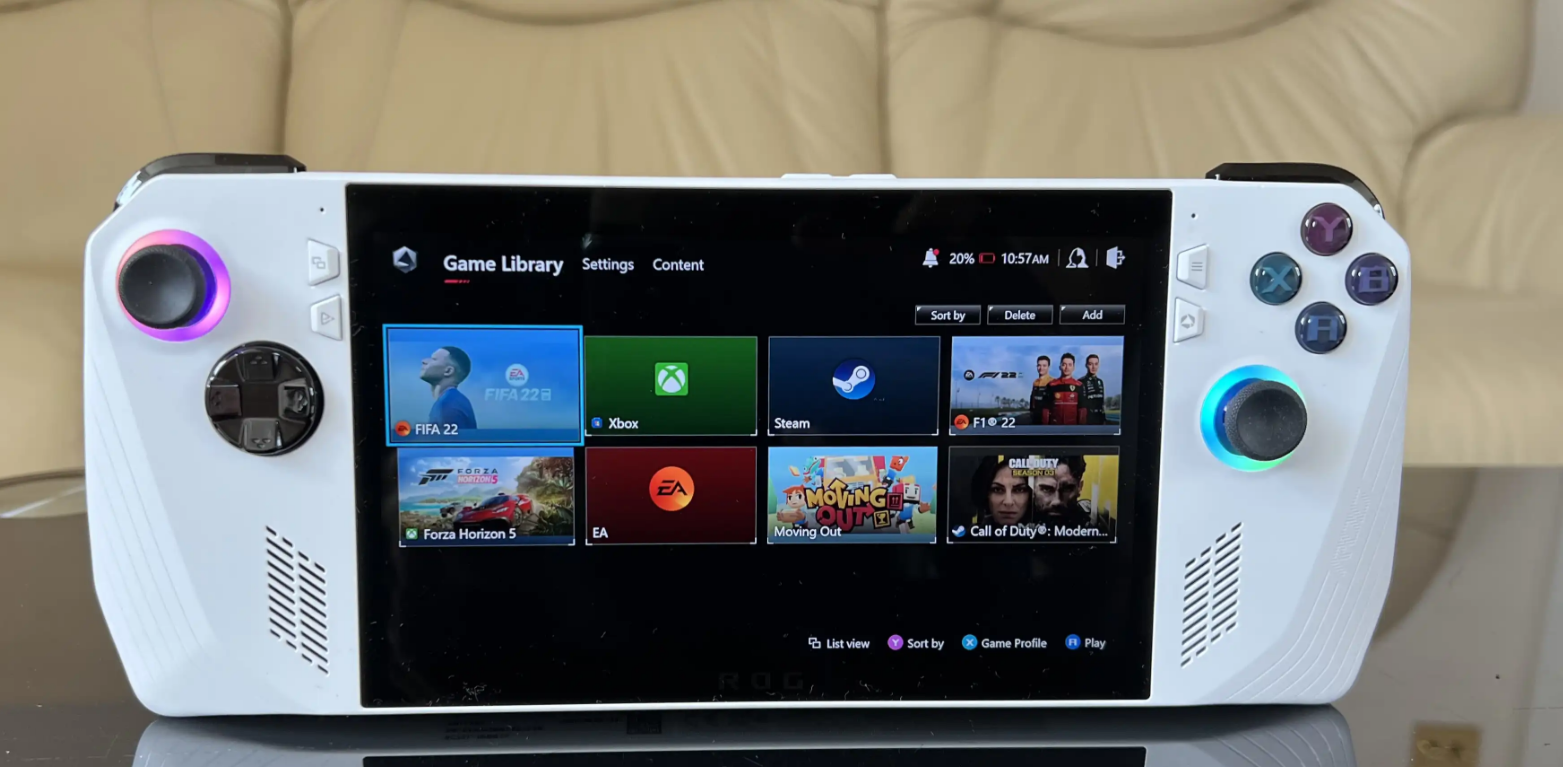
The ASUS ROG Ally has dipped below the $500 mark again, and that changes the conversation around it completely.
At launch, it was positioned as a premium handheld gaming PC. At this price, it starts to look like one of the most accessible ways to get into portable PC gaming.
But pricing alone doesn’t make it a good buy. The real question is whether it still holds up in 2026.
What the ROG Ally Actually Is
The ROG Ally isn’t a console. It’s a full Windows gaming PC in a handheld form factor.
It runs Windows 11, which means you can:
- Install Steam, Epic Games, and other launchers
- Play PC games natively
- Use emulators and other software
- Treat it like a compact computer
This flexibility is its biggest strength, but also where complexity comes in.
Why the Price Drop Matters
At launch, the ROG Ally competed more directly with premium handhelds and gaming laptops.
At under $500, it moves into a different category.
Now it competes with:
- Entry-level gaming PCs
- Budget laptops
- Mid-range handheld devices
That makes it far easier to justify, especially if you’re looking for a secondary gaming device.
Real-World Performance in 2026
The hardware is no longer cutting-edge, but it’s still capable.
You can expect:
- Solid performance in indie and older AAA titles
- Playable frame rates in newer games with reduced settings
- Better experience when plugged in (higher performance modes)
It’s not a max-settings machine, but it was never meant to be.
The key is managing expectations.
Where It Still Stands Out
The biggest advantage of the ROG Ally is flexibility.
Unlike closed systems, you’re not locked into a single ecosystem.
You can:
- Install multiple game launchers
- Use mods and custom settings
- Access PC-level features
That makes it more powerful in terms of capability, even if raw performance isn’t the highest anymore.
The Trade-Offs You Should Consider
This isn’t a perfect device.
The main compromises are:
- Battery life, especially under load
- Windows UI not fully optimized for handheld use
- Occasional performance tuning required
It’s closer to a small PC than a console. That means you’ll need to adjust settings and manage your experience.
Who Should Actually Buy It
At this price, the ROG Ally makes sense for:
- PC gamers who want portability
- Users comfortable with tweaking settings
- People looking for a secondary gaming device
It’s less ideal if you want a plug-and-play experience with no adjustments.
How It Compares Today
In 2026, the handheld gaming space is more competitive.
Newer devices may offer:
- Better efficiency
- Improved battery life
- More refined user interfaces
But the ROG Ally still holds its ground because of price and flexibility.
That combination is hard to beat.
Limitations You Should Know
You’re buying older hardware.
That means:
- Less headroom for future games
- Potential need to lower settings over time
- Shorter long-term lifespan compared to newer devices
It’s still capable, but not future-proof.
Final Thoughts
At under $500, the ROG Ally becomes much easier to recommend.
It’s not the newest or most efficient handheld anymore, but it offers a level of flexibility that many alternatives still don’t.
If you understand what it is, a portable Windows gaming PC with some trade-offs, it’s a strong value.
If you expect console-like simplicity, it may not be the right fit.
FAQs
Is the ROG Ally still good in 2026?
Yes, especially at a lower price, but it’s no longer cutting-edge.
Can it run modern games?
Yes, but often at reduced settings.
Is it better than a console?
It depends. It offers more flexibility but less simplicity.
How is battery life?
Average to below average under heavy gaming load.
Should you buy it now?
If you want a flexible handheld PC at a good price, it’s worth considering.
Discussion (0)
Be the first to comment.