



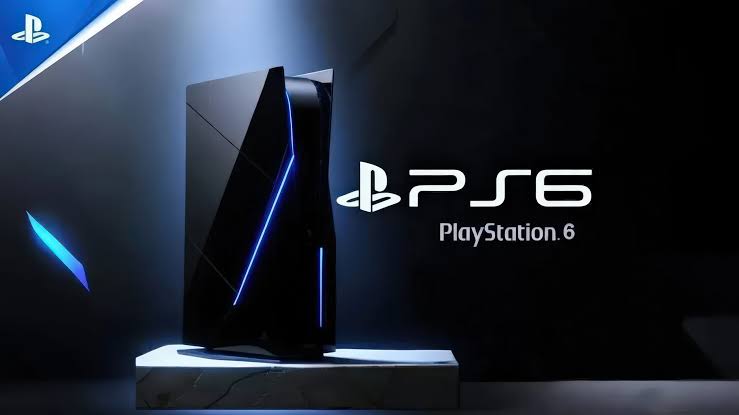
Sony is exploring a new graphics management system that could allow future PlayStation controllers to switch between different visual quality settings using a dedicated button.
A patent published on November 19, 2026, describes technology that can adjust graphics settings dynamically while a game is running, potentially reducing the need for players to navigate traditional settings menus.
The system, described as Adaptive Visual Quality, would analyze consecutive frames and modify rendering settings based on changes detected in the image.
These adjustments could include texture resolution, filtering, shader quality, and anti aliasing, allowing games to respond automatically to different visual demands.
Although the technology could eventually become part of the PlayStation 6 ecosystem, Sony has not confirmed that it will appear in its next console or controller.
Sony Patent Describes a Dedicated Button for Changing Graphics Quality
One of the most interesting features described in Sony's patent is a dedicated controller input for switching graphics modes.
The proposed system would allow players to move between different quality profiles without opening a game's graphics settings menu.
For example, a player could potentially switch from a mode prioritizing visual quality to one designed for higher performance.
The patent also describes a gradual transition between these modes.
Rather than immediately applying every new setting, the rendering system could introduce intermediate values until it reaches the selected configuration.
This process is intended to make changes less abrupt.
However, Sony has not explained how the proposed button would be positioned on a future controller or whether it would replace an existing input.
The patent also does not establish that a dedicated graphics button will be included in the PlayStation 6 controller.
Adaptive Visual Quality Could Change Graphics Settings Every Frame
The underlying technology goes beyond manually switching between preset modes.
According to the patent, Adaptive Visual Quality would analyze two consecutive rendered frames and calculate differences between their pixels.
These measurements could include changes in brightness and color.
The resulting difference score would range from 0.0 to 1.0, with lower values representing little visual change and higher values indicating greater differences.
The system would then compare that score against predefined thresholds associated with graphics settings.
Depending on the result, it could select a different rendering configuration for the following frame.
This means graphics quality could potentially be adjusted continuously rather than remaining fixed throughout gameplay.
The patent describes several settings that could be modified through this process.
| Graphics Setting | Potential Adjustment |
|---|---|
| Texture resolution | Changes the detail level of textures |
| Texture filtering | Adjusts how textures appear at different viewing angles and distances |
| Shader quality | Modifies the complexity of certain rendering effects |
| Anti aliasing | Changes how the system reduces jagged edges |
| Quality profiles | Allows switching between predefined rendering configurations |
The patent does not confirm exactly how frequently each setting would change in a finished game or whether all adjustments could occur without visible interruptions.
Sony's Technology Goes Beyond Conventional Dynamic Resolution Scaling
Modern console games already use technologies designed to maintain stable performance when rendering demands increase.
Dynamic Resolution Scaling is one of the most common approaches.
It automatically changes a game's rendering resolution according to the available processing resources and performance targets.
For example, a game targeting 60 FPS may temporarily reduce its internal resolution during demanding sequences.
This allows the graphics processor to handle complex scenes without requiring every frame to be rendered at the same resolution.
Sony's proposed Adaptive Visual Quality system appears to introduce a more detailed approach.
Instead of focusing primarily on rendering resolution, it could modify multiple aspects of graphical quality.
This would potentially allow developers to make smaller adjustments depending on the visual characteristics of a particular scene.
However, the patent does not provide real world benchmarks demonstrating that the technology performs better than existing dynamic resolution techniques.
Its effectiveness would depend on implementation, hardware capabilities, and the design of individual games.
PlayStation 6 Could Combine Adaptive Graphics With PSSR Upscaling
The patent has attracted attention because of speculation surrounding Sony's next generation PlayStation hardware.
The PlayStation 5 Pro introduced PlayStation Spectral Super Resolution, commonly known as PSSR, to improve image reconstruction.
PSSR uses machine learning techniques to upscale rendered images and produce higher resolution output.

Adaptive Visual Quality could potentially complement this approach by adjusting rendering complexity while an upscaling system manages image reconstruction.
Such a combination might allow developers to balance image quality and performance more efficiently.
Reports have also suggested that Sony wants its next console to deliver stronger 4K gaming performance at refresh rates reaching 120 FPS.
However, Sony has not officially confirmed that the PlayStation 6 will consistently support native 4K gaming at 120 FPS.
The presence of a patent also does not establish that Adaptive Visual Quality has been integrated with PSSR.
For now, any relationship between these technologies remains speculative.
Future PlayStation Controllers Could Offer More Than Haptic Feedback
Sony has previously introduced substantial controller innovations through its PlayStation hardware.
The PlayStation 5 DualSense controller includes adaptive triggers and haptic feedback designed to provide more detailed physical responses during gameplay.
These features allow compatible games to simulate different sensations, such as resistance when pulling a trigger or vibrations associated with particular actions.
The newly published patent suggests Sony is also investigating ways to expand controller functionality beyond physical feedback.
A dedicated graphics settings control would provide a direct connection between player input and visual performance.
Another recently discussed Sony patent describes the possibility of allowing players to purchase digital content through controller interactions.
However, neither patent confirms the features planned for the company's next controller.
Technology companies frequently register patents for concepts that never reach commercial products.
Sony Has Not Confirmed Adaptive Visual Quality for PlayStation 6
The Adaptive Visual Quality patent provides insight into Sony's research into more flexible graphics rendering systems.
Its proposed combination of automatic frame analysis and manual controller controls could give developers additional ways to balance visual detail and performance.
For players, the most noticeable potential benefit would be the ability to adjust graphics quality without repeatedly opening settings menus.
The technology could also help games respond to demanding scenes through more granular rendering changes.
However, important questions remain unanswered, including the processing overhead required for continuous frame analysis and how smoothly the system could transition between different quality levels.
Sony has not demonstrated the technology in a commercially available game or announced plans to include it in PlayStation 6.
Until the company confirms its next generation hardware features, the dedicated graphics button and Adaptive Visual Quality system should be considered experimental concepts rather than guaranteed additions to future PlayStation consoles.
Discussion (0)
Be the first to comment.