




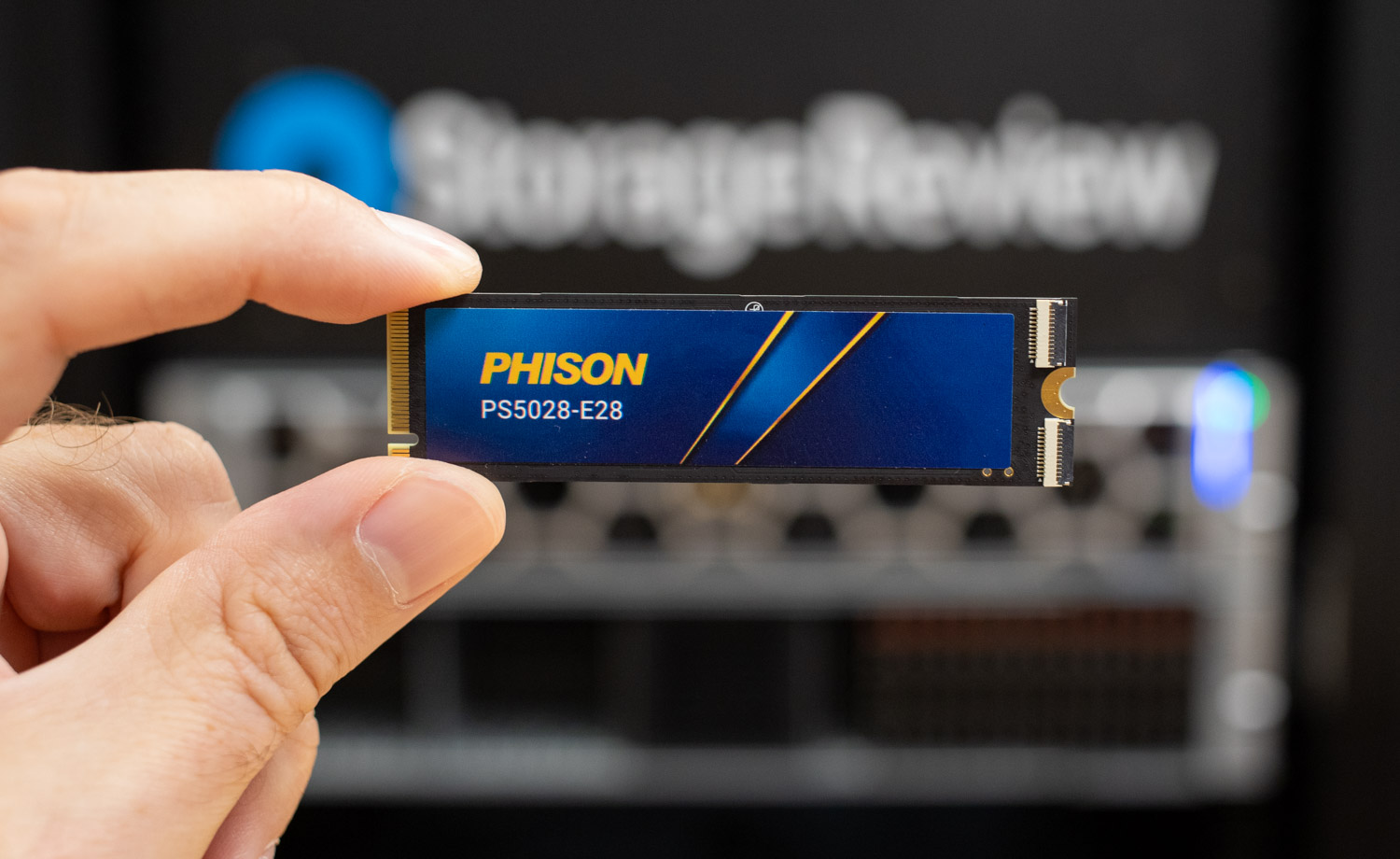
Phison expects the current NAND shortage to last for years, with supply potentially taking around four years to catch up with demand.
The warning comes from Phison CEO Pua Khein-Seng, who says the market often underestimates how long it takes NAND manufacturers to add meaningful new production capacity.
According to the report, new NAND capacity may require roughly four years from investment to actual mass production. That is much longer than the two year timeline some market participants might expect.
If that outlook proves accurate, SSD prices could remain under pressure through the end of the decade.
NAND supply may remain constrained through 2030
| Area | Current outlook |
|---|---|
| NAND demand | Rising strongly |
| New production lead time | Around four years |
| Main demand driver | AI and cloud infrastructure |
| Consumer impact | Higher SSD prices |
| Phison strategy | Build strategic NAND inventory |
| Focus areas | Enterprise SSDs, AI SSDs, AI storage |
| Q2 2026 gross margin | 65.3% |
The core issue is that storage demand is expanding alongside the AI infrastructure boom.
AI data centers require large amounts of both memory and storage. As generative AI and agentic AI systems process and retain more data, cloud providers and AI companies need additional NAND capacity for SSDs.
That puts enterprise demand in direct competition with other parts of the storage market.
New NAND fabs cannot appear quickly
Phison’s CEO reportedly asked senior executives at NAND manufacturers how long it would take to expand production from the point of investment to actual mass production.
His initial estimate was around two years.
The answer he received was closer to four years.
That matters because higher prices do not automatically lead to an immediate increase in supply. Building or expanding semiconductor production facilities requires major capital investment, equipment installation, qualification and production ramping.
As a result, the industry cannot quickly solve shortages simply by spending more money.
Phison is building strategic inventory
Phison is responding by building a strategic NAND inventory.
The company wants to ensure that it has enough supply to support enterprise SSD customers, cloud service providers and AI companies over the next two years.
That also means Phison may avoid selling large portions of its available NAND inventory in the short term if doing so could weaken long term supply commitments.
The strategy reflects concern that obtaining additional NAND later could become increasingly difficult.
SSD prices could remain elevated
For consumers, the biggest concern is SSD pricing.
If NAND demand continues rising while production capacity remains tight, manufacturers will have little reason to lower prices aggressively.
That could affect everything from inexpensive consumer SSDs to high capacity enterprise drives.
The impact could also spread to laptops, desktops, handheld PCs and other systems where storage represents a meaningful part of the total hardware cost.
AI storage is becoming more important for Phison
Phison is also changing its long term strategy.
Under its Phison 3.0 initiative, the company plans to focus more heavily on AI Storage, Edge AI and AI platforms rather than depending mainly on NAND controllers and storage modules.
It is also accelerating development in enterprise SSD and AI SSD products.
Even with stronger pricing in the storage market, however, Phison does not expect rising NAND prices to translate directly into much higher profit margins because its own NAND procurement costs are also increasing.
The company reported a record gross margin of 65.3% in Q2 2026, but the broader outlook remains constrained by supply.
If the four year production timeline is accurate, the current NAND shortage could remain one of the most important hardware pricing issues through 2030, keeping SSD costs elevated for both consumers and enterprise buyers.

Discussion (0)
Be the first to comment.