



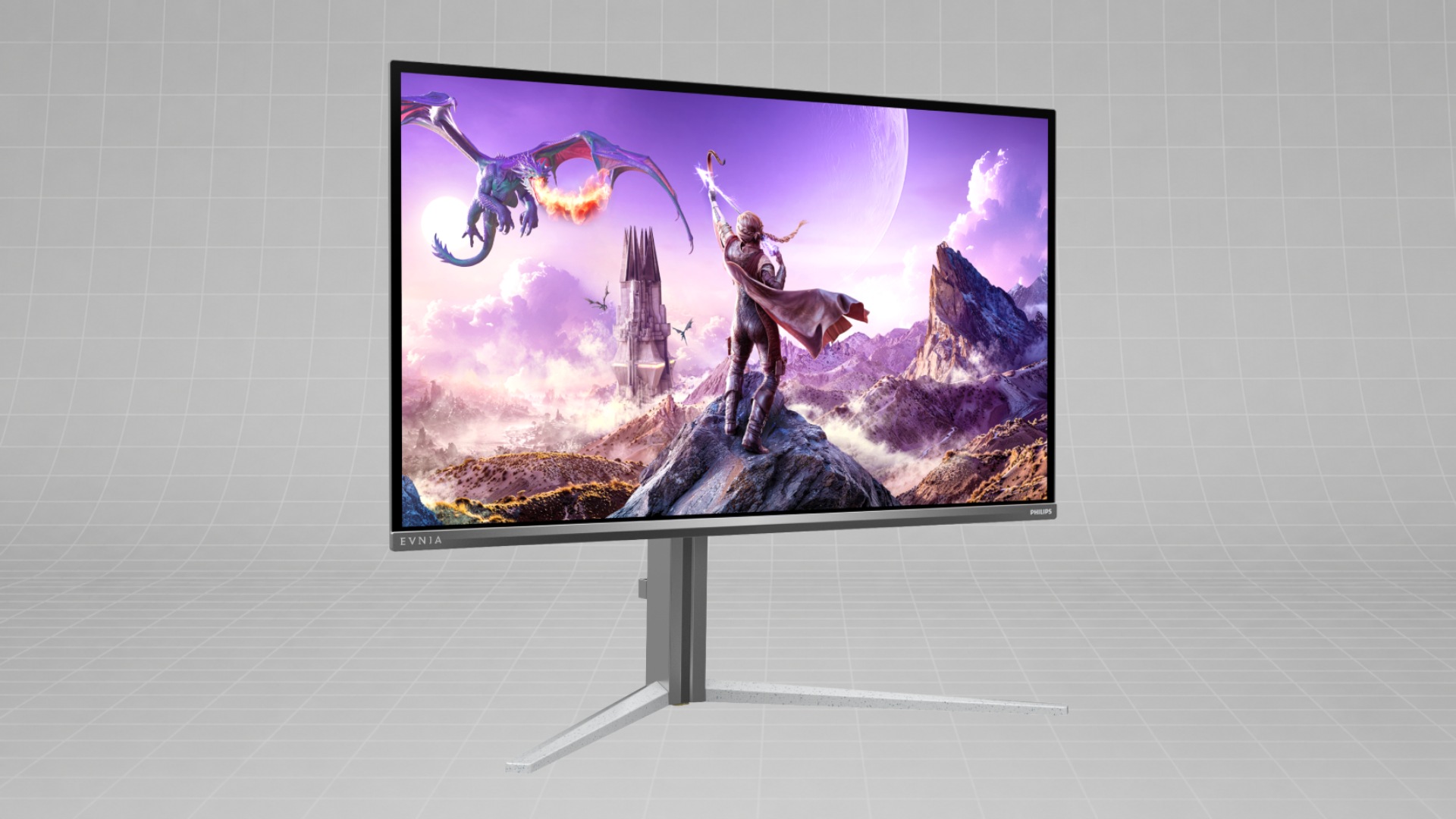
Philips has introduced the Evnia 32M2N6901A, a 32 inch gaming monitor that combines a 4K QD OLED panel with a 165Hz refresh rate, fast response times, USB C connectivity, and built in speakers.
The monitor is aimed at players who want high image quality without moving into the most expensive 240Hz or 360Hz 4K OLED category. It will be available from August for £649.99, which is approximately $868.
Its 3840 × 2160 resolution should provide sharp visuals across games, movies, productivity, and creative work. The 32 inch screen size also gives the display enough space for immersive gaming while remaining practical for a standard desk setup.
The 165Hz refresh rate is suitable for both demanding single player games and competitive titles, although reaching very high frame rates at 4K will require a powerful graphics card. Players using mid range hardware may need to reduce graphics settings or enable upscaling in newer games.
The QD OLED panel combines strong contrast with fast response times
The Evnia 32M2N6901A uses QD OLED technology, which combines self emissive OLED pixels with quantum dots. This design allows individual pixels to turn off completely when displaying black, producing deeper shadows and stronger contrast than most traditional LCD panels.
Philips lists a 0.03ms response time, which should help reduce motion blur and visible trailing during fast camera movement. The combination of low response time and a 165Hz refresh rate makes the monitor suitable for racing games, shooters, and other titles where motion clarity matters.
| Specification | Philips Evnia 32M2N6901A |
|---|---|
| Screen size | 32 inches |
| Resolution | 3840 × 2160 |
| Panel type | QD OLED |
| Refresh rate | 165Hz |
| Response time | 0.03ms |
| HDR certification | DisplayHDR True Black 400 |
| HDMI ports | Two HDMI 2.1 |
| DisplayPort | One DisplayPort 1.4 |
| USB C charging | Up to 90W |
| Speakers | Two 5W speakers |
| Additional features | USB hub, KVM switch, AI Ambiglow |
| Price | £649.99 |
| Availability | August 2026 |
The monitor also carries DisplayHDR True Black 400 certification. This standard focuses on deep black levels and strong contrast rather than extremely high full screen brightness.
QD OLED panels can provide vivid colours and clear highlights, but buyers should still consider room lighting. Bright rooms and direct reflections may reduce perceived contrast, particularly if the panel uses a glossy or semi glossy surface.
AI Ambiglow adds lighting behind the monitor
Philips includes its AI powered Ambiglow system, which projects RGB lighting from the back of the monitor.
The lighting can react to colours and activity shown on the screen, extending the visual experience onto the wall behind the display. This may make games and movies feel more immersive in darker rooms.
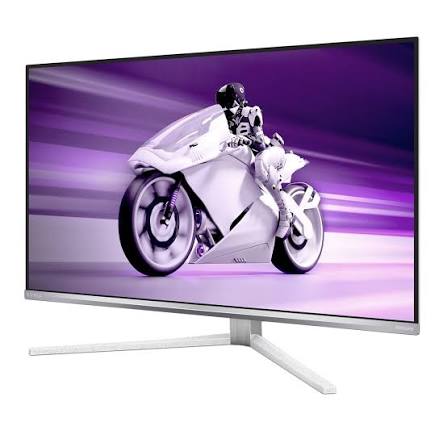
Ambiglow is mainly an aesthetic feature and will not improve image quality directly. Its value will depend on your desk position, wall colour, and preference for reactive lighting.
The monitor also includes Low Blue Mode, which is designed to reduce eye strain during longer sessions. This type of feature may make extended use more comfortable, although brightness, viewing distance, and room lighting remain equally important.
USB C with 90W charging improves productivity use
Connectivity is one of the stronger parts of the Evnia 32M2N6901A.
The monitor includes two HDMI 2.1 ports and one DisplayPort 1.4 connection. HDMI 2.1 should make it suitable for modern gaming consoles and compatible PCs running at high resolutions and refresh rates.
A USB C port supports up to 90W power delivery. This allows compatible laptops to receive power while sending video through a single cable.
The included USB hub can connect peripherals directly to the monitor, while the built in KVM switch allows one keyboard and mouse to control two connected devices.
This could be useful for someone who uses a desktop gaming PC and a work laptop at the same desk. Switching between systems becomes easier without reconnecting peripherals manually.
The monitor also includes two 5W speakers. They should be sufficient for basic audio, video calls, and casual use, though dedicated speakers or headphones will likely provide better sound quality.
The 165Hz refresh rate positions it below faster premium models
The Evnia 32M2N6901A does not compete directly with the fastest 4K OLED monitors, some of which now offer 240Hz or higher refresh rates.
Its 165Hz specification is still enough for smooth gaming, particularly at 4K where many systems cannot maintain more than 165 frames per second in demanding games.
This balance may help keep the price below more extreme models while preserving the main benefits of OLED technology.
The monitor should appeal most to players who prioritise 4K clarity, deep blacks, fast response times, and broad connectivity. Competitive esports players focused entirely on maximum refresh rates may prefer a lower resolution 360Hz or 500Hz display.
At £649.99, the Philips Evnia 32M2N6901A enters a crowded premium monitor market. Its QD OLED panel, USB C charging, KVM switch, Ambiglow lighting, and built in speakers give it a versatile feature set for both gaming and productivity.


Discussion (0)
Be the first to comment.