



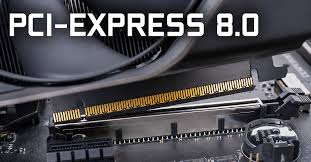
PCI SIG has released the first official draft of the PCIe 8.0 specification, keeping the new standard on track for a full release in 2028.
The next PCIe generation is built for much faster data movement across high performance systems. PCIe 8.0 targets a raw data rate of 256 GT/s and up to 1 TB/s of bidirectional bandwidth through a x16 connection. That is eight times the bandwidth of PCIe 5.0.
This jump is mainly aimed at data heavy markets such as AI servers, high speed networking, edge computing, quantum computing, and large data centers. These systems need faster links between processors, GPUs, accelerators, storage, and networking hardware.
PCIe 8.0 will use PAM4 signaling and remain backward compatible with older PCIe generations. That matters because companies need a path to adopt newer hardware without breaking support for existing systems.
PCI SIG is also looking at new connector technology for PCIe 8.0. The group says the standard will focus on better bandwidth through protocol improvements, lower power use, and targets for latency, reliability, and forward error correction.
Here is how PCIe 8.0 bandwidth breaks down by lane count:
| PCIe 8.0 lane count | Bidirectional bandwidth |
|---|---|
| x1 | 64 GB/s |
| x2 | 128 GB/s |
| x4 | 256 GB/s |
| x8 | 512 GB/s |
| x16 | 1,024 GB/s |
The lane scaling shows how large the jump is. A single PCIe 8.0 lane can match the bandwidth of a full PCIe 4.0 x16 connection. A x2 PCIe 8.0 link can match a full PCIe 5.0 x16 setup, while x4 can reach PCIe 6.0 x16 class bandwidth.
For regular consumer PCs, PCIe 8.0 is not something you should expect soon. PCIe 5.0 is still more than enough for most gaming PCs and everyday desktops. The first major impact will likely be in servers, AI hardware, networking platforms, and other systems where bandwidth limits are already becoming harder to ignore.
PCIe 8.0 also fits PCI SIG’s long term roadmap, which aims to double I/O bandwidth roughly every three years. If the schedule holds, the final PCIe 8.0 specification should arrive in 2028, with real products likely coming after that as chipmakers, board partners, and data center companies build around the new standard.



Discussion (0)
Be the first to comment.