




OpenAI is reportedly preparing its first custom AI chip, called Jalapeño, as part of a broader effort to build more specialized hardware for large language model inference. The project is said to involve Broadcom and could lead to the first deployments before the end of 2026.
The reported chip would be designed for inference rather than general purpose computing. That means it would focus on running AI models efficiently after they have been trained, which is the stage used by products such as chatbots, coding assistants, APIs, and agent based tools.
OpenAI has not publicly confirmed the Jalapeño name or the full technical details in an official announcement. The available information should therefore be treated as an early report rather than a confirmed product launch.
Jalapeño Is Reportedly Built for Large Language Model Inference
The chip is described as a dedicated AI accelerator designed around modern large language model workloads. Instead of adapting an existing general purpose processor, the reported design is said to focus on the systems OpenAI uses for ChatGPT, Codex, APIs, and future agentic AI services.
Inference is becoming one of the most important parts of AI infrastructure. Training a model requires huge computing resources, but inference happens continuously once the model is released to customers. Every question, prompt, image request, coding task, and automated workflow can require inference capacity.
A custom inference chip could help OpenAI lower operating costs, improve response times, and reduce dependence on a single chip supplier.
| Reported Jalapeño Detail | What It Could Mean |
|---|---|
| Custom AI accelerator | Hardware designed specifically for AI workloads |
| Inference focus | Faster model responses and lower operating costs |
| Broadcom involvement | Support for chip implementation and production |
| Eight HBM sites | High bandwidth memory for large AI workloads |
| First deployments | Expected before the end of 2026 |
| Multi generation roadmap | Future chip designs could follow later |
The report suggests that engineering samples are already running internal machine learning workloads at target power and frequency levels. However, no independent benchmarks, performance figures, chip size details, manufacturing node, or memory capacity have been confirmed.
Custom Silicon Could Help OpenAI Reduce Its Dependence on NVIDIA
OpenAI has relied heavily on NVIDIA hardware for AI development and deployment, like many major AI companies. Custom chips would not necessarily replace NVIDIA GPUs, but they could give OpenAI another option for workloads where a purpose built accelerator is more efficient.
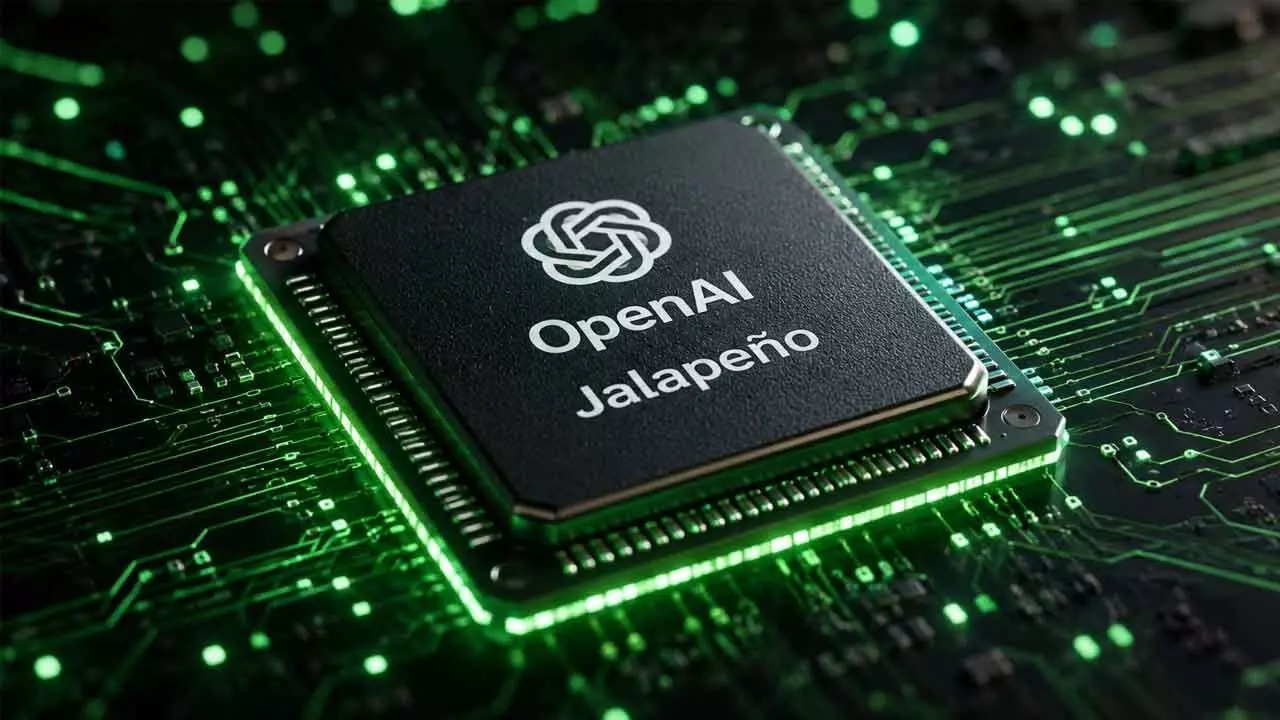
The company is reportedly working on a broader compute platform rather than a single one time chip. That could include the processor, memory, networking, boards, rack systems, and software needed to run AI at scale.
This approach mirrors strategies already used by companies such as Google, Amazon, Microsoft, and Meta, which have invested in custom AI hardware for their own infrastructure.
The Chip’s Real Test Will Come After Deployment
Building a custom AI chip is only part of the challenge. OpenAI would also need a mature software stack, reliable networking, data center integration, manufacturing capacity, and enough performance to justify the investment.
A chip can look strong on paper but still face limits in compiler support, framework compatibility, memory bandwidth, power use, or scaling across large server clusters.
The reported Jalapeño project shows why custom AI silicon is becoming more important. As AI companies spend more on inference capacity, they are looking for ways to control costs and tailor hardware around their own services.
For now, OpenAI’s reported Jalapeño accelerator remains an early and unconfirmed development. But if it reaches deployment, it could become an important part of the company’s long term AI infrastructure strategy.



Discussion (0)
Be the first to comment.