



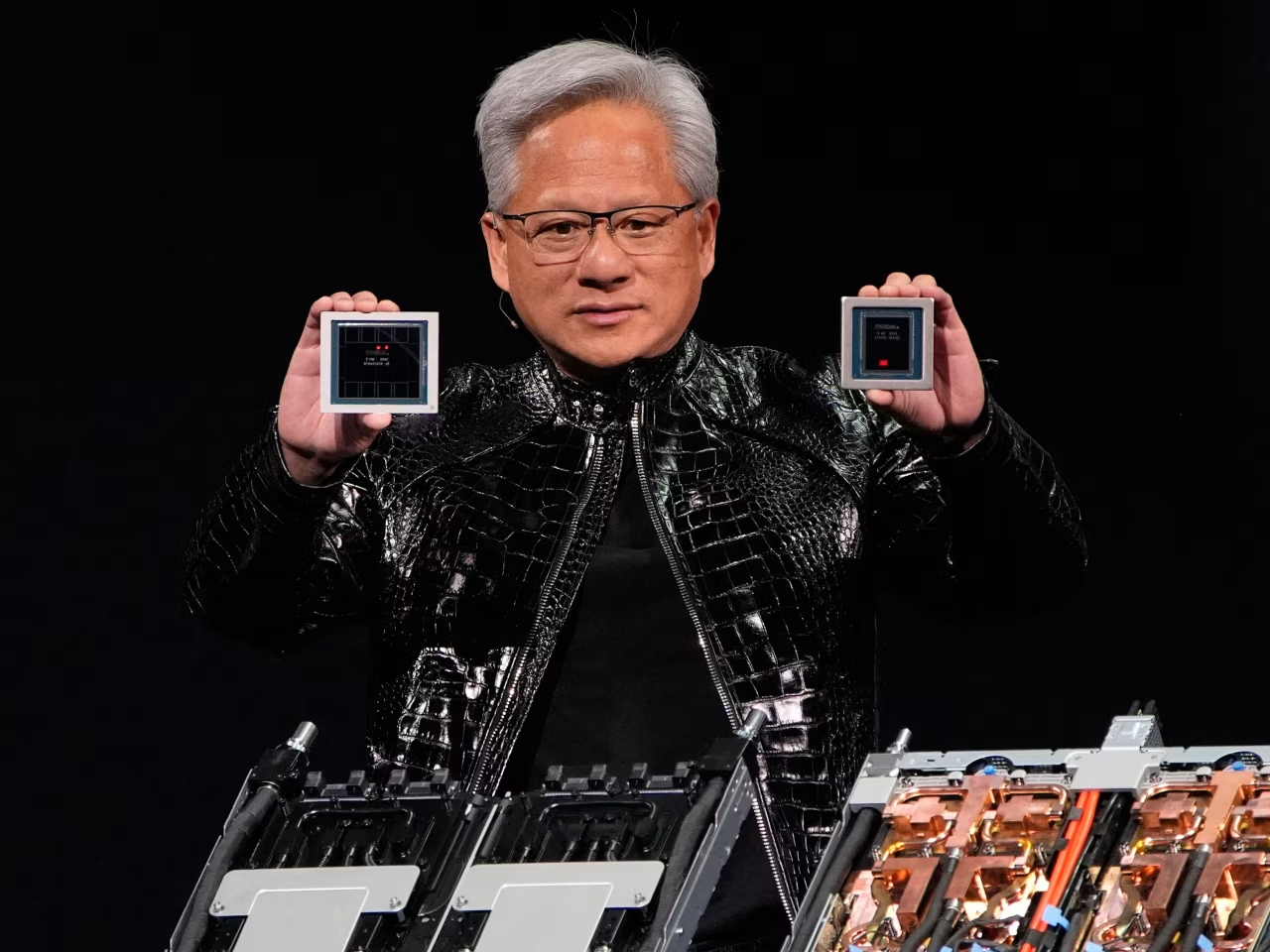
NVIDIA’s next major AI platform, Vera Rubin, is reportedly moving ahead faster than expected, with first shipments planned for July.
The update pushes back against recent rumors that Vera Rubin was facing design or specification problems. According to the report, NVIDIA has finalized the production version with its ODM partners and will begin trial production in June. The first shipments are expected to go to major North American cloud providers starting in July.
The first customers are said to include Microsoft, Google, Amazon, Meta, and Oracle. These companies are among the largest buyers of AI infrastructure, so early Vera Rubin shipments will likely be focused on the biggest data center deployments first.
Mass rollout is expected in the second half of 2026, with larger shipments beginning as early as the third quarter. TSMC has reportedly already started mass production of Vera Rubin chips on its 3nm process, while manufacturing partners such as Foxconn, Quanta, and Wistron are preparing server and rack production.
Here is the current rollout plan:
| Stage | Expected timing |
|---|---|
| Trial production | June 2026 |
| First shipments | July 2026 |
| Early customers | Microsoft, Google, Amazon, Meta, and Oracle |
| Mass rollout | Second half of 2026 |
| Larger shipments | As early as Q3 2026 |
| Chip production | TSMC 3nm |
Vera Rubin is expected to become NVIDIA’s next flagship AI platform after Blackwell. It combines new Rubin GPUs, Vera CPUs, advanced networking, memory, and a large software stack built for next generation AI training and inference.
The platform is also expected to drive strong demand for new memory technologies. Rubin GPUs will use HBM4, while the Vera CPUs are expected to use SOCAMM2 LPDDR5X memory in capacities up to 256GB.

The scale of the platform is huge. Each Vera Rubin AI server rack is estimated to cost around $180 million, showing how expensive the next phase of AI infrastructure is becoming. NVIDIA’s total market opportunity around Vera Rubin is being described as reaching at least $1 trillion.
The report also suggests that earlier concerns around design changes may have been based on outdated information or issues that have already been resolved. NVIDIA has dealt with pre launch supply chain and server design challenges before, including during Blackwell’s rollout, and the company appears to be pushing ahead with Vera Rubin on an aggressive schedule.
Vera Rubin matters because AI demand is still rising quickly. Cloud providers need more compute for larger models, agentic AI, inference workloads, and enterprise services. If NVIDIA can ship Vera Rubin on this timeline, it would strengthen its lead in AI hardware and give major customers another large jump in compute capacity.
The next big moment could come at Computex 2026, where NVIDIA is expected to talk more about its AI roadmap. If the July shipment timeline holds, Vera Rubin will move from roadmap promise to real data center hardware very soon.


Discussion (0)
Be the first to comment.