


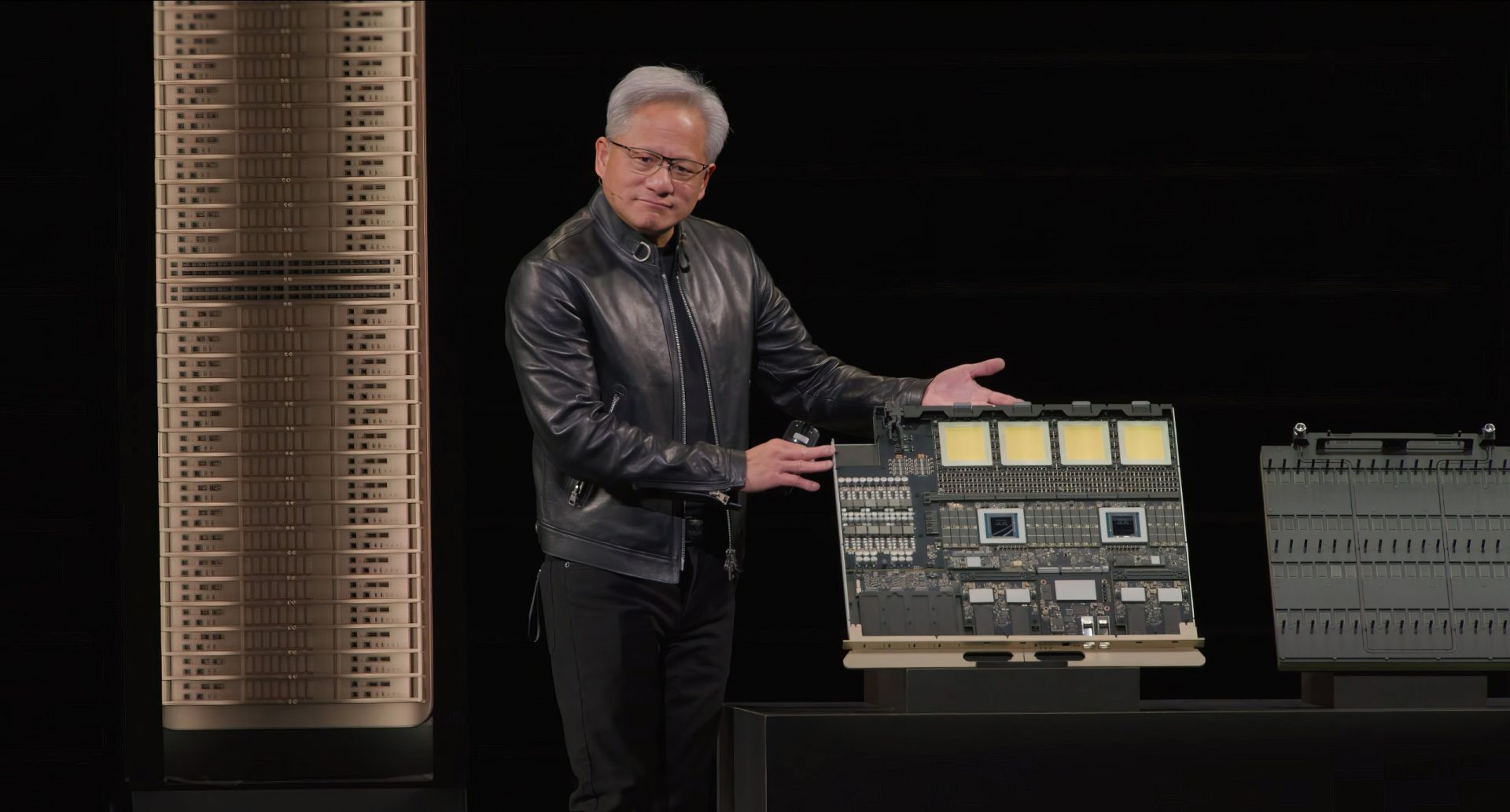
NVIDIA has revealed new details about its upcoming Rubin Ultra AI computing platform, which will connect 576 GPUs using next generation NVLink and co-packaged optics (CPO) technology.
The system, known as Rubin Ultra NVL576, is designed to operate as a single interconnected computing platform capable of handling artificial intelligence models with approximately 10 trillion parameters.
NVIDIA is targeting deployment in 2027, promising substantial improvements in computing performance, memory capacity, and energy efficiency compared with existing Blackwell systems.
Rubin Ultra NVL576 Targets 15 Exaflops of AI Performance
Rubin Ultra will use NVIDIA's new Kyber architecture, replacing the Oberon design used in earlier rack systems.
The platform features advanced liquid cooling and high bandwidth connections between GPUs, allowing them to exchange data efficiently during large AI workloads.
According to NVIDIA's disclosed specifications, Rubin Ultra NVL576 will deliver up to 15 exaflops of FP4 inference performance and 5 exaflops of FP8 training performance.
These figures represent a claimed 14 times improvement over the Blackwell GB300 NVL72 platform.
Memory performance is another major focus.
The configuration is expected to offer approximately 365TB of HBM4E memory and 4.6PB/s of aggregate memory bandwidth.
Its NVLink 7 interconnect will provide up to 1.5PB/s of bandwidth.
Co-Packaged Optics Will Connect Hundreds of GPUs
NVIDIA executive Ian Buck discussed the design during OCP 2026, explaining how next generation optical networking will connect the GPUs into a unified computing system.
Co-packaged optics places optical communication components close to networking chips, reducing electrical signaling requirements across large installations.
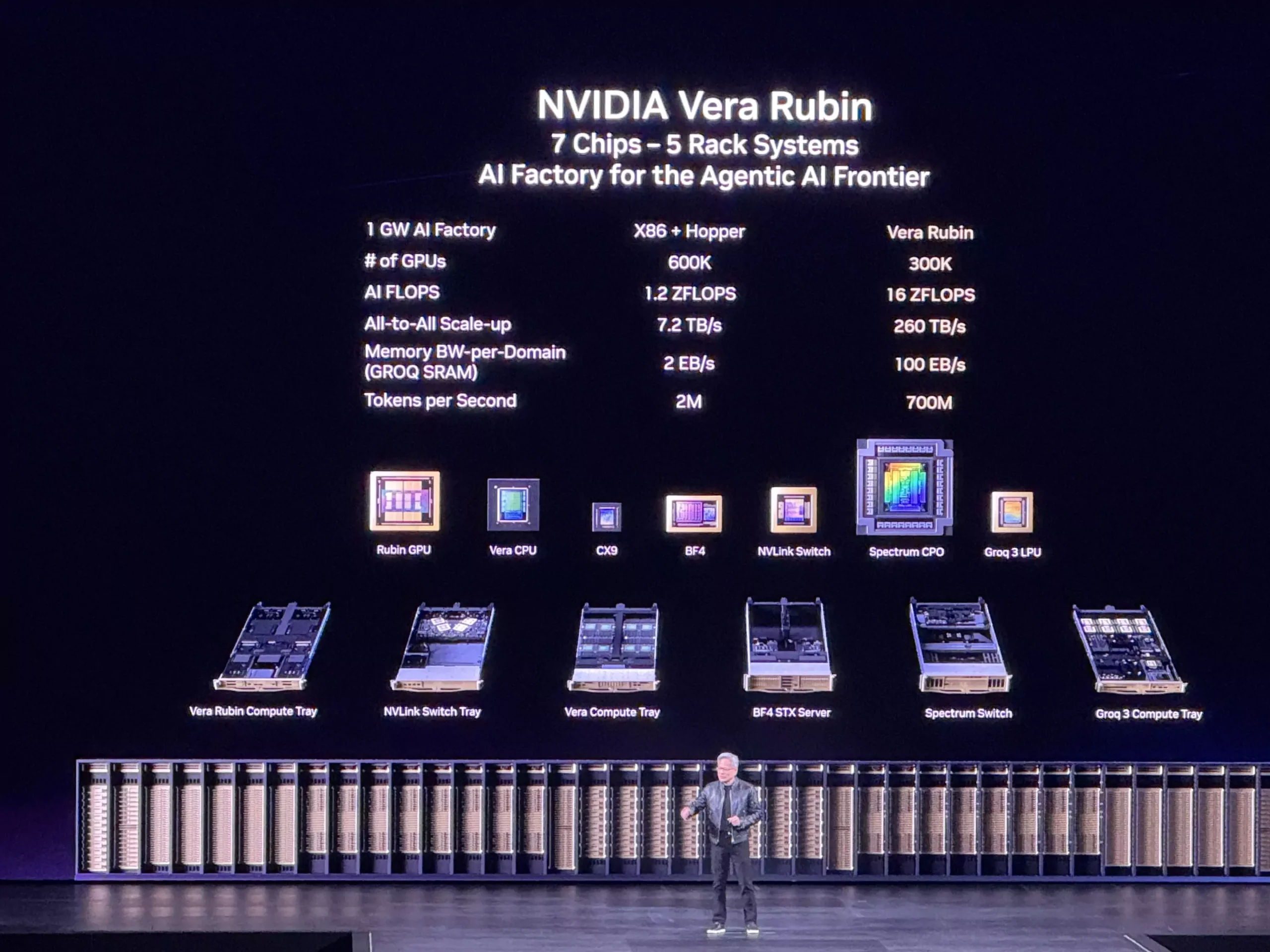
This approach is intended to improve bandwidth efficiency while reducing communication power consumption.
The platform will also follow Open Compute Project standards, supporting modular hardware installation and maintenance.
NVIDIA claims its modular design can reduce certain installation procedures from hours to minutes.
NVIDIA Targets 10 Trillion Parameter AI Models
Rubin Ultra is being developed for extremely large AI workloads requiring substantial processing power and memory.
The company expects its interconnected GPU design to support models containing approximately 10 trillion parameters.
NVIDIA is also promoting its DSX Pod reference architecture, which aims to reduce deployment timelines for AI infrastructure to around 14 days.
However, actual performance and efficiency will depend on workload characteristics and deployment configurations.
With Rubin Ultra, NVIDIA is preparing to scale AI computing beyond individual accelerators, using optical connectivity and shared infrastructure to support increasingly demanding models.


Discussion (0)
Be the first to comment.