



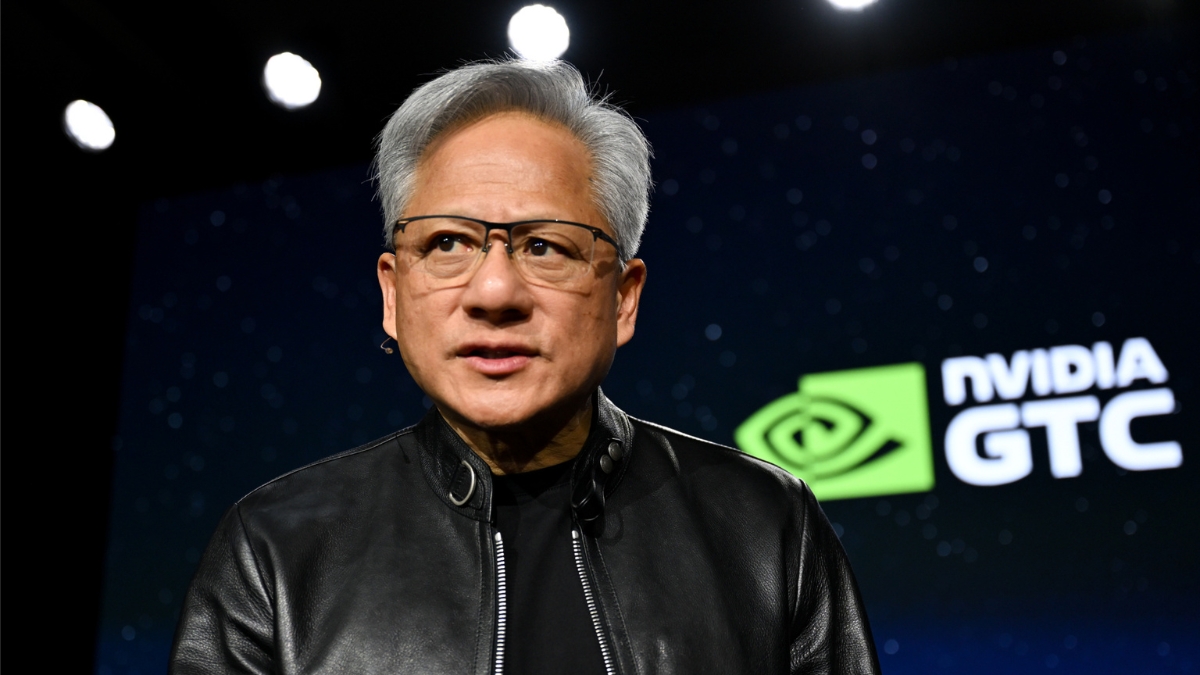
NVIDIA chief executive Jensen Huang has opened an account on X, using his first public post to support wider access to open weight artificial intelligence models.
Huang did not begin by discussing GeForce graphics cards, gaming hardware, or upcoming consumer products. Instead, his first message focused on how the United States can strengthen its position in artificial intelligence by supporting a broader and more accessible AI ecosystem.
The post highlighted a letter backed by 25 technology companies and organizations. It argues that long term AI leadership will require more than one powerful frontier model controlled by a small number of providers.
The group wants businesses, universities, startups, researchers, and public institutions to have greater access to advanced systems that can be downloaded, modified, and operated on their own hardware.
Open Weight Models Give Organizations More Control
Open weight AI models allow developers to obtain the trained model parameters and run them on local systems or private infrastructure.
This can give organizations more control over how their models are deployed, which data they process, and which changes are made for specific tasks. Companies may also avoid relying entirely on a single cloud platform or AI service provider.
The letter argues that this flexibility is important for competition. Smaller businesses and research groups may not have the resources to create a large model from the beginning, but they can adapt an existing open weight system to meet their needs.
Local deployment may also help organizations keep sensitive information within their own environment. This can be useful in industries where customer records, business data, or research material cannot easily be sent to an outside service.
| Open weight benefit | Practical effect |
|---|---|
| Local deployment | Models can run on private infrastructure |
| Greater customization | Developers can adapt systems for specific tasks |
| Provider independence | Organizations are less dependent on one cloud company |
| Data control | Sensitive information can remain within the organization |
| Lower operating costs | Smaller models can handle routine workloads |
| Wider research access | Universities and startups can study advanced systems |
Open weight does not always mean that every part of a model is fully open source. Training data, development methods, and software licenses can still have restrictions. However, access to the model weights provides much more freedom than a closed service available only through an online interface.
Smaller Models Could Reduce AI Costs
The message also argues that open models can lower the cost of operating AI systems.
Many organizations do not need the largest available model for every task. A smaller system trained or adjusted for one area may be enough for document processing, customer support, coding assistance, data analysis, or internal search.
Running a specialized model locally can reduce repeated payments for cloud based services. It may also allow companies to select hardware and software that better match their workload.
NVIDIA benefits from this approach because local and private AI deployments require processors, graphics hardware, networking products, and software tools. A wider market for downloadable AI models could therefore increase demand for the company’s data center and workstation platforms.
The letter includes support from companies and organizations involved in cloud computing, hardware, software, model development, open source projects, and startup investment. The broad list suggests that open weight AI has become an important policy and business issue rather than a narrow technical debate.
Huang Had Previously Avoided the Platform
Huang’s arrival on X is notable because other major semiconductor executives have maintained public accounts for years.
Leaders from Intel and AMD have used the platform to discuss new products, company events, partnerships, and industry developments. Huang has usually communicated through presentations, interviews, corporate announcements, and public events instead.
It is not clear how often he will post personally or whether the account will mainly be managed by NVIDIA’s communications team. His first message appears carefully focused on AI policy rather than informal commentary or direct interaction with customers.
The account could still become another channel for NVIDIA announcements, particularly as the company expands beyond graphics cards into artificial intelligence infrastructure, networking, processors, robotics, and enterprise software.
For gaming customers, Huang’s presence also creates a new public place to raise concerns about driver problems, pricing, product availability, and graphics card decisions. Whether he responds directly remains uncertain.
His first post makes NVIDIA’s current priority clear. The company sees open weight models as an important part of AI growth and wants policymakers to support an environment where more organizations can build, modify, and operate advanced systems.



Discussion (0)
Be the first to comment.