



Nintendo designed the DS and Wii to reach people who did not think of themselves as gamers, according to Shigeru Miyamoto.
The strategy followed the weaker than expected performance of the Nintendo GameCube. Miyamoto said the console was affordable, easy to use, and straightforward for developers, yet it mainly appealed to people who were already interested in games.
Nintendo concluded that dedicated gaming hardware was still viewed as a product for a limited audience. The company wanted to change that perception by creating devices that felt approachable even to people who had never owned a console.
The result was the Nintendo DS, released in 2004, and the Wii, released in 2006. Both systems used unconventional controls designed to make their basic functions understandable without requiring experience with traditional gamepads.
GameCube Sales Changed Nintendo’s Hardware Strategy
Nintendo expected the GameCube to perform more strongly than it did. The console offered capable hardware and a library of well known games, but it finished behind the PlayStation 2 and the original Xbox in global sales.
One factor was that competing consoles offered features beyond gaming. The PlayStation 2 could play DVDs without additional hardware, while the Xbox also supported DVD playback with an accessory.
The GameCube was more focused on games. That gave existing Nintendo fans a clear reason to buy it, but it did less to attract households looking for a broader entertainment device.
Former Nintendo president Satoru Iwata reportedly identified a larger problem. Gaming had not yet become a fully normal activity across the wider public. People were commonly divided into gamers and non gamers, unlike readers or television viewers.
Nintendo decided that continuing to build increasingly complicated controllers would make it difficult to reach people outside its established audience.
| Nintendo system | Main interface idea | Intended benefit |
|---|---|---|
| GameCube | Traditional controller | Familiar experience for existing players |
| Nintendo DS | Touchscreen and stylus | Simple input that required little explanation |
| Wii | Motion sensitive remote | Physical actions could replace complex button combinations |
| Wii Sports | Movement based activities | Made games understandable through familiar sports |
| Brain Training | Short touchscreen exercises | Appealed to people outside traditional gaming audiences |
The DS Put Every Player at the Same Starting Point
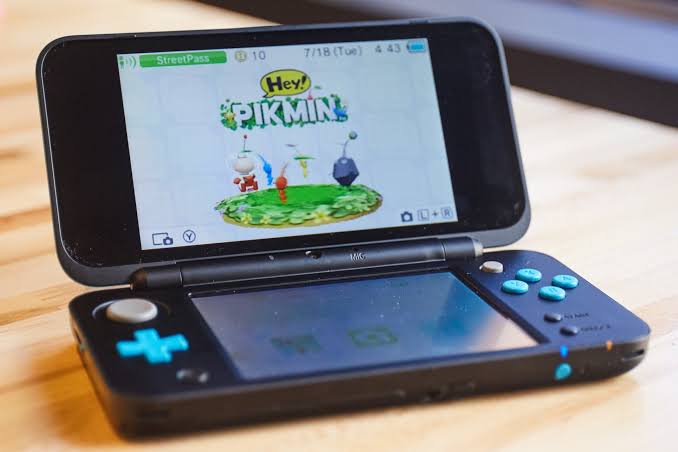
The Nintendo DS used two screens, with the lower display supporting touch controls through a stylus.
Nintendo promoted the idea that everyone could begin with the same level of experience. A person did not need to understand analogue sticks, shoulder buttons, or complex combinations to interact with a touchscreen.
Games could ask players to tap an object, draw a line, write a number, or move something directly. These actions were easier to understand because they resembled familiar activities outside gaming.
Brain Training became one of the strongest examples of the strategy. Its short exercises and simple controls attracted adults who might not have considered buying a traditional console.
Other software expanded the audience through cooking, music, pets, puzzles, language learning, and casual social play. The DS still supported conventional games, but it was not limited to them.
This combination helped Nintendo reach experienced players without making the hardware feel inaccessible to newcomers.
Wii Controls Turned Movement Into Gameplay
The Wii followed a similar philosophy through motion controls.
Instead of using a conventional controller with two analogue sticks and many buttons, the Wii Remote resembled a simple television remote. Players could point it at the screen or move it to perform an action.
Wii Sports demonstrated the concept through tennis, bowling, golf, boxing, and baseball. Players could understand the basic movements because they were based on real activities.
The system became popular at family gatherings, care homes, schools, and community spaces. Many people who had never purchased a console were able to participate without first learning a traditional control scheme.
Wii Fit expanded the idea further by presenting exercise and balance activities through the Balance Board. Nintendo was no longer selling hardware only as a way to play conventional video games. It was presenting the system as a new form of interactive entertainment.
Nintendo Treated the Interface as Part of the Game
Miyamoto said the DS and Wii made Nintendo more conscious of designing the hardware interface as part of the play experience.
The touchscreen, stylus, motion controls, microphones, and other features were not simply technical additions. They shaped which games developers could create and how people understood them.
Nintendo’s goal was to make the first interaction inviting. The company wanted someone to see a stylus or Wii Remote and quickly understand what to do.
This approach differed from competing systems that focused heavily on processing power, graphics, and increasingly advanced controllers. Nintendo did not abandon established players, but it placed accessibility at the centre of its hardware design.
The strategy proved commercially successful. Both the DS and Wii reached audiences far beyond Nintendo’s previous home console market and became two of the company’s most recognisable systems.
Gaming is now far more widespread than it was during the GameCube era, although the word “gamer” remains common. Miyamoto’s comments suggest that Nintendo saw this distinction as a design problem. The DS and Wii were its attempt to make playing games feel as ordinary as reading a book or watching a programme.



Discussion (0)
Be the first to comment.