



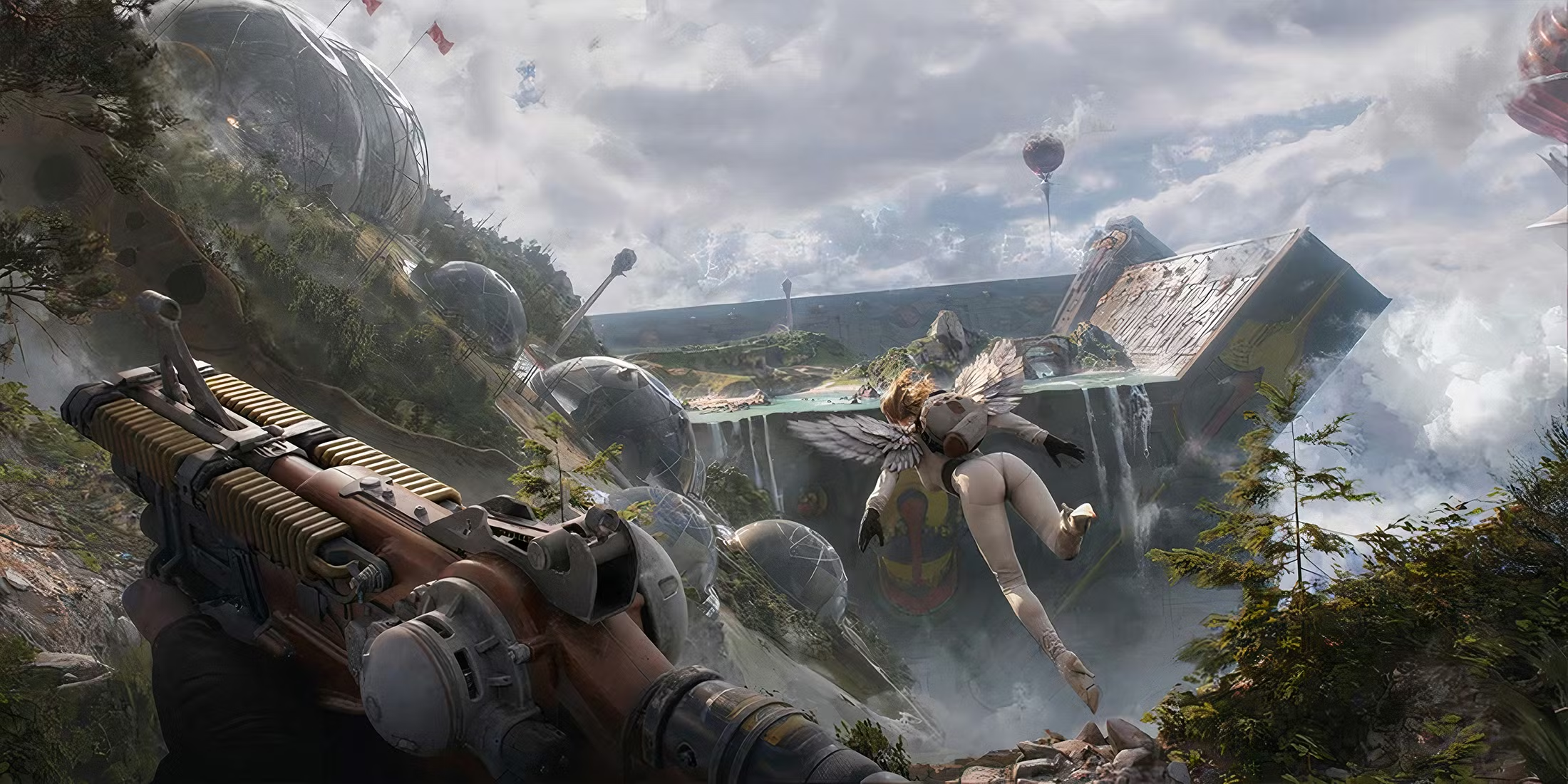
Mundfish has closed the first chapter of Atomic Heart with Blood on Crystal, the fourth and final DLC for its debut shooter. The studio is now moving fully toward two larger projects: Atomic Heart 2 and The Cube, an MMO spin off set in the same universe.
Atomic Heart has been a major success for Mundfish. CEO Robert Bagratuni says the game passed 10 million players worldwide and helped turn the strange retrofuturistic setting into a real franchise. For a new studio launching a new IP, that is a strong result. Still, Bagratuni is also clear that the team would handle parts of development differently today.
Mundfish now starts playtesting earlier because Atomic Heart showed how much production structure matters
Bagratuni says one of the biggest lessons came from production itself. During the early years of Atomic Heart, Mundfish spent a lot of time building its team, improving internal pipelines, and figuring out how different departments should communicate. That process helped the studio mature, but it also showed the team where time could have been saved.
The studio now wants to begin large scale playtesting much earlier in development. That matters because Atomic Heart was a complex game with combat, exploration, story, puzzles, upgrades, and unusual world design all working together. You can test each system alone, but the real problems often appear only when everything is playable together.
Mundfish is using those lessons for Atomic Heart 2 and The Cube. The studio has also created Mundfish Powerhouse, an initiative meant to help younger developers avoid some of the problems the team faced during its own early years.
| What Mundfish learned | How it affects future projects |
|---|---|
| Production pipelines need to be clearer earlier | Atomic Heart 2 and The Cube are being built with a more organized structure |
| Playtesting should begin sooner | The studio can see how systems work together before it is too late |
| Feedback matters after launch | DLCs helped Mundfish test ideas and adjust the experience |
| Growth must stay controlled | The studio wants to remain agile instead of becoming too large |
Blood on Crystal is also more important than a normal add on. Mundfish sees it as the ending of Atomic Heart’s first story arc and a bridge to the next two projects. The DLC closes lingering threads while setting up the wider direction of the franchise. The studio still wants newcomers to be able to enter Atomic Heart 2 and The Cube without needing to study every detail of the first game.
The Cube will arrive before Atomic Heart 2. Bagratuni says Mundfish will share more about it soon, while Atomic Heart 2 remains a few years away. The sequel is being built with a different production approach and is expected to improve areas the first game could not fully realize, especially the open world and RPG systems.
That is a good target. Atomic Heart had a strong identity, but its world sometimes felt less reactive than its visual design suggested. If the sequel can make the world feel more alive and give you deeper RPG choices, it could become a much stronger version of the original idea.
Mundfish has grown from a small team into a few hundred developers across global hubs. Even so, Bagratuni says the company does not want unlimited expansion. The goal is to keep direct communication between teams while letting separate groups work on Atomic Heart 2, The Cube, and other studio efforts.
The studio is also taking a cautious position on AI tools. Mundfish has studied neural networks and sees how they can help with pre production, but it has not added them to daily production pipelines. Bagratuni says the team still believes human creativity should lead the work, while AI may become useful later as a supporting tool.
The same careful approach applies to NVIDIA DLSS 5. Mundfish is watching the technology, but it has not committed to support yet. The studio says it will evaluate major graphics breakthroughs if they can improve the player experience.
Atomic Heart gave Mundfish a franchise, but it also gave the studio a clearer view of its own limits. The next test is whether those lessons produce better games, not simply bigger ones.
Discussion (0)
Be the first to comment.