


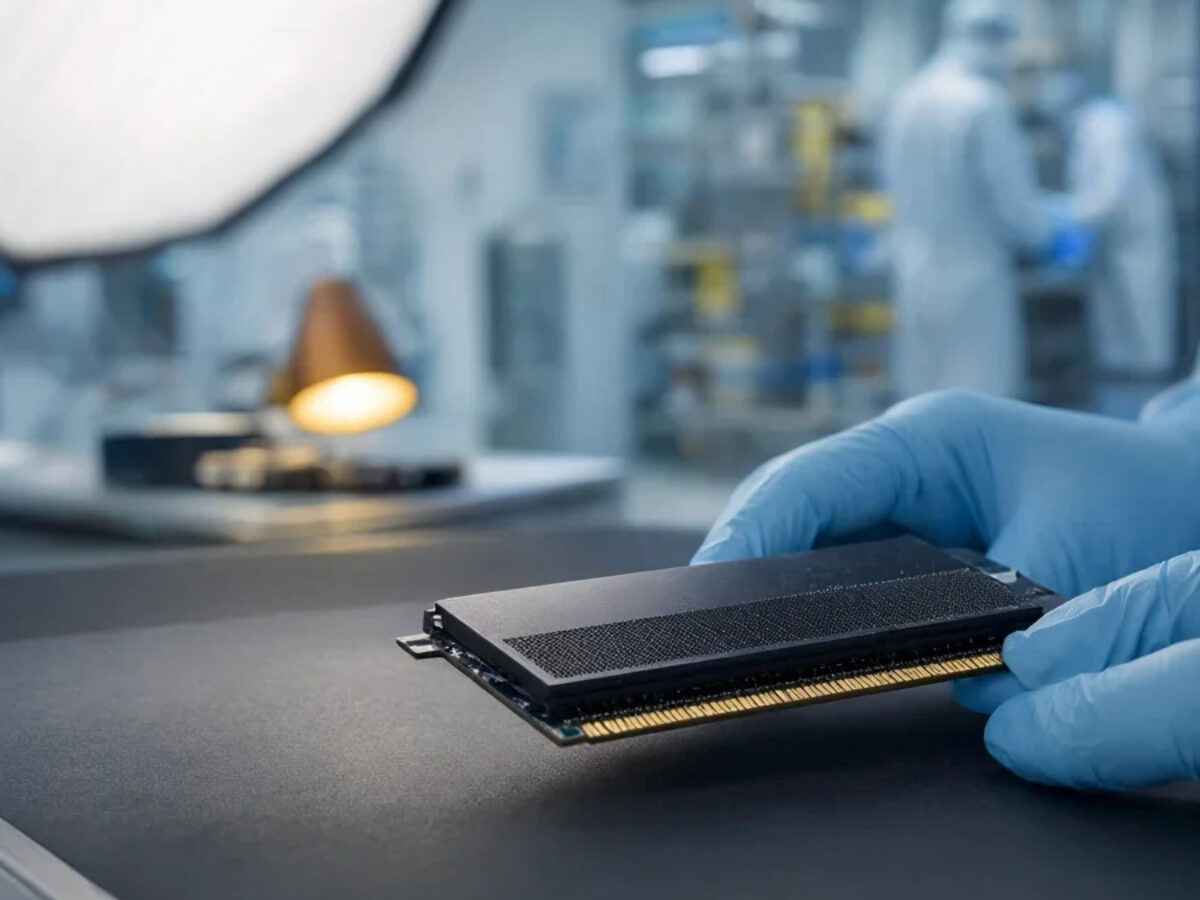
Micron has confirmed that it will not commercialize 4F² DRAM technology despite spending more than two decades researching the memory cell design.
The company believes conventional 6F² DRAM can deliver better manufacturing economics and competitive memory density without the additional complexity associated with 4F² architecture.
The decision separates Micron from Samsung, SK Hynix, and Chinese memory manufacturer CXMT, which are continuing development of 4F² memory.
Micron instead plans to improve existing DRAM manufacturing processes while preparing for a longer term transition to vertically stacked 3D DRAM.
Why Micron Is Abandoning 4F² DRAM
Traditional DRAM cells contain a transistor and capacitor, making memory manufacturing more complicated than producing conventional logic transistors.
The widely used 6F² design describes the physical layout of these components.
Moving to 4F² theoretically reduces the cell footprint by approximately 33%, potentially allowing manufacturers to increase memory density.
However, Micron President and Chief Technology Officer Scott DeBoer argues that shrinking cell geometry does not necessarily deliver proportional density improvements.
According to DeBoer, the spacing required between capacitors remains a major limitation.
He also explained that 4F² manufacturing introduces additional costs and technical challenges that could outweigh its benefits.
Micron reportedly researched the technology for more than 20 years before deciding against commercial production.
Micron Plans Advanced 6F² Manufacturing and 3D DRAM
Rather than adopting 4F², Micron will continue improving established memory cell designs.
Its updated roadmap includes several manufacturing generations.
| Technology | Development status |
|---|---|
| 1δ DRAM | Production yields improving |
| 1ε DRAM | Advanced wafer bonding under development |
| Zeta Angstrom | Planned future planar DRAM |
| Eta Angstrom | Later planar DRAM generation |
| 3D DRAM | Long term development direction |
The company is also exploring advanced lithography and materials to increase manufacturing efficiency.
Its longer term objective involves stacking DRAM memory cells vertically, similar in principle to the approach already used in modern NAND flash storage.
However, DRAM requires more complicated capacitor structures, making vertical stacking technically difficult.

Meanwhile, competitors remain committed to 4F² development, with CXMT reportedly targeting server DDR5 memory products using the architecture before the end of 2026.
Micron's strategy could prove advantageous if 4F² manufacturing remains expensive.
However, if competitors successfully produce denser memory economically, Micron could face additional competitive pressure while developing its alternative technologies.


Discussion (0)
Be the first to comment.