



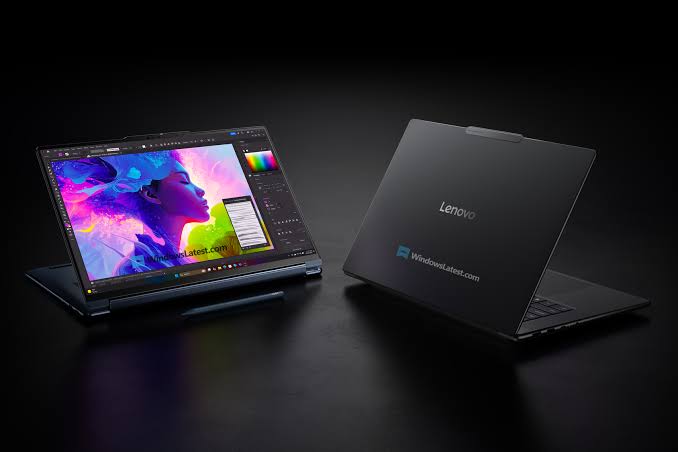
Lenovo appears to be preparing two premium laptops powered by NVIDIA’s upcoming RTX Spark platform, including a convertible Yoga 9n and a larger Yoga Pro 9n designed for creators.
Leaked images suggest the Yoga 9n could become the first 2 in 1 laptop built around RTX Spark. The device combines a 360 degree hinge, a 14 inch OLED display, stylus support, and an ARM based processor developed for demanding graphics and artificial intelligence workloads.
The second model, called the Yoga Pro 9n, uses a traditional clamshell design with a larger 15 inch screen. It appears to focus more heavily on creative work, audio quality, and desktop style productivity.
Lenovo has not officially announced either laptop, so their final specifications, launch dates, and prices remain unconfirmed. Current information points to a release during fall 2026.
RTX Spark combines an ARM processor with Blackwell graphics
RTX Spark, also known as N1X, is expected to combine a 20 core ARM processor developed with MediaTek and an NVIDIA Blackwell graphics unit.
The platform may include as many as 6,144 CUDA cores, giving it far more graphics hardware than a typical integrated laptop processor. NVIDIA is positioning it for creative applications, local AI processing, and demanding visual workloads.
Performance claims suggest the graphics section could approach the level of a desktop GeForce RTX 5070 in some workloads. Real performance will depend on laptop power limits, cooling, memory speed, and software support.
RTX Spark also uses a unified memory design. Instead of separating system memory and dedicated graphics memory, the processor and graphics unit can access the same pool.
The platform is expected to support up to 128 GB of LPDDR5X memory. This could be particularly useful for large AI models and creative applications that need more memory than most mobile graphics processors provide.
| RTX Spark feature | Reported detail |
|---|---|
| Processor architecture | ARM |
| CPU configuration | 20 cores |
| Development partner | MediaTek |
| GPU architecture | NVIDIA Blackwell |
| Maximum CUDA cores | Up to 6,144 |
| Memory type | Unified LPDDR5X |
| Maximum memory | Up to 128 GB |
| Target workloads | AI, graphics, and content creation |
Yoga 9n uses a convertible design with OLED and stylus support
The Yoga 9n appears to share several design ideas with Lenovo’s Yoga 9i Aura Edition.
It uses a dark blue aluminium body and a rotating soundbar hinge. The screen can fold through 360 degrees, allowing the laptop to work in standard laptop, tent, stand, and tablet modes.
The display is described as a 14 inch PureSight Pro OLED panel with a 2.8K resolution. Slim bezels surround the screen, while an infrared webcam sits above it for facial recognition.
A physical privacy shutter is also included, giving owners a simple way to block the camera when it is not needed.
The display supports the Yoga Pen Gen 2, making the laptop suitable for handwritten notes, drawing, document marking, and other pen based tasks.
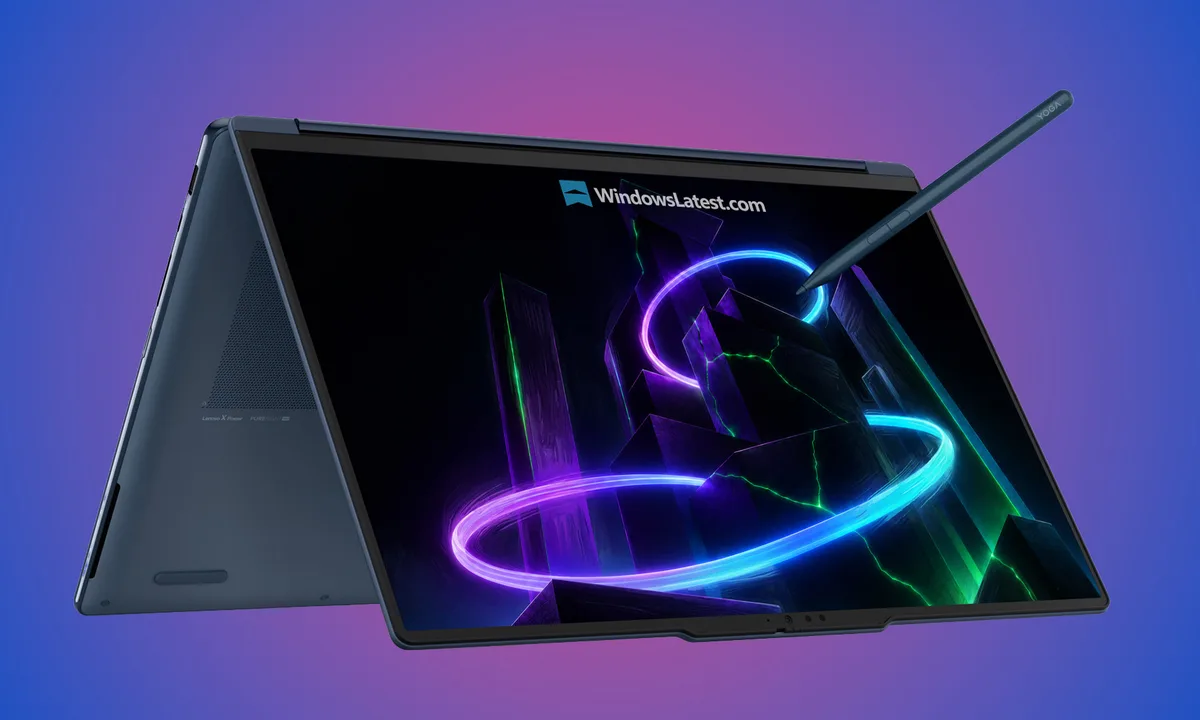
The convertible design could make RTX Spark more flexible than a traditional creator laptop. You could use the graphics performance for editing and AI work in laptop mode, then fold the device into a tablet for drawing or presentations.
Yoga Pro 9n focuses more heavily on creative work
The Yoga Pro 9n appears alongside the convertible model in the leak. It uses a larger 15 inch clamshell design and removes the 360 degree hinge.
Lenovo also appears to have removed the numeric keypad, leaving more space for a wider keyboard layout, a larger touchpad, and stronger speakers.
The audio system reportedly includes six speakers, with four woofers and two tweeters. Dolby Atmos tuning should help with films, music, editing, and general media playback.
The laptop also includes a magnetic holder for a stylus on the display lid. This could provide a more convenient storage position than placing the pen inside the chassis or carrying it separately.
Its large haptic touchpad can reportedly function as a digital drawing surface. This could allow basic pen input without touching the display, although the accuracy and software support remain unclear.
A full size SD card slot is another useful addition for photographers and video creators who regularly transfer files from cameras.
Lenovo also appears to have replaced its older proprietary charging connection with USB C charging. This should make the system easier to use with compatible chargers, docks, and displays.
Software support will be important for the new platform
RTX Spark represents a significant move into ARM powered Windows laptops for NVIDIA. Hardware performance alone will not determine whether the platform succeeds.
Applications and games must run properly on the ARM architecture. Some programs may work through native versions, while others may depend on Windows translation technology.
Creative software developers will also need to optimise their applications for the combination of ARM CPU cores, Blackwell graphics, and unified memory.
The platform could be particularly attractive for local AI workloads because large memory capacities are difficult to provide through conventional laptop graphics cards. However, performance will depend on model support, drivers, and software frameworks.
Battery life will be another important factor. ARM processors can offer strong efficiency, but a Blackwell GPU with thousands of CUDA cores could still consume considerable power during heavy workloads.
Lenovo has not confirmed battery capacity, cooling design, port selection, weight, or memory configurations for either model.
The leaked Yoga 9n and Yoga Pro 9n show two different uses for the same platform. The convertible prioritises flexibility, touch input, and portability, while the Pro model focuses on audio, creative controls, and workstation features.
Both laptops are expected to arrive in fall 2026, although official pricing and complete specifications have not yet been announced.



Discussion (0)
Be the first to comment.