



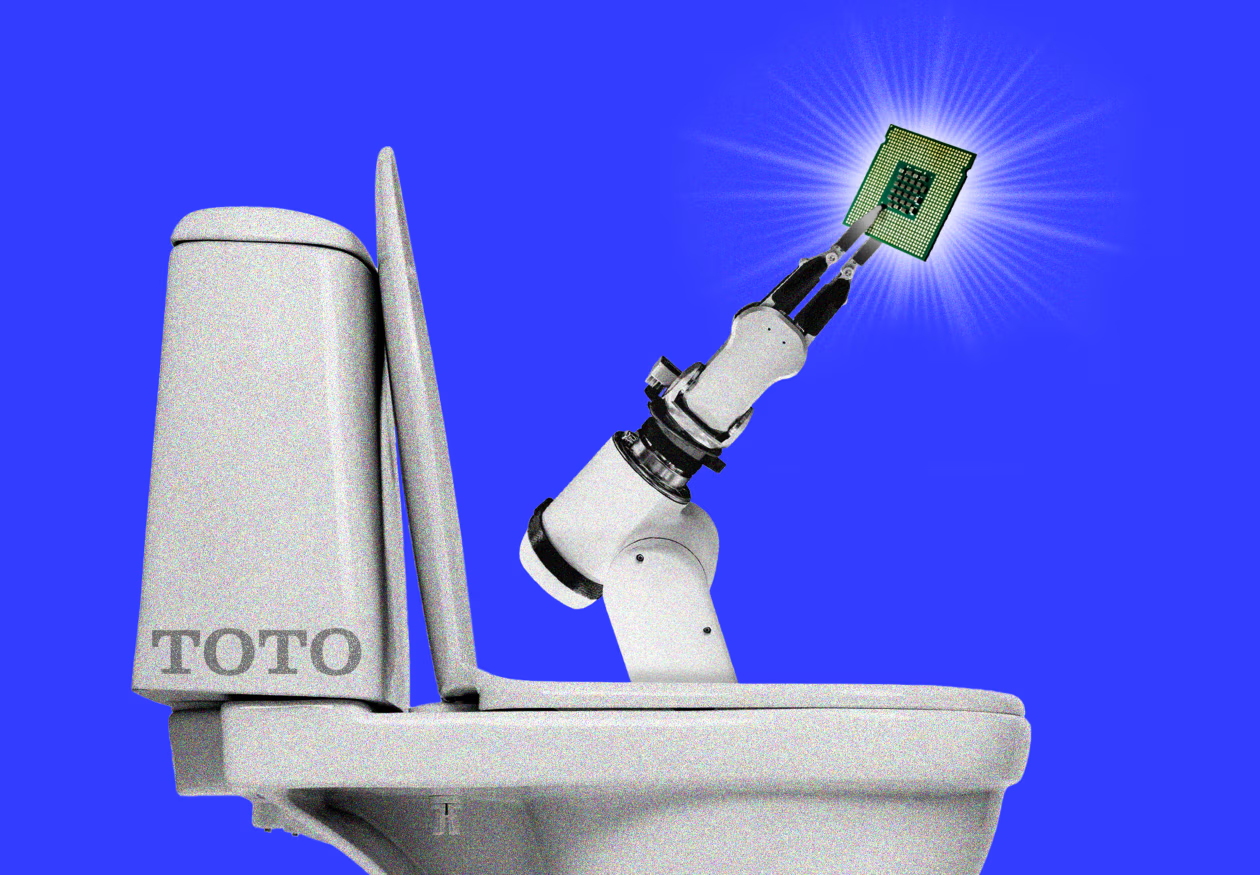
Toto is best known for toilets and bathroom products, but the Japanese company is now getting attention for a very different reason: AI chips.
The company’s shares reportedly jumped 18% after it announced plans to increase production of semiconductor components, including parts used in AI chip manufacturing. The link may sound strange at first, but it comes down to ceramics.
Toto’s ceramics expertise has become useful for chip manufacturing
Toto already works with advanced ceramics for its main business. That knowledge also applies to semiconductor tools, especially electrostatic chucks.
These chucks hold silicon wafers securely during chip production. They are also used while wafers move through equipment and during plasma based processes where cooling and stability matter.
Toto has reportedly made these components for more than 40 years. What has changed is demand. AI chip production is rising quickly, and that is increasing demand for almost every part of the semiconductor supply chain.
| Company | Main business | AI supply chain role |
|---|---|---|
| Toto | Toilets and sanitary products | Ceramic electrostatic chucks for chipmaking |
| Ajinomoto | Food seasoning and MSG | ABF substrates for advanced chip packaging |
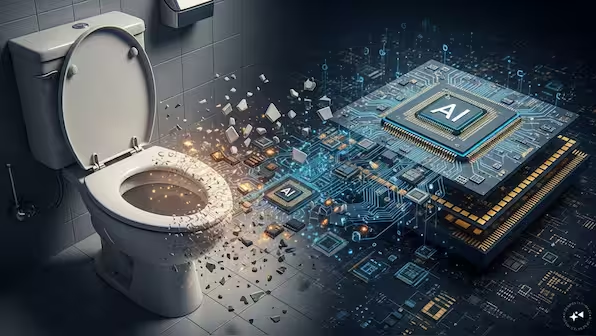
Toto is not the only unusual Japanese company benefiting from AI. Ajinomoto, best known for MSG, became important to the chip industry because of ABF substrates. These substrates are used in advanced packaging, which is critical for modern processors and AI accelerators.
This shows how wide the AI supply chain has become. The industry does not only depend on GPUs, memory, and foundries. It also depends on materials, chemicals, ceramics, packaging substrates, power systems, cooling, and manufacturing tools.
That is why companies outside the obvious tech sector can suddenly become important. If a company already makes a specialized material or component that chipmakers need, AI demand can turn that quiet business into a major growth area.
For Toto, the opportunity is not that it is designing AI chips. It is supplying a small but important part of the equipment needed to make them. As chip production expands, those supporting components become more valuable.
The bigger takeaway is simple. AI spending is spreading through the entire manufacturing chain. Some of the winners will be obvious names like NVIDIA, TSMC, Samsung, and Micron. Others may come from unexpected places, including companies better known for toilets or food seasoning.


Discussion (0)
Be the first to comment.