


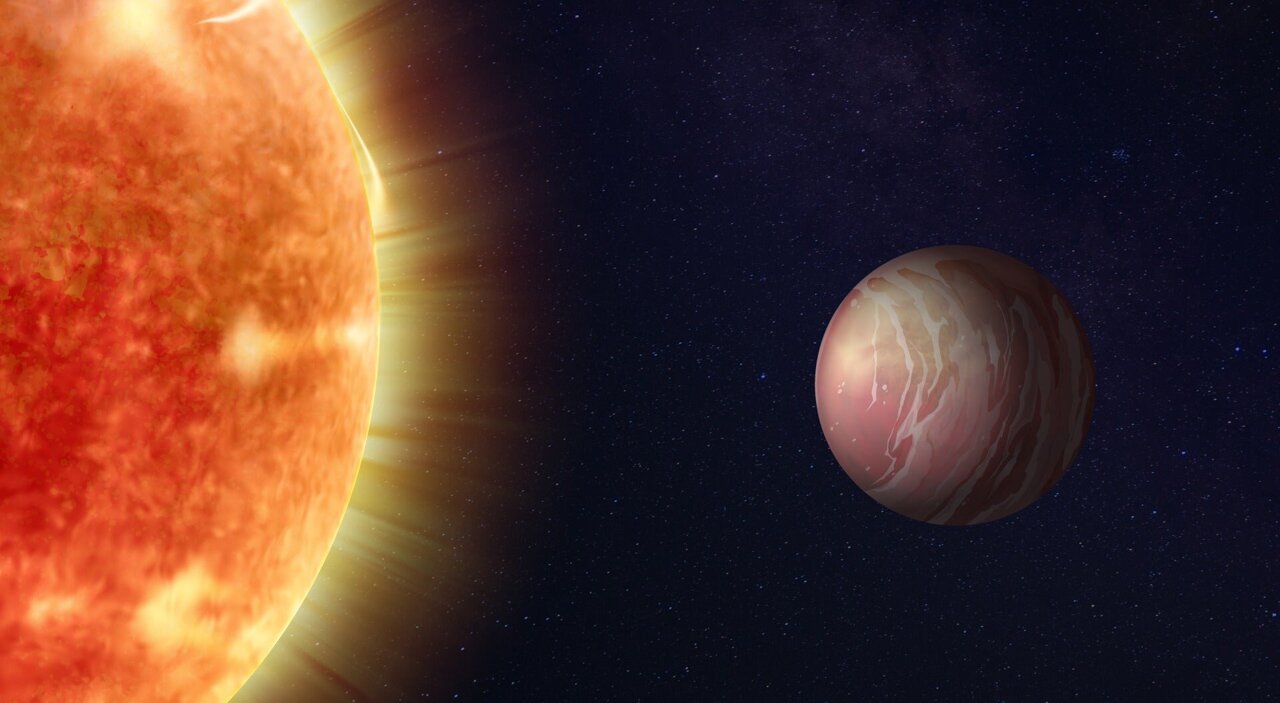
The James Webb Space Telescope has uncovered evidence of an unusual atmosphere surrounding TOI-561 b, an extremely hot exoplanet located approximately 280 light years from Earth.
New observations suggest that the planet may contain clouds made from vaporized minerals, including silicon dioxide and magnesium silicate, despite experiencing temperatures high enough to maintain a molten surface.
The findings challenge expectations about how atmospheres survive on planets orbiting extremely close to their stars.
Scientists previously expected that intense stellar radiation would have removed most of the planet's original atmosphere over billions of years.
However, the latest observations suggest that TOI-561 b may retain a substantial atmospheric layer capable of reflecting radiation and redistributing heat.
James Webb Observations Reveal an Unexpected Atmosphere
TOI-561 b belongs to a category of planets known as ultra-short-period exoplanets.
It completes an orbit around its host star in less than 11 hours, exposing its surface to extreme radiation.
The planet's proximity to its star likely produces temperatures sufficient to keep large portions of its rocky surface molten.
Researchers used Webb's Near-Infrared Spectrograph, known as NIRSpec, to study the planet's thermal characteristics over a 37-hour observation period.
The measurements indicate that the planet reflects more incoming radiation than expected and may transport heat from its illuminated side toward its darker hemisphere.
One possible explanation involves clouds containing microscopic mineral particles suspended within its atmosphere.
These particles could scatter incoming starlight, influencing the planet's observed temperature distribution.
Scientists Investigate How the Planet Retains Its Atmosphere
Researchers are considering several explanations for how TOI-561 b could maintain an atmosphere under such extreme conditions.
One possibility involves gases continuously escaping from the planet's molten rock surface.
This process, known as outgassing, could replenish atmospheric material lost through interactions with stellar radiation.
Alternatively, the planet may have formed with a particularly substantial atmosphere that has survived prolonged erosion.
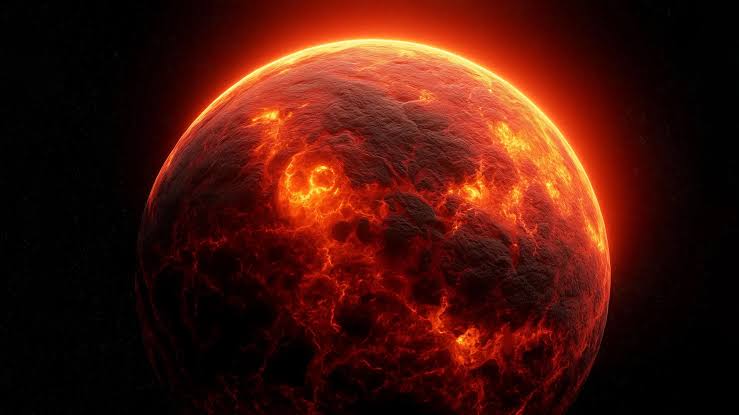
Scientists are also investigating whether carbon dioxide or sulfur dioxide dominates its atmospheric composition.
A carbon dioxide atmosphere could resemble an extreme version of Venus, while sulfur dioxide could indicate intense volcanic activity.
Neither composition has been confirmed.
Further Webb Observations Could Reveal the Planet's Chemistry
The initial observations provide evidence consistent with an atmosphere, but they do not establish its exact chemical composition.
Researchers will need longer observations at additional infrared wavelengths to distinguish between competing explanations.
Understanding TOI-561 b could improve scientific models of atmospheric evolution on rocky exoplanets.
The results suggest that even planets exposed to intense stellar radiation may retain more complex atmospheres than previously expected.



Discussion (0)
Be the first to comment.