



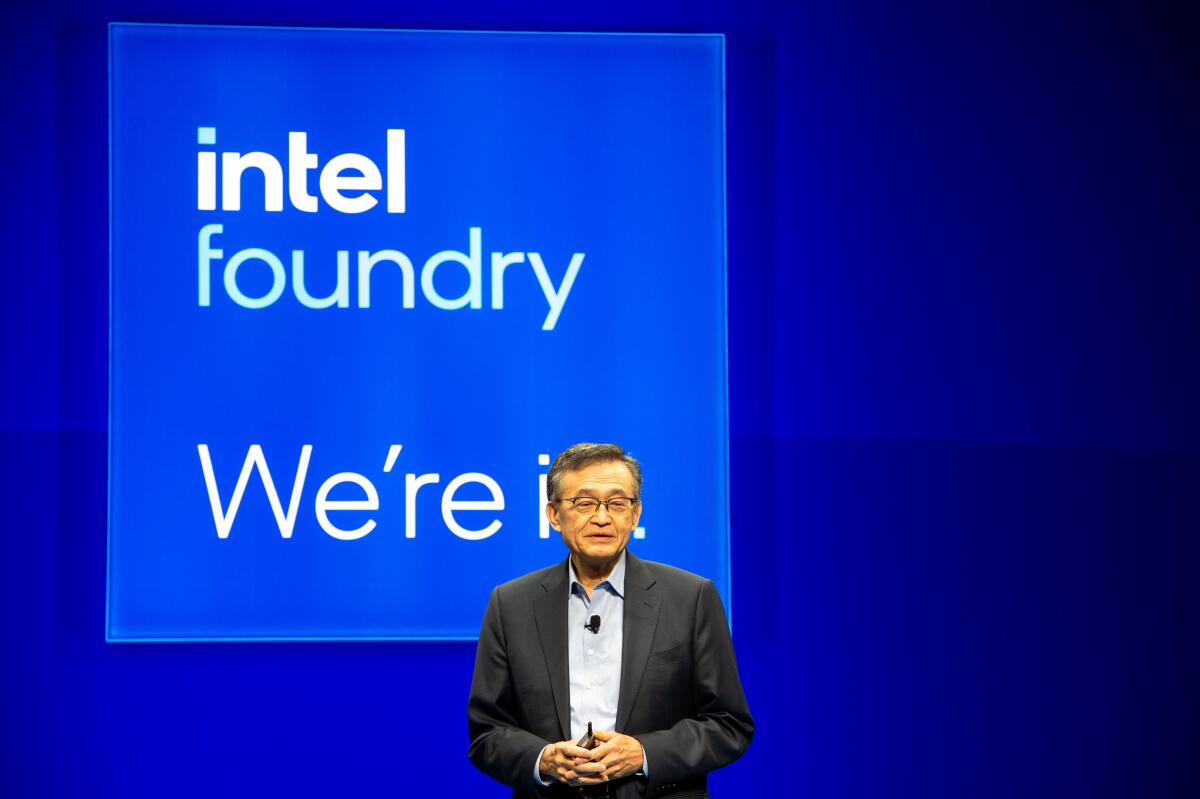
Intel’s recovery has gained momentum under CEO Lip Bu Tan, but the company’s next challenge may be harder than rebuilding confidence. It now has to turn interest in its foundry business into confirmed, lasting customer deals.
The company was in a difficult position just a year ago, with pressure on its stock, doubts around its manufacturing roadmap, and heavy competition in AI. Since then, Intel has benefited from stronger execution, US government backing, and renewed attention around its role in domestic chip manufacturing.
A major part of that story is Intel’s “Made in US” push. Fab 52 became operational last year and is tied to Panther Lake production on Intel’s 18A process. The company is also planning more US fabs and has landed a US defense contract connected to chip supply and advanced packaging.
Government support has helped Intel’s position. The US government is now described as Intel’s third largest shareholder with a 10 percent stake, valued at about $40 billion at the start of the month. That support gives Intel a stronger domestic manufacturing narrative at a time when advanced chip supply is a national priority.
Intel’s future foundry nodes are also drawing attention. The company’s 18A P and 14A technologies are being framed as key steps for its next phase. Tesla has reportedly signed a deal connected to Intel’s 14A process for its TeraFab project, while other names such as Apple, Google, NVIDIA, and MediaTek have been linked to Intel’s foundry and advanced packaging plans.
Still, many of those names remain potential or rumored customers rather than confirmed public wins. Tan has avoided naming customers directly, saying Intel wants partners to announce their plans themselves.
Here is the current picture:
| Area | Why it matters |
|---|---|
| US manufacturing | Gives Intel a stronger role in domestic chip supply |
| Fab 52 | Supports Panther Lake production on 18A |
| 18A P and 14A | Key future nodes for Intel Foundry |
| EMIB packaging | Could attract major chip designers |
| Tesla deal | Shows Intel can convert interest into real business |
| Potential customers | Apple, Google, NVIDIA, and MediaTek have been linked to Intel |
| Main challenge | Turning rumors and interest into confirmed foundry revenue |
Intel also needs internal product success, not only outside foundry customers. Xeon demand has improved as AI infrastructure pushes companies to buy more CPUs for servers. Intel also reportedly sold out its wafer capacity last year because demand exceeded supply.
On the consumer side, Panther Lake and Core Ultra Series 3 are important tests. Intel is ramping volume and preparing more client products, including Wildcat Lake systems. The company also appears to have a broader desktop and laptop CPU roadmap for the next two years.
That makes Intel’s comeback more than one story. It needs strong CPUs, competitive manufacturing, advanced packaging, foundry customers, and continued execution. The company has regained attention, but attention is not the same as a durable turnaround.
Lip Bu Tan’s biggest opportunity is now execution. If Intel can deliver its own products on time and prove that outside customers can trust its fabs, the comeback could become real. If it cannot, the current optimism may fade quickly.

Discussion (0)
Be the first to comment.