



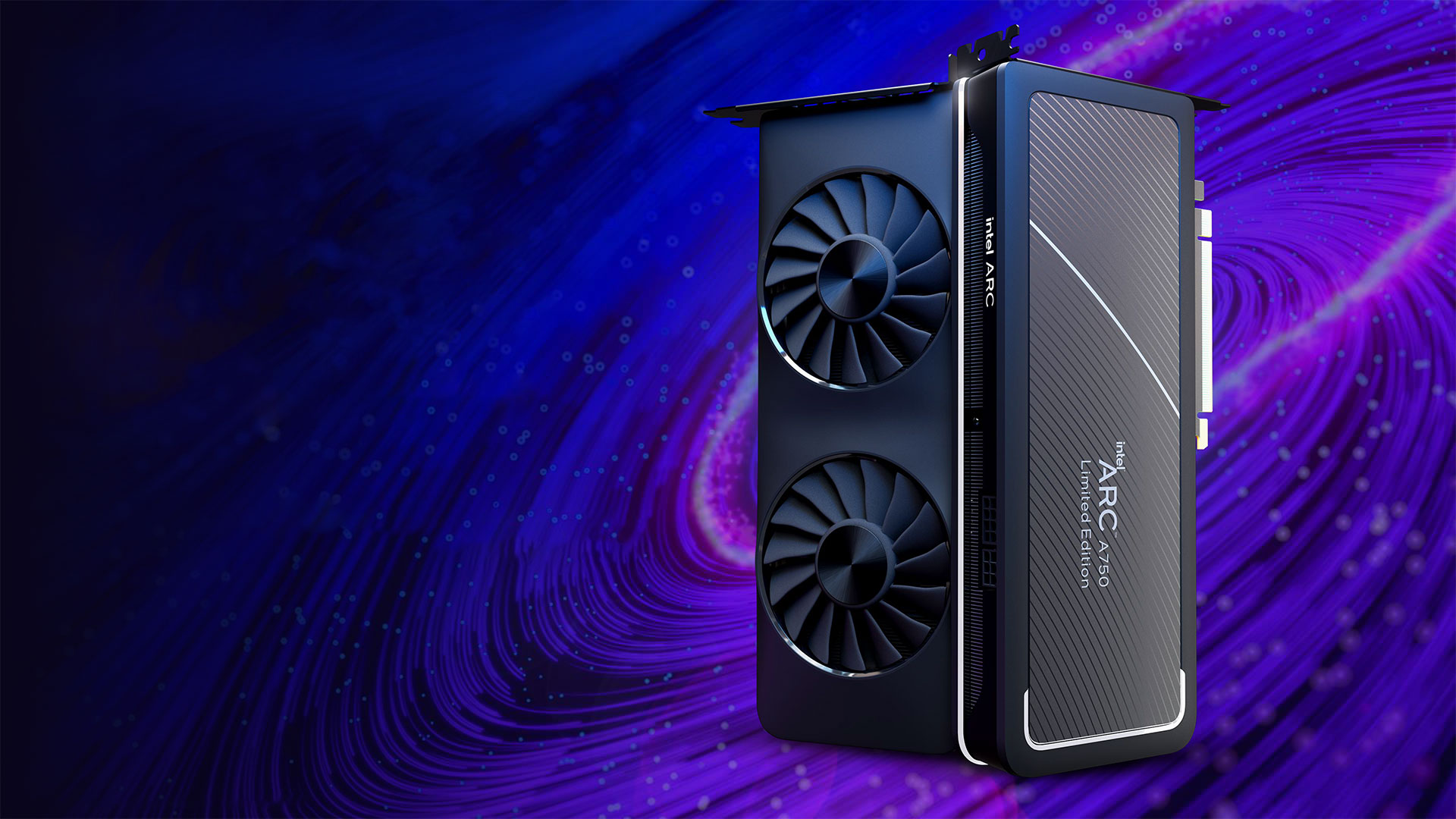
Intel’s cancelled Arctic Sound 2T GPU has resurfaced online, giving hardware watchers a rare look at one of the company’s abandoned Xe HP data center graphics projects from its older roadmap. The chip reportedly features a dual tile design with four HBM2E memory sites, showing how ambitious Intel’s GPU plans were before the company moved away from that architecture.
The sample appeared after a user reportedly ordered a Ponte Vecchio GPU but received an Arctic Sound 2T engineering sample instead. The chip carries an Intel Confidential marking and a QVS8 1.00GHz identifier, suggesting it was never meant to appear in regular channels.
Arctic Sound was once part of Intel’s early Xe push, alongside products aimed at gaming, workstation, and data center markets. The project was eventually cancelled, while Ponte Vecchio suffered major delays before finally being used in the Aurora supercomputer.
Arctic Sound was part of Intel’s original Xe HP ambitions
Intel’s Xe HP architecture was designed to scale across different tile counts. The company had shown plans for 1 tile, 2 tile, and 4 tile versions, targeting workstation and server class workloads.
The newly pictured Arctic Sound 2T sample appears to belong to the middle configuration, using two compute tiles and four HBM2E memory sites. That would have placed it well above a basic single tile design, but below the largest planned four tile variant.
| GPU version | Planned configuration |
|---|---|
| Xe HP 1 tile | 512 EUs |
| Xe HP 2 tile | 1024 EUs |
| Xe HP 4 tile | 2048 EUs |
| Resurfaced sample | Arctic Sound 2T with dual tiles and quad HBM2E sites |
| Status | Cancelled before commercial launch |
The 2 tile version was expected to carry 1024 execution units, with 512 EUs per compute tile. Based on older estimates, it could have targeted more than 20 TFLOPs at around 300W, though those figures were tied to early projections.
The sample shows how much Intel’s GPU strategy changed
The Arctic Sound leak is interesting because Intel no longer follows the same data center GPU path. The company has moved away from HBM based designs in several current products, focusing instead on GDDR and LPDDR based solutions in different segments.
That change reflects how turbulent Intel’s accelerator roadmap has been. Arctic Sound was cancelled. Ponte Vecchio arrived much later than planned. Falcon Shores was also cancelled. Now, attention has shifted toward future projects such as Jaguar Shores and Crescent Island.
This makes the Arctic Sound 2T sample feel like a physical reminder of Intel’s old plan, when the company hoped Xe HP would help it compete more directly in workstation, server, and accelerator markets.
Intel missed a major AI data center opportunity
The timing of these cancelled and delayed products matters. While Intel was restructuring its GPU and accelerator plans, Nvidia and AMD were moving quickly in AI and data center compute.
Nvidia became the dominant force in AI accelerators, while AMD pushed forward with Instinct products. Intel, meanwhile, lost precious time as its roadmap changed repeatedly.
That is why Arctic Sound’s resurfacing is more than a collector story. It highlights how Intel had serious hardware ambitions but could not turn them into a strong market position quickly enough.
Current Intel graphics products are in a better place, but the data center gap remains
Intel’s graphics efforts are not in the same state today as they were during the Arctic Sound era. The company now has much stronger integrated GPUs, more mature Arc graphics products, and workstation or server offerings that can compete on value in certain areas.
Big Battlemage is also receiving Pro focused treatment, while Crescent Island is expected to bring Xe3P architecture with large LPDDR5X memory configurations. Some reports point to up to 480GB of LPDDR5X memory, which could make it useful for specific AI and professional workloads.
Still, the bigger data center AI fight remains difficult. Intel needs Jaguar Shores and future accelerators to arrive on time and offer a clear reason for customers to consider them over Nvidia and AMD alternatives.
Arctic Sound is a reminder of what Intel almost built
The resurfaced Arctic Sound 2T sample is not a product launch, and it will not change Intel’s current position. But it is a fascinating look at an abandoned chapter in the company’s graphics history.
It shows Intel experimenting with tile based GPU scaling, high bandwidth memory, and large compute designs years before today’s AI accelerator race became the center of the hardware industry.
The problem was never that Intel lacked ideas. The problem was turning those ideas into products quickly enough and consistently enough to matter.
Arctic Sound now stands as a ghost from Intel’s 2021 roadmap. It was ambitious, technically interesting, and ultimately left behind. As Intel looks toward Jaguar Shores and Crescent Island, the lesson is clear: promising architecture alone is not enough. In the AI and data center market, timing, execution, and platform confidence matter just as much as the silicon itself.



Discussion (0)
Be the first to comment.