



Intel has received a one-year exemption from the US Federal Communications Commission (FCC), allowing the chipmaker to continue maintaining and modifying foreign-made robotic equipment used in its semiconductor manufacturing facilities.
The waiver, granted on October 22, 2026, follows concerns that newly introduced restrictions on foreign-produced advanced robots could interfere with Intel's automated manufacturing operations.
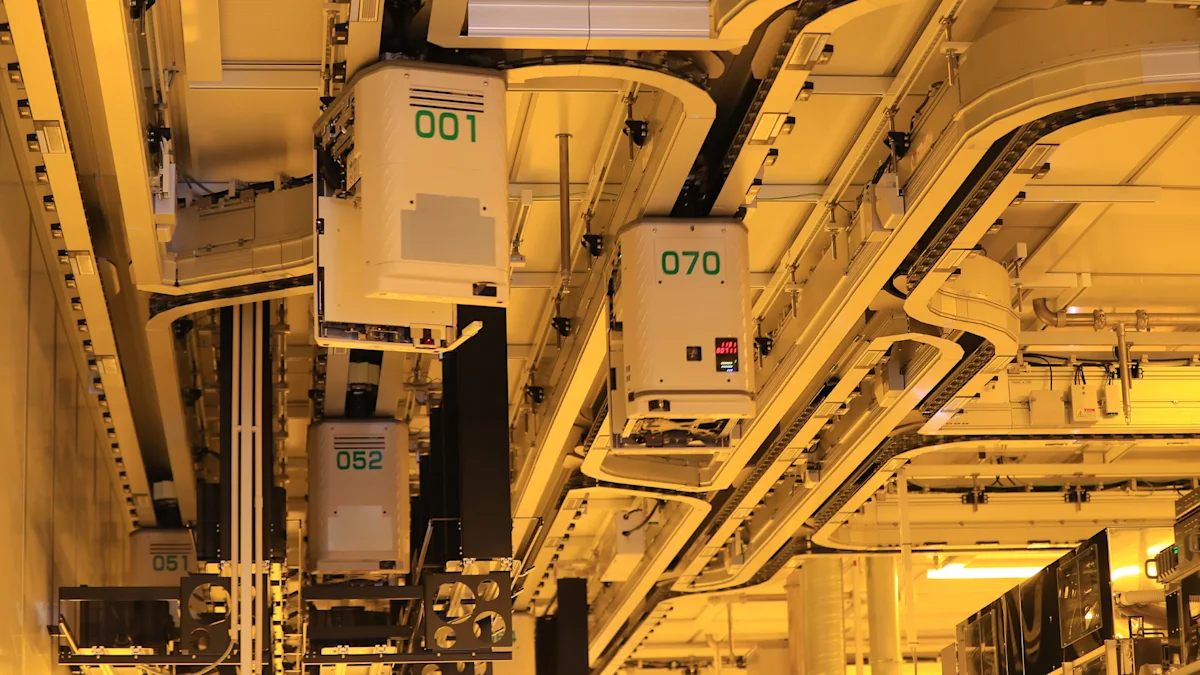
The decision allows Intel to perform specified hardware, software, and firmware modifications on its existing automated guided vehicles (AGVs), which play an important role in semiconductor production.
Intel's Manufacturing Robots Faced Restrictions Under FCC Rules
Intel relies on automated guided vehicles to transport materials, including silicon wafers, through its semiconductor factories.
These machines help maintain efficient manufacturing operations while reducing manual handling in controlled production environments.
According to Intel, similar robotic systems have been operating in its facilities for more than two decades.
However, the FCC introduced restrictions on foreign-produced advanced robotic devices in July 2026, citing national security concerns.
The restrictions created uncertainty about whether Intel could continue modifying its existing equipment.
Intel submitted a waiver request on October 16, explaining that its robotic systems might fall within the restricted equipment category.
The company argued that preventing necessary modifications could disrupt semiconductor manufacturing and affect customers relying on its production services.
FCC Grants Intel One-Year Exemption
The FCC approved Intel's request after considering the potential consequences for domestic semiconductor manufacturing.
The exemption applies to specific automated guided vehicles identified in Intel's application.
| Detail | FCC decision |
|---|---|
| Company | Intel |
| Approval date | October 22, 2026 |
| Waiver duration | One year |
| Equipment | Specified automated guided vehicles |
| Permitted changes | Hardware, software, and firmware modifications |
The exemption does not remove the broader restrictions on foreign-made robotic equipment.
It instead allows Intel to maintain its existing systems under defined conditions.
Intel Says Replacing Existing Robots Could Take Years
Intel explained that suitable American-made alternatives capable of meeting its operational requirements are currently unavailable.
Replacing its existing fleet would require extensive testing, equipment integration, and manufacturing validation.
The company warned that this process could take several years and potentially interrupt production.
The waiver therefore provides temporary regulatory certainty while allowing Intel to maintain its manufacturing infrastructure.
The decision also highlights the semiconductor industry's reliance on specialized international equipment suppliers.
For now, Intel can continue making approved modifications to its existing robotic systems, although the exemption is limited to one year.


Discussion (0)
Be the first to comment.