



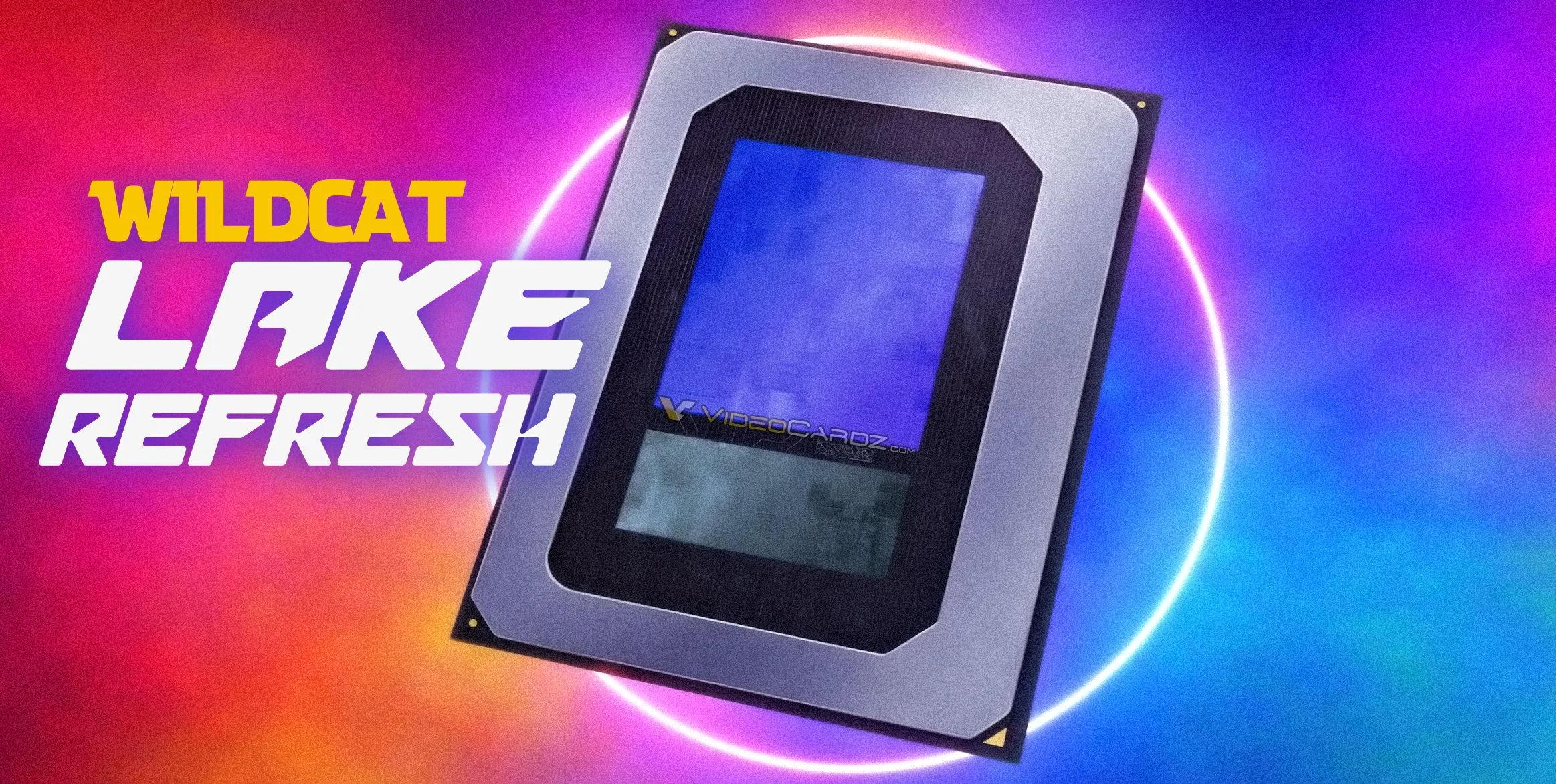
Intel may have canceled its lowest end Nova Lake configuration because a refreshed Wildcat Lake chip could cover the same market more effectively. The reported change points to a cleaner product lineup for entry level laptops, where Intel already has several overlapping designs across its Core and Core Ultra families.
The canceled Nova Lake chip was believed to be a six core design made for lower end mobile systems. It was expected to use two performance cores, no standard efficiency cores, and four low power efficiency cores from the SoC tile. That layout would have made it a modest chip for affordable or thin devices.
The problem is that Intel’s rumored Wildcat Lake Refresh may offer a stronger configuration in the same general category. The refreshed design is said to include four performance cores and four low power efficiency cores. If that is accurate, the low end Nova Lake model would be difficult to justify, since Wildcat Lake Refresh could offer more CPU performance while still serving the same low power segment.
Wildcat Lake Refresh could fill the Core 5 and Core 7 tiers
The current Wildcat Lake family reportedly tops out at a two performance core and four low power efficiency core layout. The rumored refresh would double the number of performance cores, which could make it much more competitive in entry level and mainstream laptops.
One open question is whether Intel already designed the existing Wildcat Lake silicon with four performance cores and simply disabled two of them for yield or segmentation reasons. Another possibility is that Wildcat Lake Refresh uses a revised compute tile with two additional performance cores. Either way, the reported four plus zero plus four layout would make it closer to Lunar Lake in CPU structure, although Lunar Lake still has a much stronger integrated GPU and on package memory.
| Chip or product area | Expected configuration or role |
|---|---|
| Canceled low end Nova Lake | Two performance cores, no standard efficiency cores, four low power efficiency cores |
| Current Wildcat Lake | Up to two performance cores and four low power efficiency cores |
| Wildcat Lake Refresh | Reportedly four performance cores and four low power efficiency cores |
| Product family | Expected to appear under Core Series 4 |
| Core 7 and Core 5 | Expected to use Wildcat Lake Refresh |
| Core 3 | Expected to continue with original Wildcat Lake silicon |
| Copilot Plus branding | Likely absent due to no high power NPU |
Videocardz reportedly checked the leak with sources inside Intel and was told that Wildcat Lake Refresh will be part of the Core Series 4 family. Based on that information, the refreshed silicon may cover Core 7 and Core 5 products, while the original Wildcat Lake design may remain in the Core 3 tier.
That would make sense from a product planning standpoint. Intel can use the stronger refresh for slightly higher performance affordable laptops, while keeping the original chip for cheaper systems. It also avoids placing a low end Nova Lake model too close to another Intel chip with similar or better capabilities.
Intel’s low end laptop lineup still has a lot of overlap
Intel has long had overlap between small core and big core designs. In the past, buyers could choose between chips with a few larger cores or chips with more smaller cores, depending on price, power, and workload needs. That overlap has grown since Intel moved to hybrid designs that mix performance cores, efficiency cores, and low power efficiency cores.
Because of that, the bottom of the product stack can become crowded quickly. A six core Nova Lake chip with only two performance cores may not stand out if Wildcat Lake Refresh can offer four performance cores in a similar power class. Canceling the Nova Lake option would help Intel avoid unnecessary internal competition.
The naming also matters. Wildcat Lake and Wildcat Lake Refresh are expected to sit under the regular Core brand, not Core Ultra. That suggests these chips likely will not include the kind of high performance NPU required for Copilot Plus PC branding. In other words, Intel may be aiming them at practical, affordable laptops rather than AI focused premium systems.
Early signs suggest Wildcat Lake can already perform well despite its small size and modest specifications. If the refresh adds more performance cores while keeping power and cost under control, it could become a stronger choice for budget and lower mainstream notebooks.
For now, this remains based on leaks rather than a full Intel announcement. Still, the reported move is logical. If Wildcat Lake Refresh can handle the entry level role with a better core layout, Intel may not need a low end Nova Lake chip at all. The company can save Nova Lake for more capable designs while letting Wildcat Lake Refresh carry the affordable laptop segment.



Discussion (0)
Be the first to comment.