



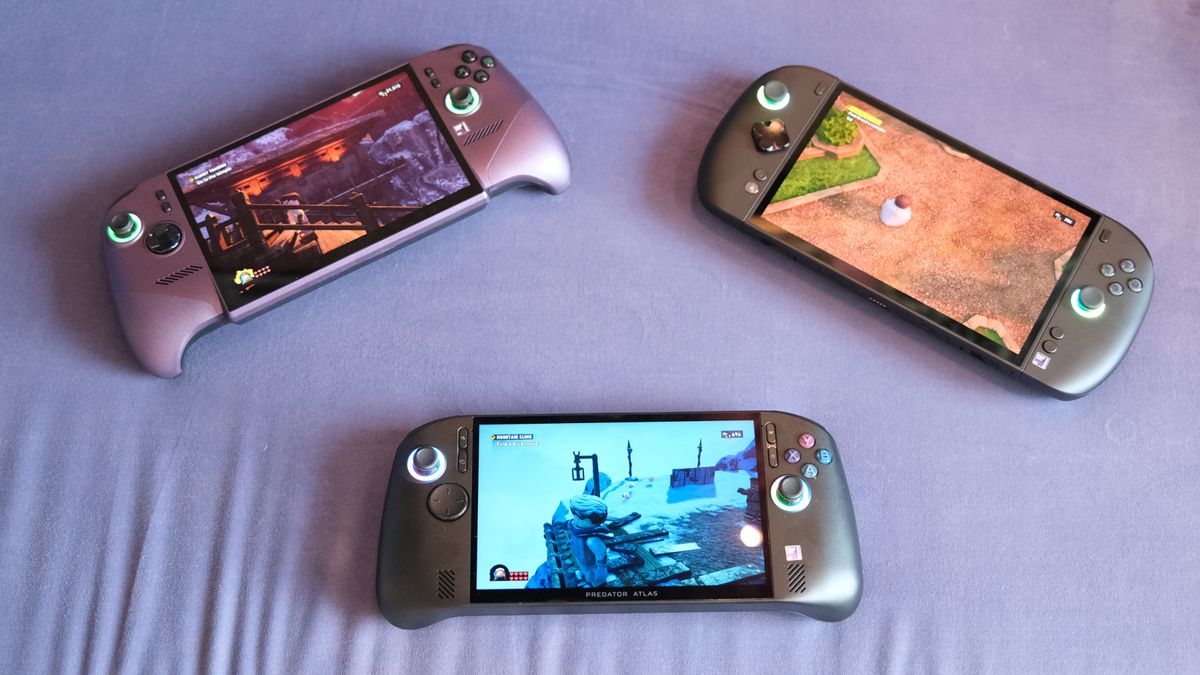
Intel’s new Arc G3 handheld chips are shaping up to be a serious step forward for Windows gaming handhelds, with early hands-on testing showing strong frame rates, better power behavior, and a more graphics focused design than Intel’s earlier mobile chips. The Acer Predator Atlas 8 and MSI Claw 8 EX AI+ were both shown at Computex with the new Arc G3 hardware, giving a clearer look at how Intel plans to challenge AMD in the handheld gaming PC market.
The most important change is how Intel is positioning these chips. Instead of treating Arc G3 as a standard mobile CPU with integrated graphics, Intel appears to have built it more like a gaming focused graphics platform with CPU cores attached. That matters for handhelds because these devices depend heavily on GPU efficiency, stable power delivery, and smart performance balancing.
Intel’s goal is clear. AMD has dominated Windows handheld gaming PCs for years, while Valve’s Steam Deck made portable PC gaming more mainstream. Intel now wants Arc G3 to become a real alternative for devices that need strong 1080p performance without draining the battery too quickly.
Acer and MSI show two different takes on Arc G3 handheld design
The MSI Claw 8 EX AI+ and Acer Predator Atlas 8 both use 8 inch displays with a 1920 x 1200 resolution, 120Hz variable refresh rate, and strong brightness. Both handhelds were tested with demanding games, including LEGO Batman: Legacy of the Dark Knight and Hogwarts Legacy.
The MSI model stands out with a larger design, a Void Purple finish, crisp buttons, and responsive triggers. It has an oversized feel because of the way the screen extends slightly downward, but early hands-on impressions suggest it still feels comfortable and not overly heavy.
The Acer Predator Atlas 8 is more compact and avoids that lower screen overhang. Its buttons and shoulder controls may feel softer than MSI’s, but its thumbsticks appear tighter and less prone to accidental movement.
| Device | Main strength | Early concern |
|---|---|---|
| MSI Claw 8 EX AI+ | Crisp buttons, strong in-hand feel, Arc G3 Extreme | Very high expected price |
| Acer Predator Atlas 8 | More compact body, tighter thumbsticks | Softer shoulder buttons |
| Both devices | 8 inch 1920 x 1200 display, 120Hz VRR, quiet operation | Real battery life still needs testing |
Both devices reportedly stayed quiet during testing, even while running demanding games. That is encouraging because noise and heat are major concerns for handheld gaming PCs.
Arc G3 Extreme appears much faster than AMD’s Ryzen Z2 Extreme in Intel’s tests
Intel shared performance comparisons against AMD’s Ryzen Z2 Extreme, and the numbers are aggressive. At 35W, Intel claims the Arc G3 Extreme averages 42 percent higher performance at 1080p with 2x upscaling enabled.
The more interesting claim is efficiency. Intel says Arc G3 Extreme at 17W can deliver roughly twice the performance per watt of Ryzen Z2 Extreme at 35W in the tested games. Even at 12W, Intel says Arc G3 Extreme stays ahead by an average of 37 percent.
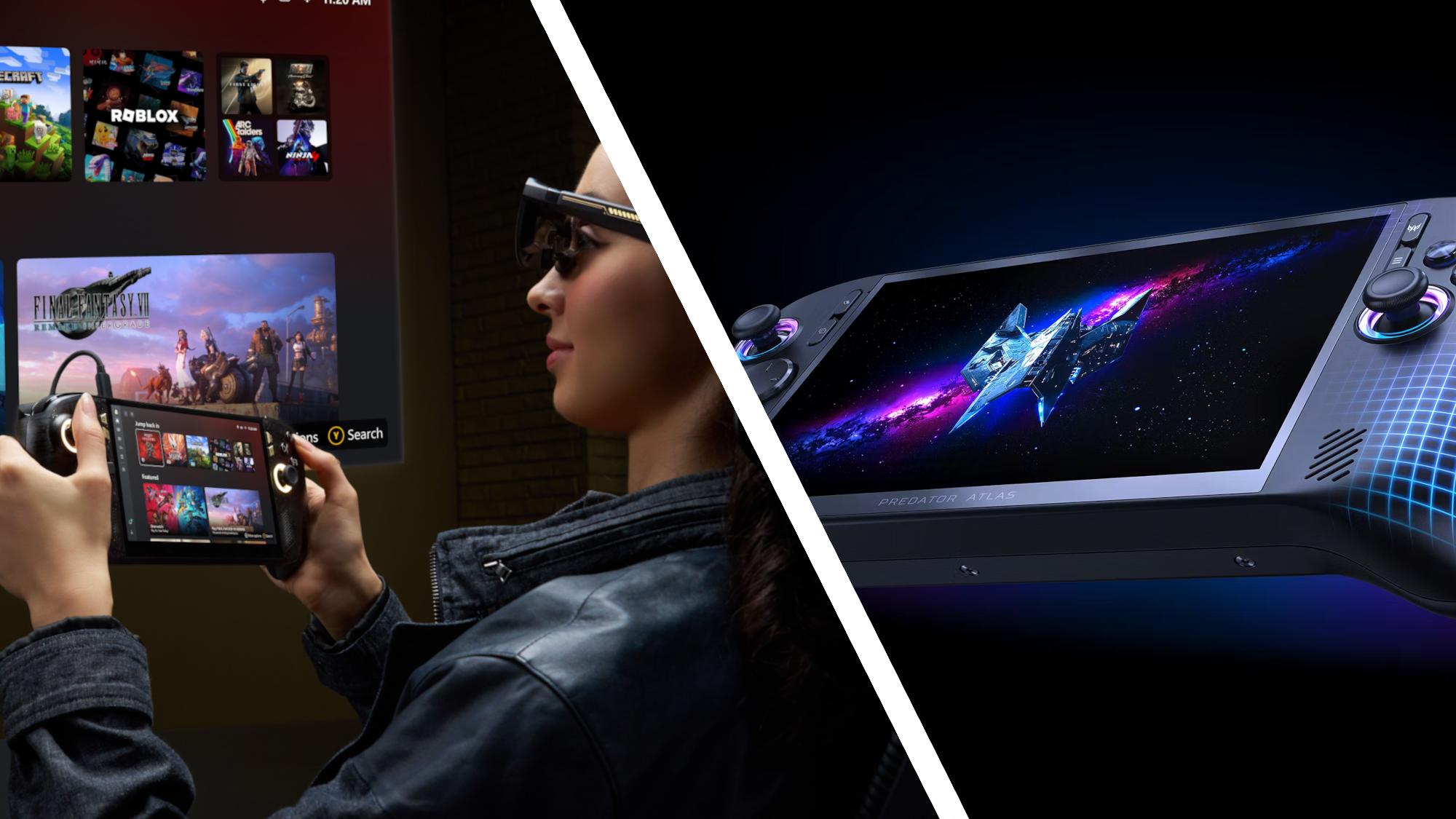
Those are Intel provided figures, so they still need independent testing. But the early hands-on experience appears to support the idea that Arc G3 is not just chasing higher peak frame rates. It is also trying to deliver smoother performance at lower power levels, which is exactly what handheld gaming PCs need.
LEGO Batman: Legacy of the Dark Knight reportedly ran between 100 and 120 FPS on both handhelds. That is notable because the game is more demanding than its style may suggest, and it can struggle on older portable hardware like the Steam Deck.
Intel is focusing on smoother power delivery, not only raw FPS
Arc G3 also brings several handheld focused features that could matter as much as raw speed. Intel is using intelligent bias control to prioritize the GPU so the CPU does not consume too much of the available power budget. The chips can schedule efficiency cores first and park performance cores when power drops below certain levels.
That kind of behavior can help reduce power spikes and create a smoother experience. In handheld gaming, unstable frame pacing can make a game feel worse even if the average frame rate looks good on paper.
Arc G3 also supports major XeSS features, including super resolution, multi frame generation, and ray tracing. Other handheld focused features include configurable TDP, precompiled shaders, and improved efficiency tuning.
This gives Intel a stronger software and hardware story than it had in earlier handheld efforts. The first MSI Claw struggled to match AMD based handhelds, partly because Intel’s platform was not yet tuned well enough for the category. Arc G3 looks like a much more deliberate attempt to fix that.
Pricing could limit the impact of these new handhelds
The biggest problem may not be performance. It may be price. The handheld market is under pressure from rising memory and storage costs, and new Windows gaming handhelds are becoming expensive fast.
Acer has not confirmed pricing for the Predator Atlas 8, which is expected in October 2026. MSI’s Claw 8 EX AI+ is expected to launch in June at around $1,500. That is a difficult price for a portable gaming PC, even with major performance gains.
At that level, buyers may compare the device not only with other handhelds but also with full gaming laptops, consoles, and desktop upgrades. Intel and its partners may have a strong chip, but if the first wave of Arc G3 handhelds lands too high, the audience could remain limited.
Still, the early signs are promising. Intel appears to have built Arc G3 around what handhelds actually need: strong GPU performance, efficient power use, stable delivery, modern upscaling, and quiet operation.
The Acer Predator Atlas 8 and MSI Claw 8 EX AI+ now have to prove those advantages outside a controlled demo. If real world testing matches the Computex showing, Intel could finally become a serious force in handheld gaming PCs. The performance looks ready. The price is the part that still needs work.



Discussion (0)
Be the first to comment.