



Huawei is becoming the biggest winner from NVIDIA’s retreat in China. After US restrictions pushed NVIDIA’s share of China’s advanced AI chip market to zero, Chinese companies have started relying more heavily on domestic hardware. Huawei is now expected to take the largest share of that demand.
The shift is important because China’s AI industry still needs large amounts of compute. Older NVIDIA chips made for the Chinese market are no longer enough for newer workloads, especially as agentic AI and large model training require more memory bandwidth, more compute, and tighter software support.
Huawei’s Ascend chips are filling the gap left by NVIDIA
Huawei is expected to capture around 60% of China’s AI chip market this year, according to the report. Its AI chip revenue could reach about $12 billion in 2026 based on current orders. Much of that demand is tied to the Ascend 950PR, which entered mass production in March.
The Ascend 950PR supports MXFP4, a format used by models such as DeepSeek V4. It also offers up to 2 PFLOPs of FP4 performance and includes 128GB of locally produced HBM memory. Huawei is also preparing the Ascend 950DT for mass production in late 2026, with 144GB of HBM memory.
| Huawei AI chip | Expected timing | Key detail |
|---|---|---|
| Ascend 950PR | Mass production started in March 2026 | Up to 2 PFLOPs FP4 and 128GB HBM |
| Ascend 950DT | Expected in Q4 2026 | 144GB HBM |
| Ascend 960 | Planned for Q4 2027 | Higher performance roadmap step |
| Ascend 970 | Planned for Q4 2028 | Further long term upgrade |
This does not mean Huawei has fully matched NVIDIA across hardware, software, and ecosystem maturity. NVIDIA still has one of the strongest AI software stacks in the world. The problem is access. If Chinese buyers cannot use NVIDIA’s leading chips, they need domestic alternatives that can scale.
That is why Huawei’s position is improving so quickly. It has a clearer roadmap, strong domestic demand, and a market where foreign competition has been sharply reduced. Morgan Stanley reportedly expects China’s AI chip market to reach $67 billion by 2030, with Chinese suppliers covering 86% of that demand.
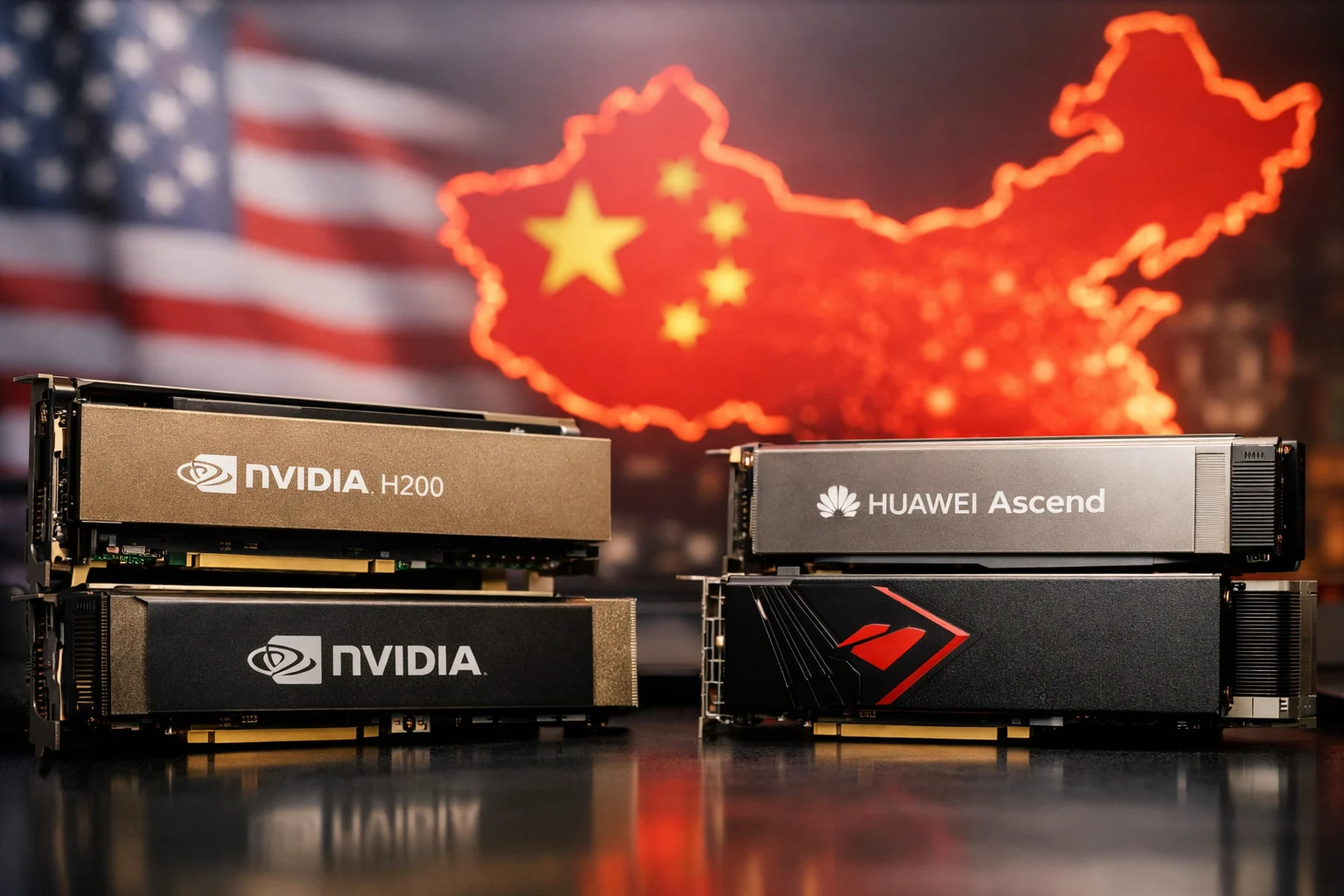
DeepSeek V4 support is another key detail. Both NVIDIA and Huawei offered day one support for the model, which shows how quickly Huawei is trying to align its chips with major Chinese AI software needs.
The main challenge is manufacturing. Huawei relies heavily on local production, and US restrictions on advanced chipmaking equipment still limit what Chinese foundries can do. That could affect yields, efficiency, and how fast Huawei can scale future chips.
Still, the direction is clear. US policy has reduced NVIDIA’s role in China, and Huawei is moving into the opening. If current forecasts hold, China’s AI chip market may become far more domestic by the end of the decade. For Huawei, that turns a difficult geopolitical situation into a major business opportunity.



Discussion (0)
Be the first to comment.