



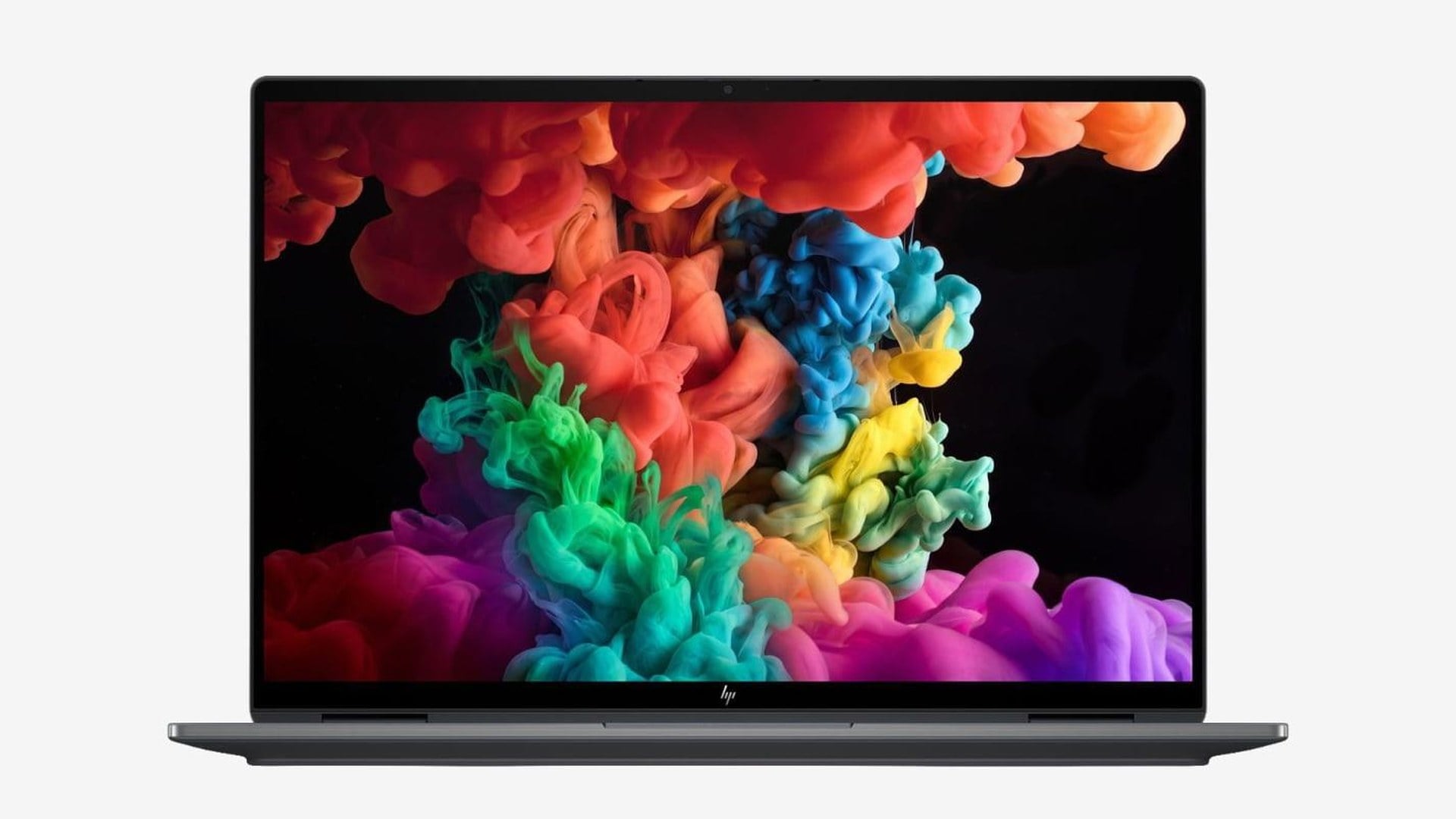
HP has introduced the OmniBook Ultra 16, a premium Windows laptop designed for artificial intelligence development, creative workloads, and gaming. The device features Nvidia's RTX Spark processor, which combines a Blackwell GPU, Grace CPU, and dedicated AI acceleration capabilities.
The laptop supports up to 128GB of unified memory and delivers a claimed maximum of 1 petaflop of FP4 AI performance, making it suitable for running and developing AI models locally.
HP is also targeting developers who need powerful hardware without relying entirely on desktop workstations or cloud computing services.
Alongside its AI capabilities, the OmniBook Ultra 16 includes a 3K OLED touchscreen, advanced cooling hardware, and a battery rated for up to 17 hours of operation.
The laptop has been available through HP and Best Buy since October 16, 2026, at a starting price of $3,199.99.
Nvidia RTX Spark Combines Blackwell Graphics and Grace CPU
The OmniBook Ultra 16 uses Nvidia's RTX Spark system on a chip, which integrates several computing components into one package.
The processor combines an Nvidia Blackwell RTX GPU with an Nvidia Grace CPU, allowing the laptop to handle workloads requiring both general computing and graphics acceleration.
Depending on the configuration, the chip supports up to 6,144 GPU cores and a 20 core CPU.
These specifications are intended to support applications such as AI model development, content creation, and demanding computational tasks.
The integrated architecture also allows the CPU and GPU to work with a shared memory pool.
This approach can reduce the need to transfer large amounts of data between separate memory systems during certain workloads.
However, actual performance depends on the application, model size, power limits, and cooling capabilities.
HP OmniBook Ultra 16 Supports Up to 128GB Unified Memory
One of the laptop's most notable features is its support for up to 128GB of unified memory.
This capacity is particularly relevant for developers working with large AI models.
Traditional consumer laptops often have separate system memory and dedicated graphics memory, which can limit how much data a GPU can access directly.
With unified memory, compatible workloads can use a shared memory pool accessible to the processor's computing components.
This can help developers load larger models locally without depending entirely on remote servers.
HP positions the OmniBook Ultra 16 for AI prototyping, model experimentation, fine tuning, and agentic workflows.
These activities can involve processing large datasets, running inference tasks, and testing different model configurations.
However, the 128GB figure represents the maximum supported configuration rather than a guarantee that every OmniBook Ultra 16 includes that amount of memory.
Nvidia Claims Up to 1 Petaflop of AI Performance
The RTX Spark processor is rated to deliver up to 1 petaflop of FP4 AI performance.
FP4 refers to a low precision numerical format used in certain AI workloads.
Using lower precision calculations can improve processing throughput and reduce memory requirements when supported by the model and software.
However, the advertised performance figure should not be interpreted as a general measurement of CPU speed, gaming performance, or higher precision computing.
The laptop also supports Nvidia CUDA, allowing developers to use compatible GPU accelerated applications and development tools.
This makes the system relevant for people building AI software that depends on Nvidia's computing ecosystem.
HP also emphasizes the ability to run agentic AI workflows locally.
These workflows involve AI systems performing sequences of tasks with varying degrees of automation.
Local execution can reduce dependence on remote computing infrastructure, although practical performance and privacy depend on the software and services used.
HP OmniBook Ultra 16 Specifications
| Feature | Specification |
|---|---|
| Processor | Nvidia RTX Spark |
| CPU | Up to 20 core Nvidia Grace |
| GPU | Up to 6,144 core Nvidia Blackwell RTX |
| Unified memory | Up to 128GB |
| Advertised AI performance | Up to 1 petaflop FP4 |
| Operating system | Windows |
| Display | 16 inch class 3K OLED touchscreen |
| Battery life | Up to 17 hours |
| Fast charging | Up to 50% in 30 minutes |
| Rear thickness | 15.73mm |
| Cooling | Dual ultra-thin fans and larger heat pipes |
| Availability | HP and Best Buy |
The specifications reflect the capabilities described in HP's promotional material. Independent performance results were not provided.
Windows Support Expands AI Development and Gaming Options
Unlike specialized AI workstations that use dedicated software environments, the OmniBook Ultra 16 runs Microsoft Windows.
This provides access to a broad selection of development tools, productivity applications, and creative software.
Developers can use compatible Windows applications alongside Nvidia's CUDA ecosystem to build and test AI workloads.
The laptop also supports ordinary productivity tasks through applications such as Microsoft 365.
HP is additionally positioning the device as suitable for PC gaming.
Its Blackwell graphics architecture supports Nvidia technologies including ray tracing, DLSS, and Reflex.
These features can improve image quality, performance, or responsiveness in compatible games.
However, HP has not provided detailed gaming benchmarks in the promotional material.
As a result, it is unclear how the laptop performs across specific games compared with conventional gaming laptops equipped with dedicated GeForce GPUs.
HP Introduces New Cooling Design for Sustained Performance
The OmniBook Ultra 16 includes a cooling system intended to manage heat during demanding workloads.
HP has introduced what it describes as its first consumer tower hinge and trunk design.
The arrangement is designed to improve airflow and provide additional space for heat dissipation.
The laptop also includes larger heat pipes and two thin cooling fans.
Together, these components are intended to transfer heat away from the processor and maintain performance during extended workloads.
Thermal management is particularly important for systems running intensive AI calculations because prolonged processing can generate substantial heat.
However, the promotional announcement does not include measured temperatures, fan noise levels, or sustained performance benchmarks.
Independent testing would therefore be necessary to determine how effectively the cooling system performs under continuous AI or gaming workloads.
OmniBook Ultra 16 Promises Up to 17 Hours of Battery Life
HP rates the OmniBook Ultra 16 for up to 17 hours of battery life on a full charge.
This figure is intended to highlight the laptop's suitability for mobile productivity and development work.
However, actual battery life depends on workload intensity, screen brightness, power settings, and other operating conditions.
Running demanding AI models or modern games can consume substantially more power than ordinary productivity tasks.
Consequently, developers should not expect the advertised maximum battery life during continuous GPU intensive processing.
HP has also included fast charging support.
According to the company, the laptop can recharge from a low battery level to approximately 50% capacity in 30 minutes under supported charging conditions.
This could be useful for people who regularly work away from a desk and have limited opportunities to recharge.
HP Targets Developers Seeking Powerful Portable AI Hardware
The OmniBook Ultra 16 represents HP's effort to bring more advanced local AI computing capabilities into a conventional laptop design.
Its RTX Spark processor, large unified memory capacity, and CUDA support make it particularly relevant for developers working with compatible AI models.
The 3K OLED touchscreen and Windows operating system also extend its usefulness to creative applications, productivity, and gaming.
However, several important questions remain unanswered, including sustained AI performance, and real world battery life under demanding workloads.
The advertised 1 petaflop AI rating and 17 hour battery estimate also describe different operating conditions and should not be treated as performance figures that can necessarily be achieved simultaneously.
For developers interested in running larger AI workloads locally while retaining the portability of a laptop, the HP OmniBook Ultra 16 offers an unusual combination of hardware capabilities.
Its practical value will ultimately depend on configuration pricing, software compatibility, and how well the RTX Spark platform performs in sustained real world testing.

Discussion (0)
Be the first to comment.