



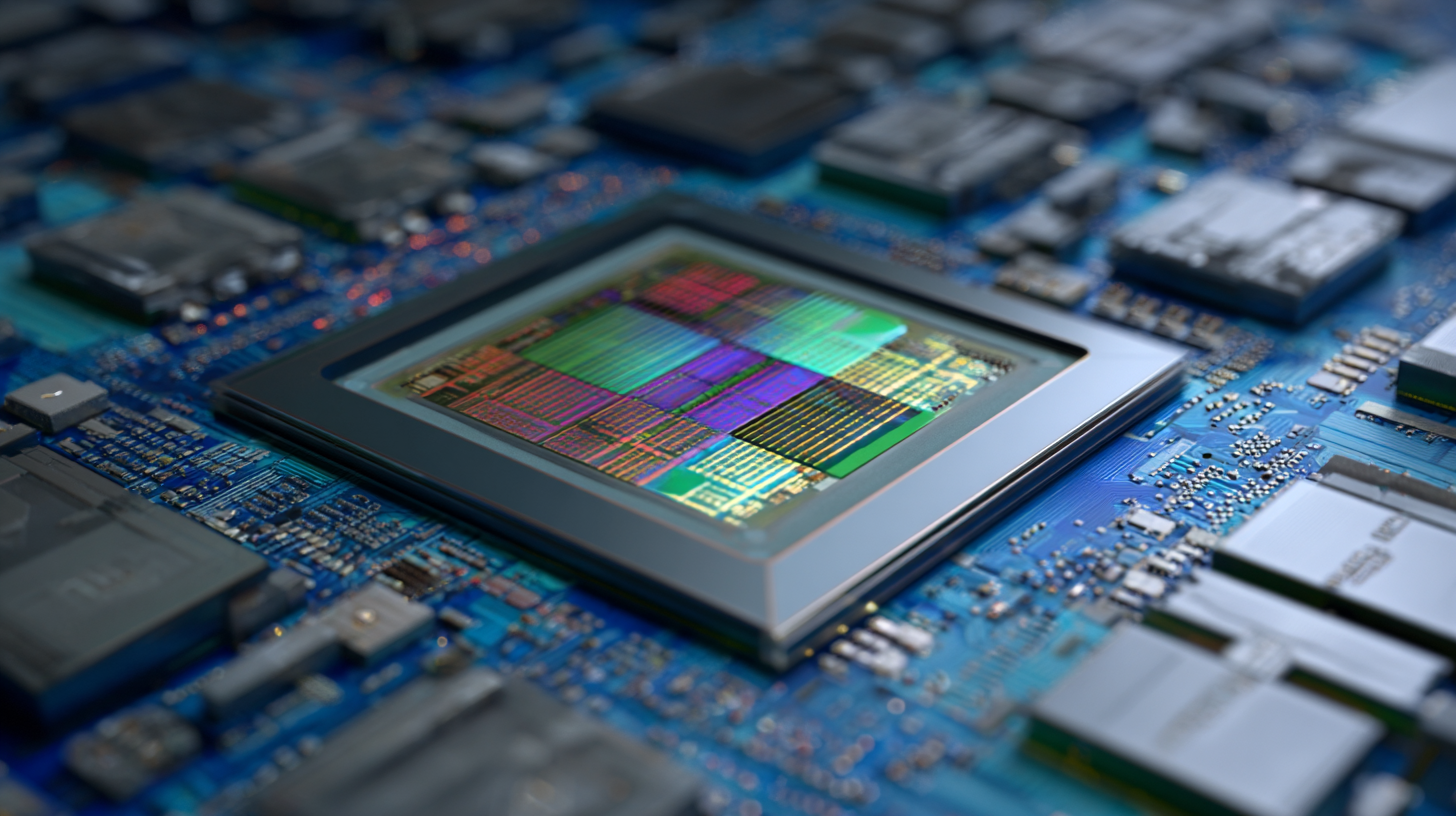
Google has reportedly placed orders for at least three million AI chips from Intel, a move that could give Intel Foundry a major boost as the semiconductor industry struggles to keep up with demand from the AI boom. The chips are expected to arrive in 2028 and are said to be Tensor Processing Units, or TPUs, designed by Google for neural network workloads.
The reported order matters because Google has traditionally relied heavily on leading chip manufacturing partners for its AI hardware. If Intel is now being tapped for a large TPU order, it suggests the company’s foundry business may be starting to gain traction at a time when TSMC’s capacity is under intense pressure.
AI demand has created a difficult supply environment across the semiconductor industry. Large cloud companies, AI startups, and chip designers are all competing for advanced manufacturing capacity. TSMC remains the world’s leading chip manufacturer, but demand has reportedly become so strong that customers are being forced to look for additional production options.
For Intel, that pressure could become an opportunity. The company has spent years trying to build Intel Foundry into a serious rival to TSMC and Samsung. A major Google order would be one of the strongest signs yet that those efforts are beginning to matter.
Google’s TPU demand is rising as AI workloads expand
Google’s TPUs are built for AI workloads rather than general computing. They help power Google’s own AI systems, but the company also offers TPU access to other firms through its cloud services. That makes the reported Intel order part of a much larger AI infrastructure push.
Google is reportedly expected to produce more than six million TPUs between 2027 and 2028. If Intel is responsible for at least three million of them, that would represent a meaningful share of the company’s planned AI chip production during that period.
| Company | Reported role |
|---|---|
| Designing and ordering TPUs for AI workloads | |
| Intel | Reportedly manufacturing at least three million chips |
| TSMC | Still a key manufacturing partner but facing tight capacity |
| Nvidia | Reportedly testing Intel for future chip production |
| Apple and Meta | Expected customers for Google’s TPU based AI services |
The timing is important. AI workloads are no longer limited to a few research systems. They now support search, assistants, image generation, coding tools, enterprise services, and cloud platforms. That has pushed companies like Google to secure huge volumes of specialized hardware years in advance.
Intel Foundry could benefit from TSMC’s capacity crunch
TSMC’s strength has also become a bottleneck for the industry. Many of the biggest technology companies rely on it for advanced chips, including Nvidia and Apple. With AI accelerators taking up so much capacity, supply has become harder to secure.
That creates an opening for Intel. If Intel can prove that its foundry process is reliable, scalable, and competitive, customers may be more willing to split orders across multiple manufacturers. That reduces supply chain risk and gives companies more flexibility when demand spikes.
The report also comes as Nvidia is said to be testing Intel for possible future chip production. Nvidia remains one of TSMC’s most important customers, but if it adds Intel as a manufacturing partner for a future architecture, that would further strengthen Intel Foundry’s position.
None of this means Intel has already caught TSMC. The gap remains large, and manufacturing advanced chips at high volume is extremely difficult. But major customer wins are exactly what Intel needs if it wants to convince the market that its foundry strategy is more than a long term promise.
AI demand is reshaping the chip industry
The broader story is that AI is changing how chip capacity is allocated. Companies are no longer only competing on chip design. They are competing for factory slots, packaging capacity, memory supply, and long term manufacturing agreements.
That has effects beyond AI. PC gamers are already seeing higher prices for GPUs and memory because AI hardware is consuming huge amounts of high value components. If more companies build new fabs and expand production, it could eventually help stabilize supply. But that will take time.
Intel and TSMC are both pursuing major expansion plans. TSMC has announced large investments in new U.S. fabs, while Intel has also been exploring new manufacturing projects, including reported interest in a major factory in India. These investments show how much the industry expects AI demand to continue.
For Intel, the reported Google order could be a turning point if it leads to more outside customers. The company has had a difficult few years, but its foundry business was always meant to give it a second path beyond selling its own CPUs. Winning large AI chip orders would help validate that strategy.
The main question now is execution. Intel must deliver chips on time, at scale, and with the performance and yield customers expect. If it can do that, the AI boom may help Intel Foundry become a more serious force in advanced chip manufacturing.
Google’s reported order does not solve Intel’s challenges overnight. But it does show how the pressure on TSMC, the rise of AI, and the need for more manufacturing capacity could give Intel a rare opening. For a company trying to rebuild its role in the chip industry, that opportunity could be very valuable.



Discussion (0)
Be the first to comment.