




Gears of War: E-Day was rebuilt from scratch in Unreal Engine 5 so The Coalition could create a darker, more believable version of the series’ most important disaster. The studio says the new game uses advanced lighting, destruction, geometry, and ray tracing features to deliver hundreds of shadow casting lights while still targeting 60FPS on Xbox Series X.
The Coalition shared the technical details during a State of Unreal presentation, where Studio Technical Director Kate Rayner explained how the team approached Emergence Day, the moment the Locust Horde first attacked humanity. The goal was not simply to make a sharper Gears game. The studio wanted the city of Kalona to feel like a real place collapsing under pressure.
That approach may also explain the long gap since Gears 5, which launched in 2019. The Coalition did not reuse everything and move forward with a quick sequel. It rebuilt the technology and content pipeline around Unreal Engine 5, with a focus on lighting, destruction, and visual density.
Why the lighting system matters in Gears of War: E-Day
Gears of War has always used darkness, shadows, and heavy atmosphere as part of its identity. E-Day appears to be leaning into that style more strongly than the brighter look of some later entries.
One scene shown during the presentation takes place inside a Pay ’n Save superstore in downtown Kalona. In older Gears games, a space like this would have been limited to only a few shadow casting lights in view. With Unreal Engine 5.7’s MegaLights feature, The Coalition can now use hundreds of light sources, all casting shadows at 60FPS on Xbox Series X.
| Feature | What it adds to Gears of War: E-Day |
|---|---|
| MegaLights | Hundreds of shadow casting lights in real time |
| Lumen | Hardware ray traced global illumination |
| Nanite | Much higher geometric detail in environments |
| Destructible assets | More believable breakage and damage |
| Ray traced collisions | More accurate interaction with shattered objects |
| Dynamic muzzle flash shadows | Shadows from every muzzle flash in combat |
This matters because the world is supposed to feel chaotic and unstable. Flickering TVs, freezer lights, armor lights, ceiling spotlights, emergency lighting, and muzzle flashes can all affect the mood of a scene.
The superstore scene shows the new visual target
The Pay ’n Save scene is a strong example of what The Coalition is trying to do. TV walls use animated area lights that are driven by the videos shown on the screens. Those lights cast unsettling shadows across the environment, helping the space feel alive and unstable.
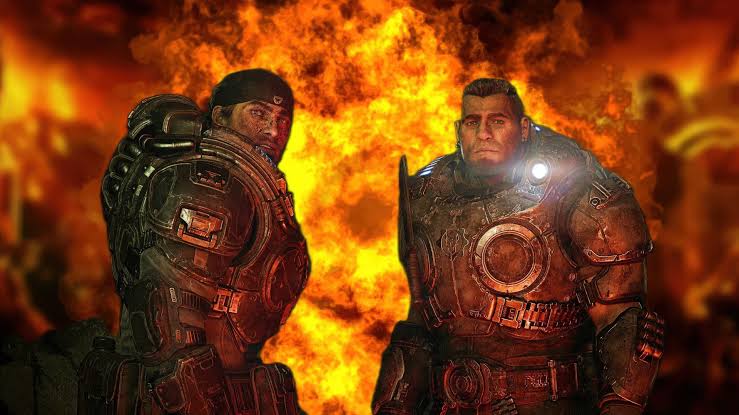
The freezer section uses multiple area lights inside each unit to create a more realistic grocery store look. Small lights on Marcus Fenix’s armor and larger lights in the ceiling also contribute to the scene.
Rayner showed a debug view with hundreds of active lights, making it clear how much more complex the lighting setup is compared with older games. According to the studio, this kind of scene would not have been possible on current hardware without MegaLights.
Destruction is designed to stay visually grounded
The environments in Gears of War: E-Day use Geometry Collection destructible assets. These objects can cast and receive light properly, so broken pieces do not look disconnected from the rest of the world.
During combat, bullets can create shatter points in glass. When the glass breaks, the pieces interact with the environment using hardware ray traced collisions and physically accurate translucent reflections.
That may sound like a small detail, but it is important for a game built around violence, destruction, and close range combat. If a room breaks apart during a fight, the lighting and reflections need to remain believable.
Muzzle flashes now cast dynamic shadows
The Coalition also says E-Day is the first Gears game where every muzzle flash casts dynamic shadows. That could have a big effect during firefights, especially in dark interiors.
A muzzle flash is brief, but in a horror leaning action game, those flashes can make enemies, walls, debris, and characters appear differently from moment to moment. It can make combat feel more intense without relying only on scripted effects.
Across the city of Kalona, players can expect tens of thousands of shadow casting lights. That suggests the lighting system is not limited to one showcase area, but is part of the wider visual design.
Unreal Engine 5 helps The Coalition iterate faster
The studio says hardware ray traced Lumen has made iteration faster compared with older baked lighting methods. In older workflows, lighting changes could require long rebuild times. With real time systems, artists can adjust scenes more freely and see results faster.
Nanite also plays a major role by allowing far more geometric detail in assets. The Coalition says the game can support 100 times the geometric detail in its assets, helping environments look richer without the same old limitations.
The studio also emphasized scalability across Xbox Series S, Xbox Series X, and PC. That will matter because high end visual features often raise concerns about performance and hardware requirements.
Gears of War: E-Day looks like a technical showcase for Xbox
Gears of War: E-Day is scheduled to launch on October 6, 2026, and it is shaping up to be one of Xbox’s biggest technical showcases. The Coalition has long been one of Microsoft’s strongest Unreal Engine studios, and E-Day appears to continue that role.
The bigger question is whether the technology will support the emotional weight of the story. Emergence Day is one of the most important events in the Gears universe, and rebuilding everything from scratch suggests The Coalition wants players to feel the scale of that collapse.
If the final game can keep its 60FPS target while delivering this level of lighting, destruction, and atmosphere, Gears of War: E-Day could become one of the strongest examples yet of what Unreal Engine 5 can do on current generation consoles.



Discussion (0)
Be the first to comment.