



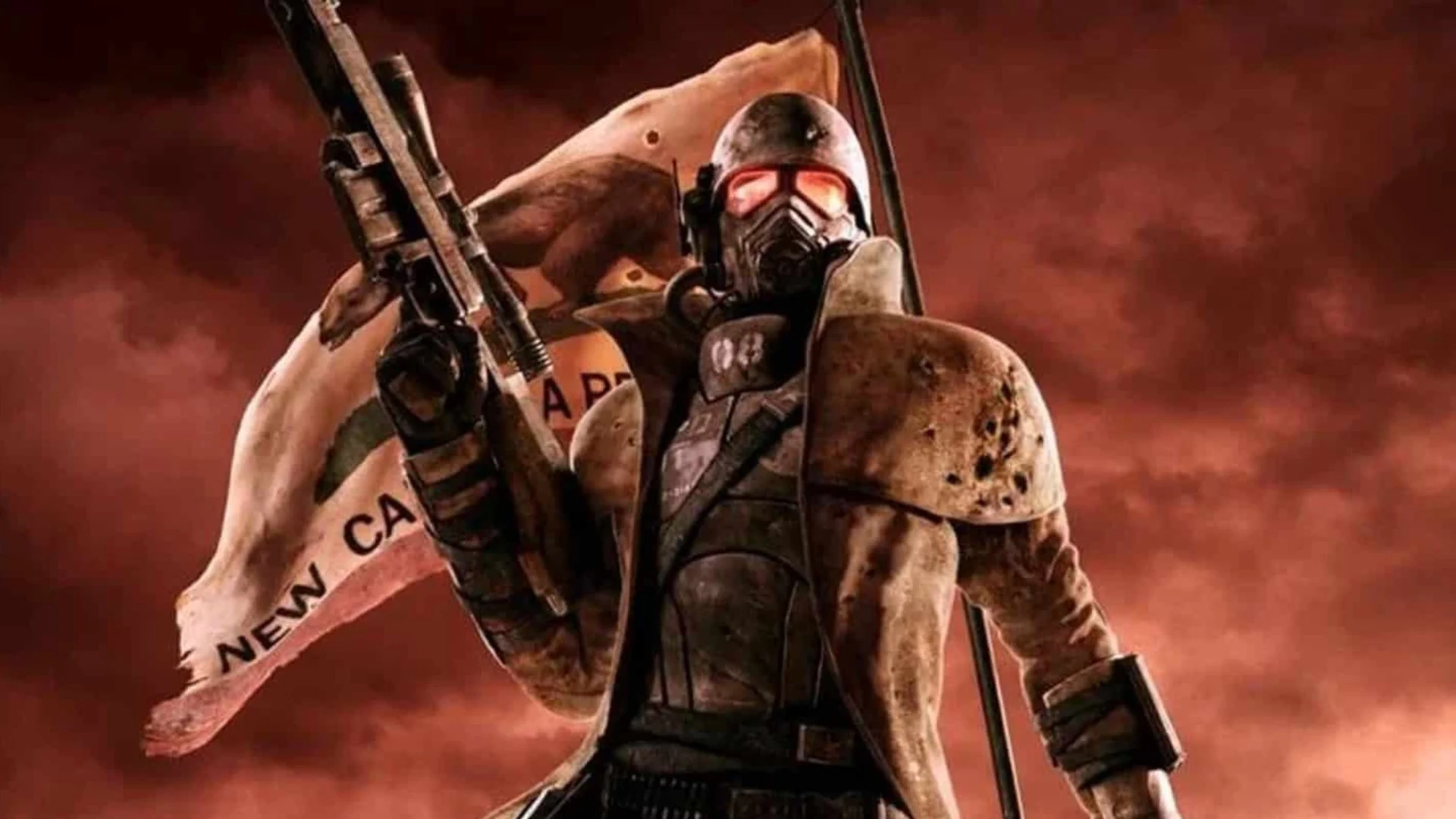
Fallout: New Vegas is now remembered as one of the most respected RPGs in the Fallout series, but its development was shaped by a severe time limit. Director and lead designer Josh Sawyer has reflected on the game’s 18 month development cycle, explaining that Obsidian had to narrow its ambitions and focus on what it could do best within the schedule.
Bethesda wanted a new Fallout game in 2010 to fill the gap between Fallout 3 in 2008 and The Elder Scrolls 5: Skyrim in 2011. Obsidian agreed to build New Vegas within that short window, which meant the studio could not treat the project like a full reinvention of the formula.
Instead, the team reused as much of Fallout 3’s engine technology and assets as possible. That decision gave Obsidian more room to focus on writing, quests, character choices, factions, and open world reactivity. Those areas later became the main reasons many players came to love New Vegas.
Obsidian focused on story and quest reactivity because there was no time for a bigger overhaul
Sawyer said the 18 month timeline was not a goal, but a constraint. Because of that, the team modestly adjusted some systems from Fallout 3 and tried to match Bethesda’s open world exploration style while building the strongest quest and story content it could.
That meant other ideas had to be left behind. Sawyer said Obsidian had “fantastic designers and writers,” and he believed they could make great content if the project stayed focused. In practical terms, New Vegas had to prioritize the areas where Obsidian could add the most value without rebuilding the entire foundation.
| Area | Obsidian’s approach |
|---|---|
| Development time | 18 months |
| Engine and assets | Adapted heavily from Fallout 3 |
| Main focus | Narrative, quests, factions, and reactivity |
| Cutback reason | Tight schedule forced other ideas aside |
| Long term result | New Vegas became one of Fallout’s most beloved RPGs |
The result was a game that launched with technical problems but slowly built a reputation as one of the best role playing experiences in the series. Many fans praise its faction writing, moral ambiguity, quest outcomes, and the way player choices can reshape the Mojave.

The short development cycle also explains why New Vegas feels both familiar and distinct. On the surface, it looks and plays close to Fallout 3 because it uses much of the same foundation. Underneath that, it has a different design focus, with more emphasis on branching decisions, dialogue, reputation, and faction conflict.
Sawyer’s comments also show why scope control can be important in game development. More time may have allowed Obsidian to pursue bigger mechanical changes or additional ideas. But within the time it had, the studio made a smart choice. It concentrated on the parts of RPG design where it had the strongest identity.
That focus is a major reason Fallout: New Vegas still has such a strong following 16 years later. It may have been built under pressure, but Obsidian’s decision to prioritize writing and reactivity helped turn a constrained project into one of the most influential Fallout games.



Discussion (0)
Be the first to comment.