



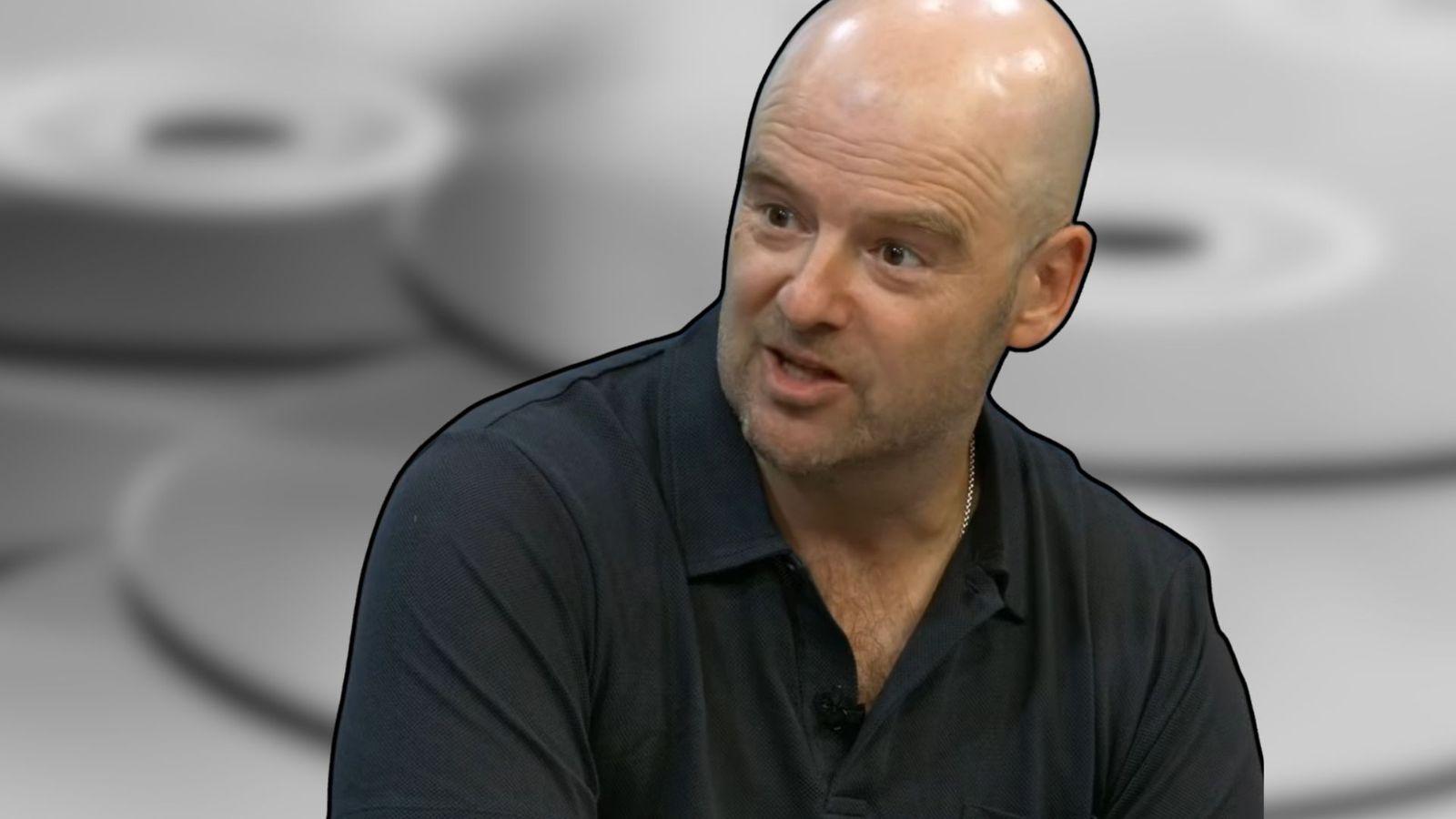
Former Rockstar Games creative director Dan Houser says companies should continue offering physical game releases while there is still meaningful demand, even though he personally has little concern about PlayStation’s reported move away from discs.
Houser discussed the future of physical media during a live interview alongside longtime Rockstar collaborator Lazlow Jones. The conversation followed reports that PlayStation plans to stop manufacturing new physical game discs from January 2028.
Houser acknowledged the convenience of digital distribution and said the ability to update games has improved overall quality. At the same time, he argued that companies should continue serving customers who prefer discs.
His comments reflect the wider disagreement surrounding the transition to digital games. Publishers gain lower distribution costs and greater control over sales, but customers lose some of the ownership, resale and preservation benefits associated with physical copies.
| Topic | Houser and Jones’ position |
|---|---|
| Houser’s personal preference | Does not appear concerned about leaving discs behind |
| Physical game demand | Companies should continue supporting it where practical |
| Digital distribution | Useful for convenience, updates and fixes |
| Physical ownership | Still meaningful to collectors and long-term fans |
| PlayStation disc production | Reportedly scheduled to end in January 2028 |
| Absurd Ventures | Developing two unannounced open-world games |
Houser sees clear advantages in digital game distribution
Houser said digital releases have made it easier for developers to update games and correct problems after launch.
Modern games are often too large and complex to ship without issues. Developers can use patches to fix crashes, improve performance, adjust balance and add accessibility options.
Digital storefronts also make games easier to purchase without visiting a retailer or waiting for delivery.
However, updates and online distribution are not exclusive to digital ownership. Games sold on discs can still receive patches, provided the platform continues supporting the software and servers.
The main difference is that a physical copy can sometimes preserve access to an initial version even after a title is removed from sale. A digital licence depends more heavily on the storefront, account and platform remaining available.
Houser did not dismiss those concerns. His position was that companies should continue producing discs if enough customers still want them.
Lower production volumes could make discs more expensive
The main obstacle is commercial rather than technical.
As more customers buy games digitally, publishers produce fewer discs. Smaller manufacturing runs can increase the cost of each copy because expenses are spread across fewer units.
Platform holders also need to maintain production lines, packaging systems, distribution agreements and retail relationships.
Sony has reportedly begun converting at least one factory in Austria that was involved in physical media production. If those changes continue, reversing the strategy later could become difficult and expensive.
Physical game prices may also rise if discs become specialist products aimed at collectors rather than the standard way to buy software.
Publishers could respond with limited physical editions, made-to-order releases or partnerships with companies specialising in smaller production runs.
That would preserve an option for collectors, although it might not offer the same availability or pricing as mainstream retail copies.
Digital-only games reduce ownership flexibility
A digital purchase gives customers a licence tied to an account rather than a freely transferable product.
Most digital console games cannot be resold, lent permanently or given to another person. Access can also become more complicated if an account is suspended or a storefront closes.
Physical games offer greater flexibility, although modern discs do not always contain a complete playable version.
Some require large downloads, online authentication or additional data that is unavailable on the disc. Code-in-a-box releases provide even fewer ownership benefits because the code usually becomes unusable after redemption.
The debate is therefore about more than nostalgia.
Physical media supports second-hand markets, game preservation and access in regions with slower or less reliable internet connections.
A complete disc can also remain usable long after official sales end, provided the console continues to work.
Lazlow Jones values both physical products and digital convenience
Jones described the satisfaction of holding a completed physical product.
Absurd Ventures has released comic books and fiction connected to its original properties, giving its creators experience with both digital entertainment and physical publishing.

Jones also recognised the practical value of digital libraries. Being able to download games to a handheld device before a long flight provides a level of convenience that physical media cannot always match.
His comments show that the two formats do not need to be treated as direct opposites.
A customer may prefer digital games for travel and everyday use while still collecting physical editions of important releases.
Maintaining both formats gives people more choice, although companies must decide whether physical demand is large enough to support continued manufacturing.
Absurd Ventures has two open-world games in development
The interview also confirmed that Absurd Ventures is developing two open-world games.
Houser founded the company after leaving Rockstar Games, where he played a central creative role across Grand Theft Auto and Red Dead Redemption.
No titles, platforms, release dates or gameplay details were provided for the two projects.
Absurd Ventures has so far introduced its fictional worlds through the American Caper comic series and the A Better Paradise novel and audiobook.
The company appears to be building properties across several formats before revealing its larger game projects.
Houser’s support for continued physical releases does not confirm that Absurd Ventures will publish its games on discs. That decision will likely depend on its publishing partners, platforms and the state of the market when the projects are ready.
His comments nevertheless support a balanced approach. Digital distribution offers clear convenience and development benefits, but customers who value physical ownership should not be abandoned while there is still enough demand to serve them.
Tomb Raider Catalyst Reportedly Moves to 2028 as Amazon Expands Luna’s Cloud Gaming Strategy
Tomb Raider Catalyst is now expected to launch in 2028, according to comments from Amazon Games chief Jeff Gattis, although the publisher later said it had no new timing information to share.
The next original adventure starring Lara Croft was announced alongside Tomb Raider: Legacy of Atlantis. The remake of the original Tomb Raider is scheduled for February 12, 2027, after moving beyond its previous 2026 window.
Catalyst had initially been associated with a 2027 release. Gattis said Amazon would follow Legacy of Atlantis with Catalyst in 2028, making this the clearest indication yet that the sequel has moved back by one year.
Amazon later responded that development was progressing well and that it had no new update about the game’s timing. That statement does not directly confirm or deny the 2028 date, leaving some uncertainty around the official release window.
| Project or service | Current position |
|---|---|
| Tomb Raider: Legacy of Atlantis | Scheduled for February 12, 2027 |
| Tomb Raider Catalyst | Reportedly planned for 2028 |
| Amazon’s official response | No new timing update, development progressing well |
| Luna strategy | Expand access rather than directly replace consoles |
| Prime Video integration | Luna games available through the app on supported Fire TV devices |
| Target markets for new feature | United States and United Kingdom |
Catalyst appears to have shifted after the remake’s delay
The reported change follows the delay of Tomb Raider: Legacy of Atlantis.
Amazon had planned to launch the remake before Catalyst, creating a sequence that would reintroduce Lara Croft’s earliest adventure before moving the series into a new chapter.
When Legacy of Atlantis moved to early 2027, it became increasingly unlikely that both large projects would arrive during the same year.
A 2028 release would give each game more space and reduce competition between them. It would also allow additional development time for Catalyst, which is expected to be a major new entry rather than another remake.
Amazon’s later statement introduces some doubt. Saying there is nothing new to share may indicate that the publisher is not ready to formally announce the date, even if 2028 is currently the internal plan.
Release schedules can also change as development progresses.
For now, 2028 should be treated as a reported target rather than a fully confirmed public launch date.
Amazon wants Tomb Raider to strengthen Luna’s identity
Gattis said Amazon wants Luna to become a platform associated with recognisable original content.
Tomb Raider could play an important role in that strategy because it is a well-known franchise with an established audience across consoles and PC.
Amazon also owns MGM, giving it access to entertainment properties that could support future games. The company has discussed opportunities involving James Bond, and IO Interactive is already developing 007 First Light.
Gattis indicated that Luna needs a portfolio that encourages customers to associate the service with particular franchises.
Original and exclusive content has historically helped platforms build identity, although Amazon has not confirmed that future Tomb Raider or Bond games will be exclusive to Luna.
Limiting major releases to a cloud service could reduce sales, so Amazon may instead use Luna as one of several supported platforms.
Luna is moving closer to Prime Video
Amazon recently expanded Luna integration for Prime members using Fire TV devices in the United States and United Kingdom.
Supported customers can access games through the Prime Video application, reducing the need to open a separate gaming service.
The available catalogue includes major titles such as Hogwarts Legacy, EA Sports FC 26 and Indiana Jones and the Great Circle.
This approach uses hardware that many customers already own. Instead of asking them to purchase a dedicated console, Amazon can deliver games through a television, internet connection and compatible controller.
The strategy lowers the initial cost of trying cloud gaming.
It also connects Luna with Prime, which already includes video, shipping and other services. Amazon can use those existing subscribers to expand its gaming audience without relying entirely on a separate monthly membership.
Rising hardware prices could make cloud gaming more attractive
Gattis does not expect Luna’s success to depend on convincing existing console and gaming PC owners to abandon their hardware.
He described cloud gaming as a way to reach more people and expand the overall market.
However, he believes rising hardware costs could cause more customers to consider streaming.
Dedicated gaming devices have historically offered a relatively affordable way to access new releases. Higher memory prices and component shortages could push future console and PC costs beyond what some customers are willing to pay.
Gattis referred to Steam Machine pricing beginning near $1,000 and speculation that future consoles could also become considerably more expensive.
Cloud services avoid the need for a powerful local processor or graphics card because the game runs on remote servers.
Customers still need fast and stable internet, suitable data allowances and access to a nearby server region.
Those requirements mean cloud gaming cannot provide an equal experience everywhere.
Streaming still has important limitations
Cloud gaming performance depends heavily on network conditions.
Latency can affect controls, especially in competitive games or titles requiring precise timing. Image quality may also fall below local hardware because the video stream must be compressed.
Internet outages can make an entire library inaccessible, while data caps may increase the cost of playing regularly.
Customers also depend on the service provider keeping games available. A title can disappear from a streaming catalogue even when someone has used the service for months.
These issues prevent Luna from fully replacing consoles or gaming PCs for many players.
Cloud gaming can still serve people who play occasionally, travel frequently or do not want to spend heavily on hardware.
Amazon’s integration with Prime Video may make the service particularly appealing to households that already own Fire TV devices.
Amazon continues rebuilding its gaming strategy
Amazon has changed its gaming plans several times after cancellations, studio reductions and mixed results from internally developed projects.
The current strategy appears to combine established franchises, external development partners and Luna distribution.
Tomb Raider gives Amazon a major single-player series, while possible James Bond projects could add another recognisable property.
Gattis also said other high-budget opportunities are at different stages of discussion, including projects based on Amazon and MGM intellectual property.
The company will need more than famous names to make the strategy work. It must release games consistently, maintain development quality and improve Luna’s availability across more countries and devices.
Legacy of Atlantis will provide an early test when it arrives in February 2027.
Catalyst is expected to follow in 2028 based on Gattis’s comments, but Amazon has stopped short of formally confirming that schedule. The extra time could help the project avoid competing with the remake and give its developers more room to deliver a substantial new Tomb Raider adventure.



Discussion (0)
Be the first to comment.