



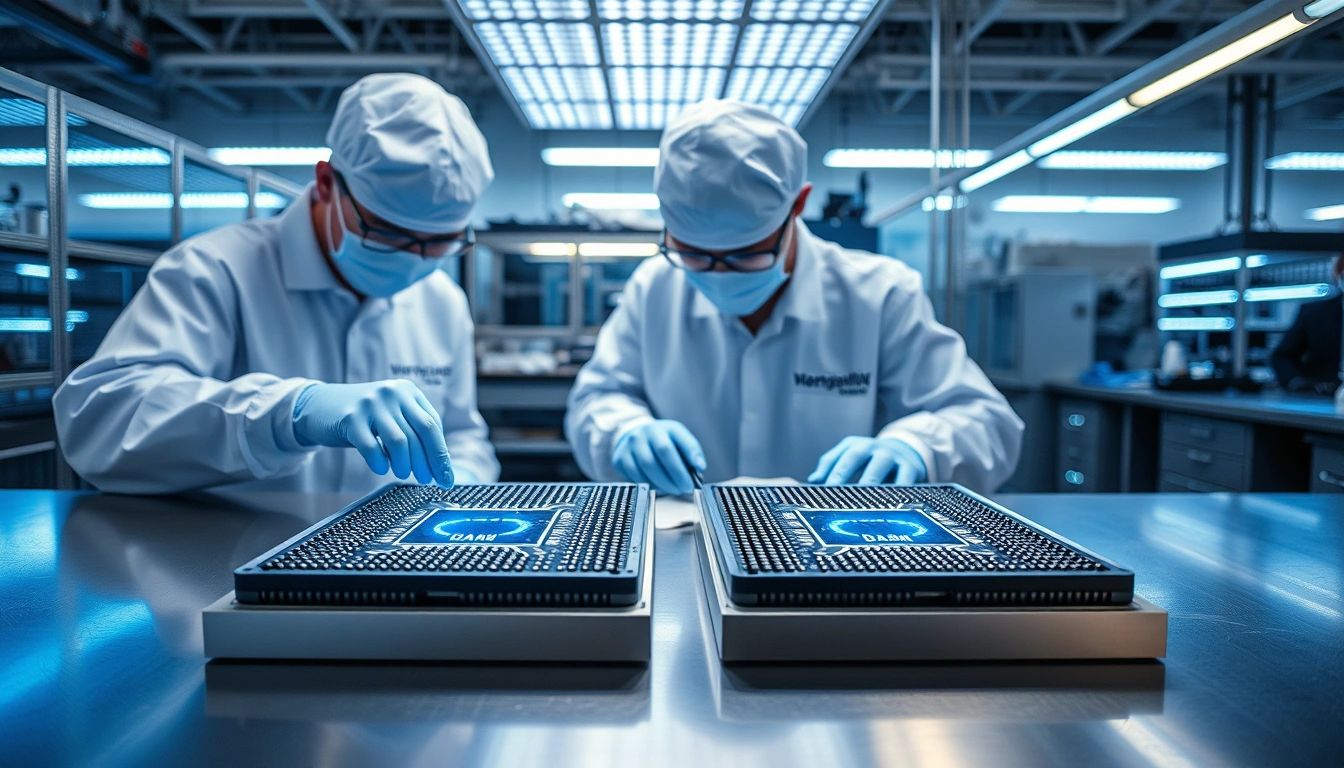
China's two major memory manufacturers could be moving into direct competition as CXMT reportedly prepares for NAND development while YMTC explores DRAM production.
The two companies have traditionally occupied different parts of the memory market. CXMT has focused primarily on DRAM, while YMTC has built its business around NAND flash.
A new report suggests those boundaries may now be starting to disappear.
YMTC is reportedly preparing trial production of DRAM before the end of 2026, while CXMT is said to be studying NAND research and manufacturing plans that could eventually lead to new production facilities in Beijing.
YMTC could begin DRAM trials by the end of 2026
YMTC's reported move into DRAM appears to be the more advanced of the two efforts.
The company is said to be preparing initial trial production at its Phase 3 project before the end of 2026.
Trial production is generally used to test equipment, processes and manufacturing stability before a factory moves toward higher volume output.
The first target is reportedly LPDDR5 memory.
| Company | Existing focus | Reported expansion |
|---|---|---|
| CXMT | DRAM | NAND flash |
| YMTC | NAND flash | DRAM |
| YMTC initial product | NAND | LPDDR5 DRAM |
| YMTC reported initial capacity | Not applicable | Around 25,000 wafers per month |
| CXMT NAND timing | Not confirmed | Possible 2028 or 2029 |
| Main challenge for CXMT | Manufacturing restrictions | 3D NAND development and equipment limitations |
YMTC's initial DRAM production capacity is reportedly expected to reach around 25,000 wafers per month.
That would still represent an early stage compared with large established DRAM manufacturers, but it would mark a significant change in YMTC's product strategy.
High memory prices are creating new incentives
The reported expansion comes during a period of unusually strong pricing across both DRAM and NAND markets.
AI infrastructure has increased demand for memory and storage, while tighter supply has pushed prices higher across consumer and enterprise products.
That environment makes entering adjacent memory markets more attractive.
YMTC, which already has extensive semiconductor manufacturing experience through NAND, may see DRAM as another growth opportunity.
CXMT faces a similar incentive on the storage side.
The company has grown significantly in DRAM and has increasingly attracted attention as a potential supplier for large technology companies.
Reports have even suggested that Apple has explored using CXMT memory for products sold in China.
CXMT is reportedly hiring former YMTC employees
CXMT is said to be preparing its NAND effort by recruiting workers with previous YMTC experience.
That could give the company access to engineers familiar with NAND design, manufacturing and process development.
CXMT is also reportedly considering NAND research and manufacturing facilities in Beijing.
However, its plans appear to be at an earlier stage than YMTC's DRAM expansion.
The first CXMT NAND production lines may not arrive until 2028 or 2029, according to the report.
That timeline remains uncertain.
Unlike YMTC's reported DRAM trial production target, CXMT has not been given a firm production schedule for NAND.
Patents could become a major issue
The two companies entering each other's traditional markets could create legal and intellectual property challenges.
YMTC has spent years developing NAND technology, while CXMT has concentrated on DRAM.
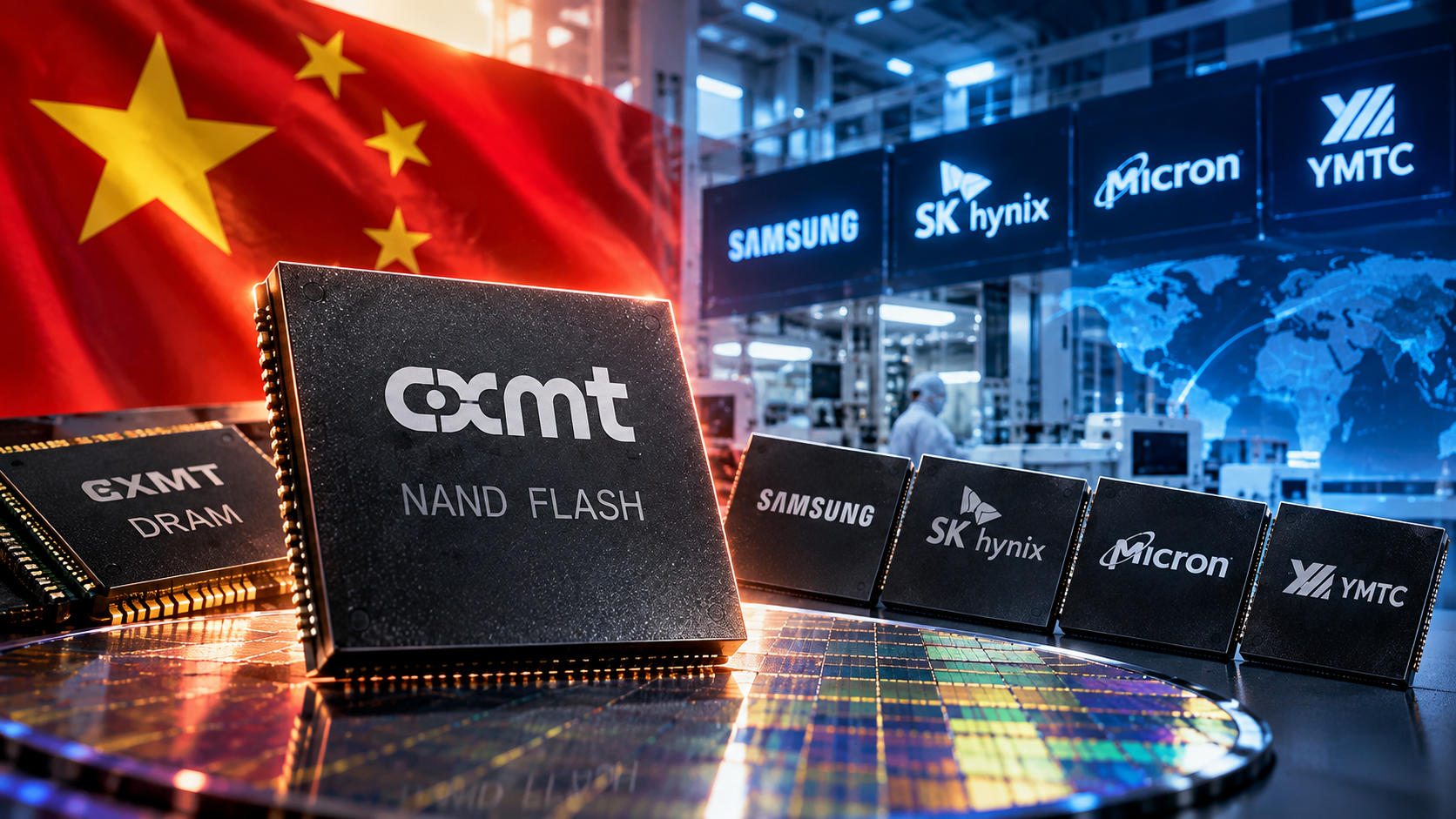
If both companies begin competing directly, patents could become an important source of tension.
The report suggests CXMT may face greater pressure in this area as YMTC moves quickly into DRAM.
Exactly how significant those patent disputes could become is not yet clear.
Memory manufacturing involves extensive intellectual property covering cell design, fabrication, packaging and controller technologies, so expanding into a new category can require either internal development or licensing agreements.
US restrictions may complicate CXMT's NAND plans
CXMT's potential NAND expansion could also be affected by US export restrictions.
Modern NAND relies on increasingly complex three dimensional stacking, requiring advanced manufacturing equipment and process technology.
Restrictions on access to some semiconductor tools could make it harder for Chinese manufacturers to scale advanced 3D NAND production.
That means CXMT may need to develop alternative manufacturing methods or rely more heavily on domestic equipment suppliers.
The challenge becomes greater as NAND layer counts increase because maintaining yield and performance becomes more difficult.
China's memory industry is becoming more competitive
CXMT and YMTC have both gained greater prominence as global memory supply has tightened.
CXMT has expanded its presence in DRAM, while YMTC has narrowed the technology gap in NAND compared with major international suppliers.
Their reported moves into each other's markets suggest China's memory industry may be entering a more competitive phase.
Instead of maintaining separate product categories, both companies could eventually compete across DRAM and NAND.
That could increase domestic Chinese supply while also creating pressure on established global manufacturers.
For now, much of the expansion remains based on reported plans rather than completed production.
YMTC appears closer to entering DRAM, with LPDDR5 trial production reportedly targeted for late 2026, while CXMT's NAND ambitions may take several more years to reach manufacturing.
If both efforts proceed, China could soon have two major memory companies competing across both volatile memory and storage markets rather than remaining specialists in separate segments.


Discussion (0)
Be the first to comment.