



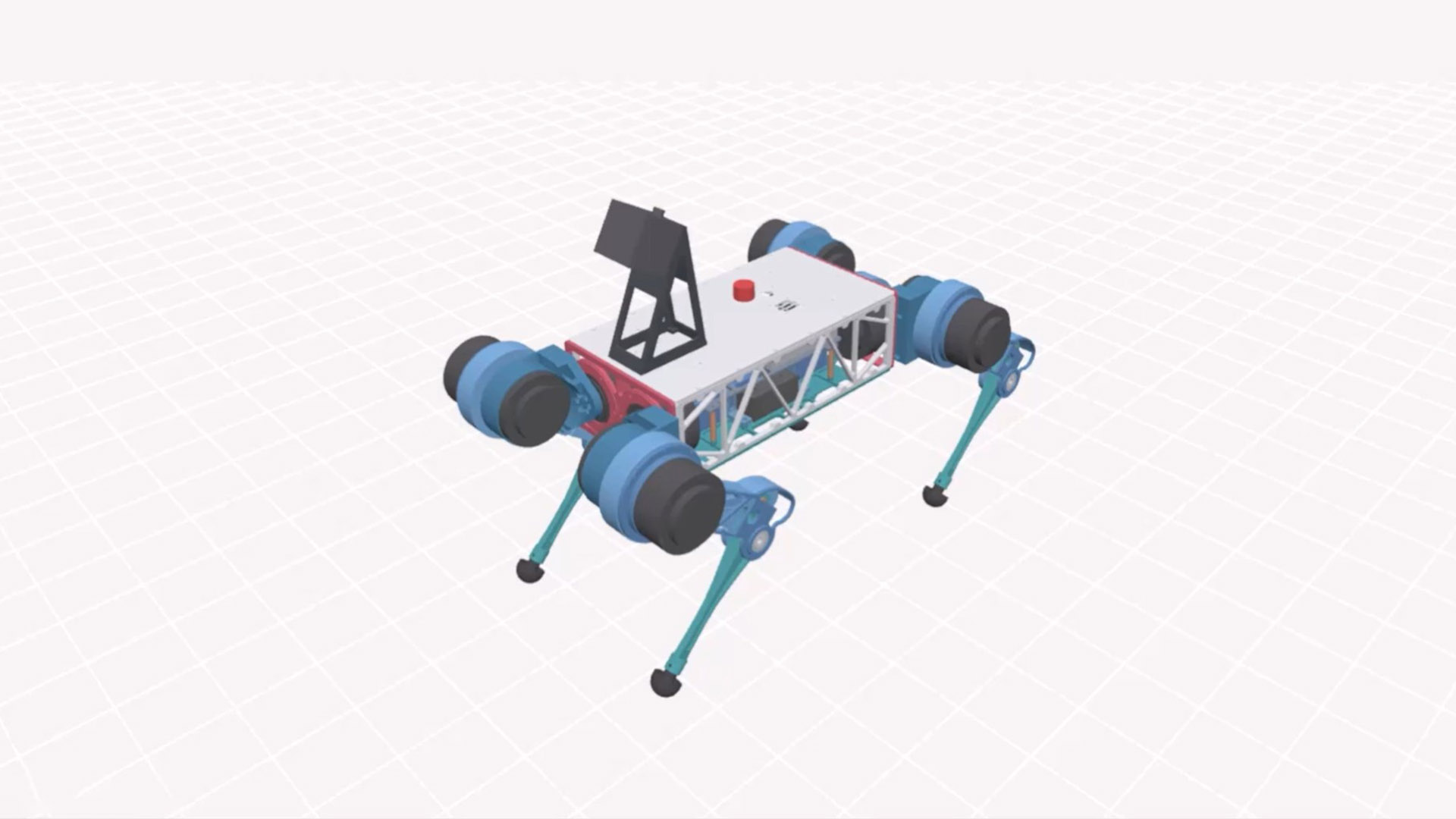
A developer has demonstrated an AI driven robotics workflow in which Claude Code helped design a complete quadruped robot, generate its firmware, calculate its power requirements and test the result in simulation.
The project, called MechFaber, uses several specialized AI agents rather than relying on a single model to handle the entire engineering process.
The resulting robot design includes 12 actuators and 99 parts, along with a full electronics layout, wiring plan, power calculations and control software.
The major limitation is that the robot has not been physically built yet, so the quality of the design has only been demonstrated in simulation.
Multiple AI agents handle different engineering tasks
The developer behind MechFaber spent around three months creating the desktop application.
Instead of treating Claude Code only as a programming assistant, the software gives AI responsibility across several stages of hardware development.
Different agents handle tasks such as research, engineering calculations, CAD work, electronics, firmware development and simulation.
| Area | AI handled task |
|---|---|
| Mechanical design | CAD and structural layout |
| Electronics | Power rails and component selection |
| Firmware | Motor control and software development |
| Wiring | Cable lengths, connections and gauges |
| Simulation | Physics based testing |
| Robot design | 12 actuators and 99 parts |
| Main computer | Raspberry Pi 5 |
| Motor controller | Teensy microcontroller |
| Sensors | LiDAR included |
The developer says this multi agent structure was necessary because asking one general purpose AI system to handle everything produced weaker results.
Splitting the work into dedicated areas allowed each part of the system to focus on a narrower engineering problem.
Claude Code is not allowed to guess dimensions
One important part of the workflow is an effort to reduce AI guessing.
Instead of allowing the model to invent measurements, MechFaber queries the CAD kernel directly for dimensions.
It also retrieves component ratings from real datasheets and performs finite element analysis through the application.
The same principle applies to the electronics design.
The system created a complete wiring loom with specified cable gauges and lengths, while also calculating current draw, voltage rails and expected battery runtime.
Claude Code reportedly selected a Raspberry Pi 5 to manage the LiDAR system and a Teensy microcontroller for the motor control loop.
This approach is intended to make the design process more grounded in engineering data rather than relying purely on generated text.
Firmware and hardware are tested together in simulation
The software does more than create a static robot model.
The firmware generated for the quadruped is executed inside a physics simulation, allowing the mechanical design and control software to be tested together.
The developer can ask the AI to create new environments such as ramps, walkways and obstacle courses.
The same firmware can then be tested against those different scenarios without manually rebuilding every simulation.
This makes it possible to identify potential problems before committing to physical manufacturing.
For robotics development, that kind of integrated workflow could reduce the amount of repetitive work involved in early prototyping.
Simulation cannot prove the robot will work in the real world
The project remains experimental because no physical prototype has been completed.
A robot that performs correctly in simulation can behave very differently once real motors, sensors, joints, materials and batteries are involved.
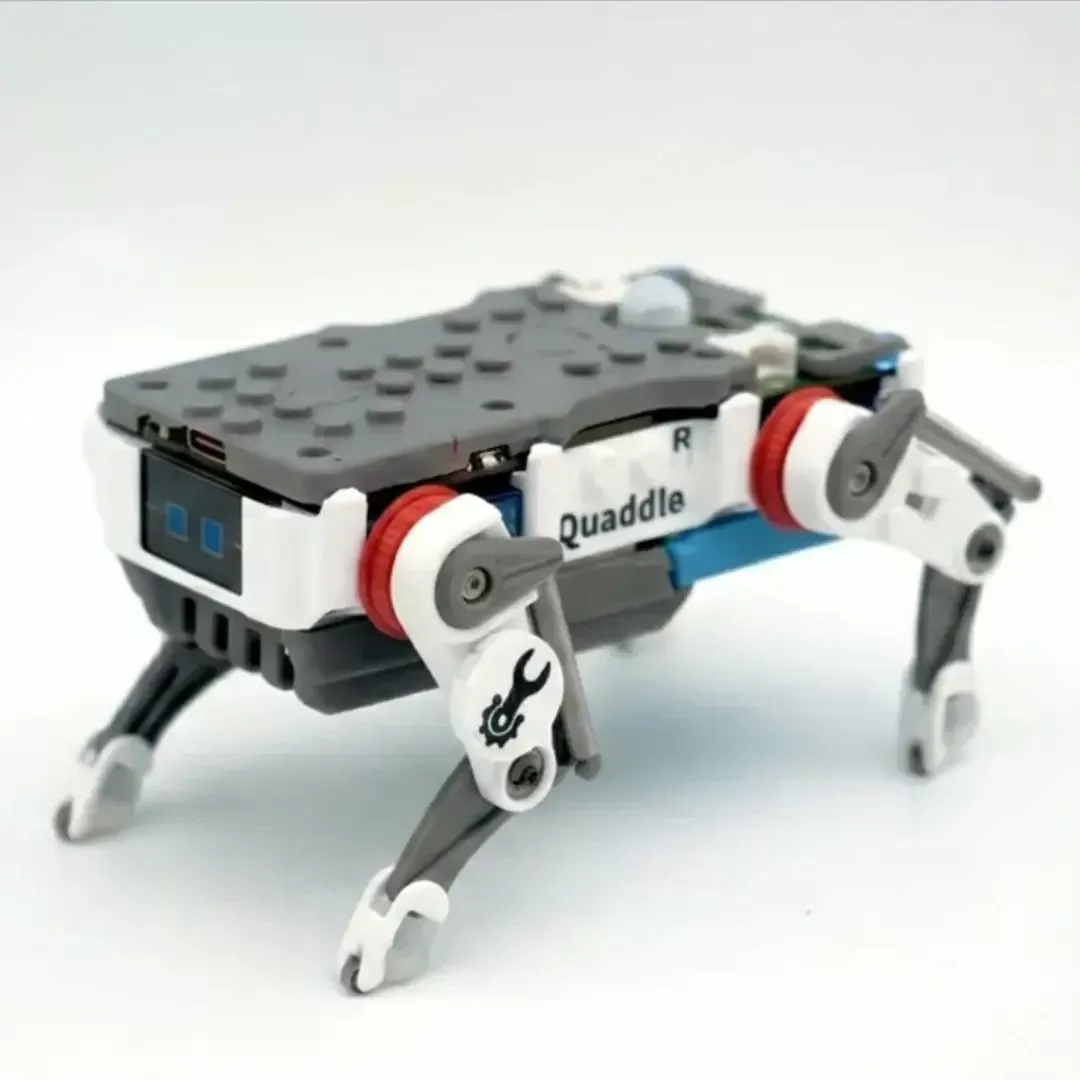
Small manufacturing tolerances can affect movement.
Real terrain can also introduce problems that are difficult to reproduce perfectly in software, including uneven surfaces, vibration, temperature changes, traction differences and unexpected mechanical stress.
The developer acknowledges this limitation.
A flat simulated surface may show good results, but outdoor testing could reveal weaknesses that are currently invisible.
That makes manufacturing and testing a real prototype the most important next step.
AI could reduce the workload of early robotics development
The demonstration is significant because Claude Code was used across mechanical engineering, electronics and software development rather than only for writing code.
If the approach holds up once the robot is physically produced, tools like MechFaber could help engineers move faster through early design iterations.
The more immediate value may be in automation rather than fully replacing engineering decisions.
AI can prepare CAD models, select components, calculate power requirements, create wiring plans and generate firmware while engineers review the results.
For now, the 12 actuator quadruped remains a simulated design.
Its 99 part structure and working virtual firmware show how far integrated AI engineering tools can go, but a functioning physical robot will be needed before the project can demonstrate that the automated design process works outside software.


Discussion (0)
Be the first to comment.