



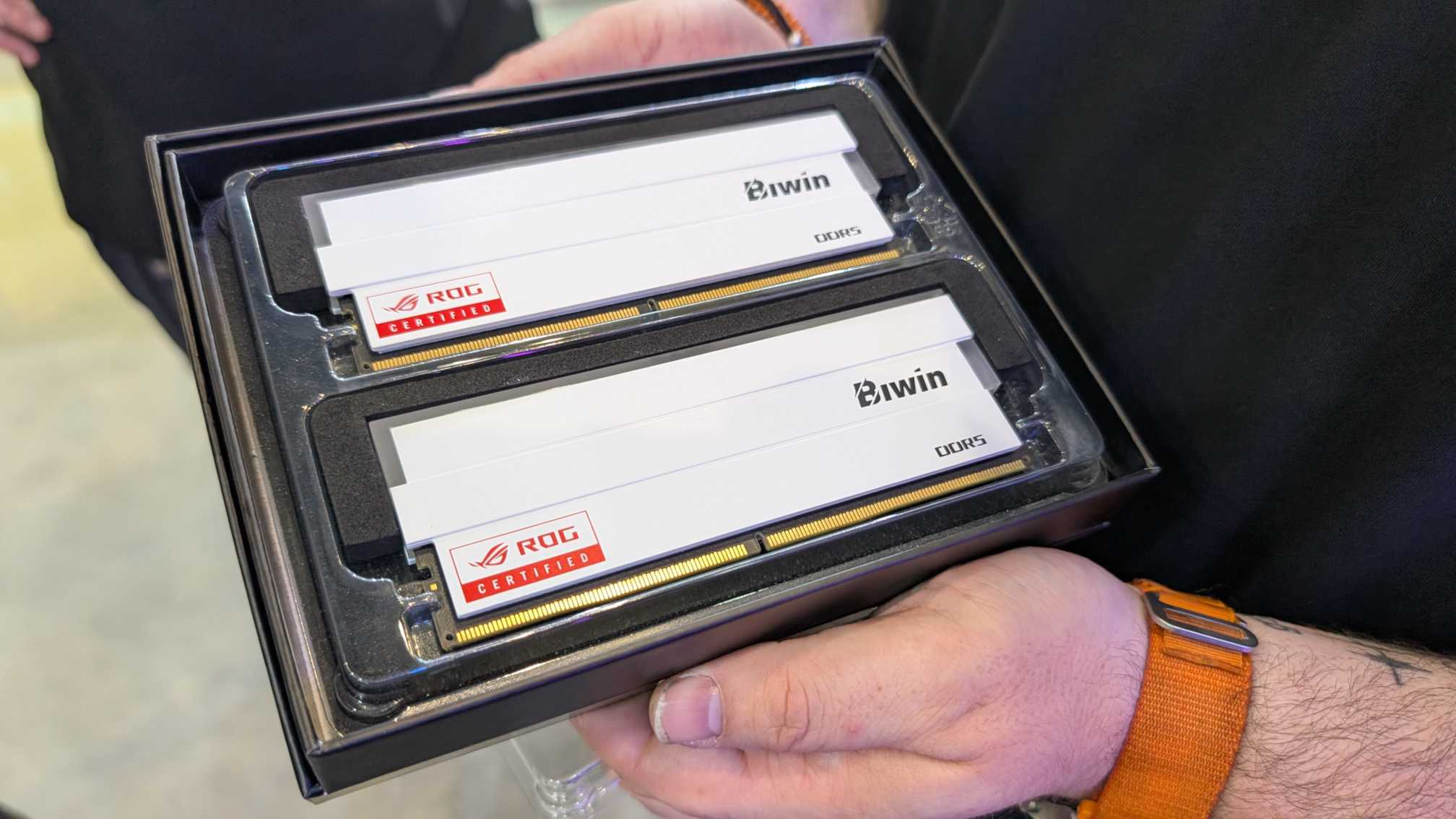
Biwin showed a broad range of new storage and memory products at Computex 2026, covering everything from compact SSDs for gaming handhelds to PCIe 5.0 drives for high end PCs and ROG certified DDR5 memory for gaming desktops. The lineup shows the company trying to serve several fast growing parts of the PC market at once, especially handheld gaming, compact systems, and enthusiast memory builds.
The most practical products in the announcement are Biwin’s new mini SSDs. These are designed for small devices such as gaming handhelds, compact PCs, and portable systems where size, power use, and heat matter as much as raw speed.
The Biwin CL100 is a PCIe 4.0 SSD that supports NVMe 1.4 and comes in 512GB, 1TB, and 2TB capacities. It can reach up to 3700MB per second read speeds and 3400MB per second write speeds. Biwin is positioning it as a cost focused option, which could make it useful for handheld gamers who want more storage without spending too much.
The Biwin BL130 is another compact SSD with the same capacity range and similar speed claims, but it is designed to stay under 3.5W. That lower power target is important for handheld devices because storage power use can affect battery life, heat, and sustained performance. Biwin also lists up to 850K read IOPS and 800K write IOPS for the BL130.
Biwin is also targeting high end PCs with faster PCIe 5.0 storage
For desktop PCs, Biwin showed the M560, a PCIe 5.0 SSD in the standard M.2 2280 form factor. It will come in 1TB and 2TB capacities, with read speeds of up to 11GB per second and write speeds of up to 10GB per second.
The M560 uses a 6nm Silicon Motion controller and does not include DRAM. Biwin says this helps keep temperatures and power use lower. That could matter because many early PCIe 5.0 SSDs ran hot and often needed large heatsinks to maintain performance.
| Product | Category | Key details |
|---|---|---|
| Biwin CL100 | Mini SSD | PCIe 4.0, up to 2TB, 3700MB per second read |
| Biwin BL130 | Low power mini SSD | Under 3.5W, up to 2TB, 850K read IOPS |
| Biwin M560 | Desktop SSD | PCIe 5.0, up to 2TB, 11GB per second read |
| Biwin RU200 | DDR5 memory | UDIMM and SODIMM, 4800 to 5600 MT/s |
| Biwin DW100 DDR5 RGB | Gaming memory | 32GB kit, 6000 MT/s, ROG certified |
Biwin also introduced the RU200 DDR5 memory series, which is aimed at mainstream systems. It comes in both UDIMM and SODIMM formats, meaning it can be used in desktops, laptops, and mini PCs. Capacities start at 8GB and go up to 32GB, with 4800 MT/s and 5600 MT/s speed options.
The more enthusiast focused product is the Biwin DW100 DDR5 RGB kit. This is a 32GB kit with two 16GB modules, rated up to 6000 MT/s. It supports both Intel XMP and AMD EXPO, which makes it easier to use across modern desktop platforms.
The DW100 also carries ROG certification, meaning it is tuned to work with ASUS ROG motherboards and may receive an extra performance boost on supported boards. The modules use a large white heatspreader and RGB lighting, giving them a cleaner look for white themed or showcase PC builds.
Biwin’s Computex lineup shows how memory and storage makers are adapting to a more fragmented PC market. Desktop buyers want faster PCIe 5.0 SSDs and tuned DDR5 kits. Handheld gamers need smaller, cooler, lower power drives. Mini PC users need compact memory and storage that can fit tight spaces without giving up too much performance.
The company appears to be covering all of those areas with one product wave. The CL100 and BL130 are the most interesting for handheld gaming because storage upgrades are becoming more important as game sizes keep growing. The M560 gives desktop builders a faster PCIe 5.0 option, while the DW100 gives Biwin a more visible place in the RGB gaming memory market.
Pricing and availability will decide how competitive these products become, especially with memory and SSD prices rising across the industry. But Biwin’s new lineup is clearly designed for where PC hardware is heading: smaller systems, faster storage, higher capacity needs, and more platform specific memory tuning.



Discussion (0)
Be the first to comment.