



AMD currently holds the strongest position in gaming CPUs, but Intel has become much more competitive in the mid range after its Arrow Lake Refresh update. The right processor now depends heavily on your budget, whether you also run demanding productivity workloads, and how much you want to spend on the motherboard and memory around it.
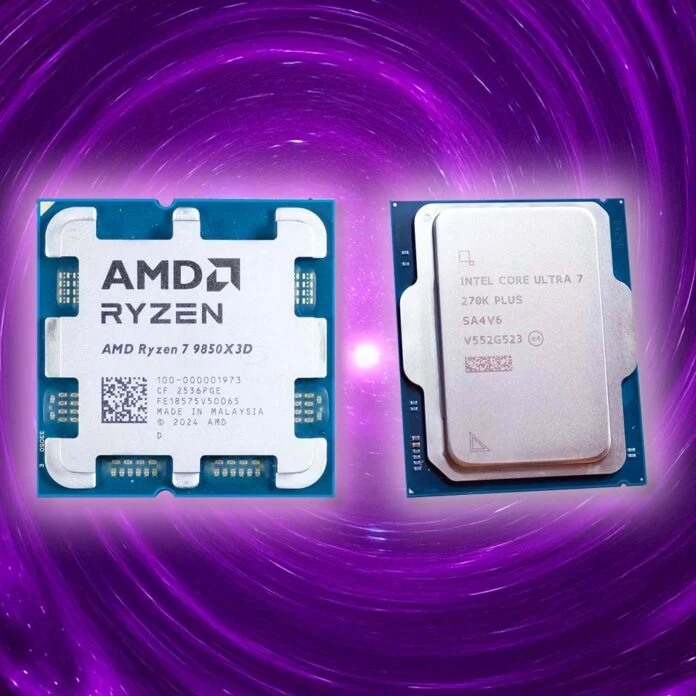
For most gaming PCs, the Ryzen 7 9800X3D remains the strongest overall recommendation. The newer Ryzen 7 9850X3D is technically faster, but its average gaming advantage is only about 3%, while the 9800X3D is cheaper. That makes the older model the more sensible choice for most gaming builds.
| Category | Recommended CPU | Main reason |
|---|---|---|
| Best overall | Ryzen 7 9800X3D | Excellent gaming speed and strong value |
| Best mid range | Core Ultra 5 250K Plus | Strong gaming and very good productivity |
| Highest performance | Ryzen 9 9950X3D2 | Top gaming and workstation performance |
| Best budget | Ryzen 5 7600X | Affordable AM5 gaming option |
| Best DDR4 option | Ryzen 7 5800X3D | Strong upgrade for existing DDR4 systems |
| Best integrated graphics option | Ryzen 5 8600G | Suitable when no discrete GPU is installed |
Ryzen 7 9800X3D remains the best gaming choice
The Ryzen 7 9800X3D combines eight cores, 16 threads and AMD's 3D V Cache technology. It operates at a 4.7 GHz base clock and can boost to 5.2 GHz, while carrying 96 MB of L3 cache.
AMD's newer Ryzen 7 9850X3D has moved slightly ahead in gaming benchmarks, but the difference is small. Testing places the newer chip around 3.3% ahead on average while costing roughly 6% more. That makes the 9800X3D a stronger value unless you specifically want every last frame available.
The 9800X3D is also comparatively efficient. Lower power consumption means you can generally use a less demanding cooling setup than with many high end Intel processors.
Its main limitation is that similarly priced CPUs can provide stronger performance in heavily threaded professional applications. For a machine focused primarily on gaming, however, that compromise is usually acceptable.
Intel Core Ultra 5 250K Plus stands out in the mid range
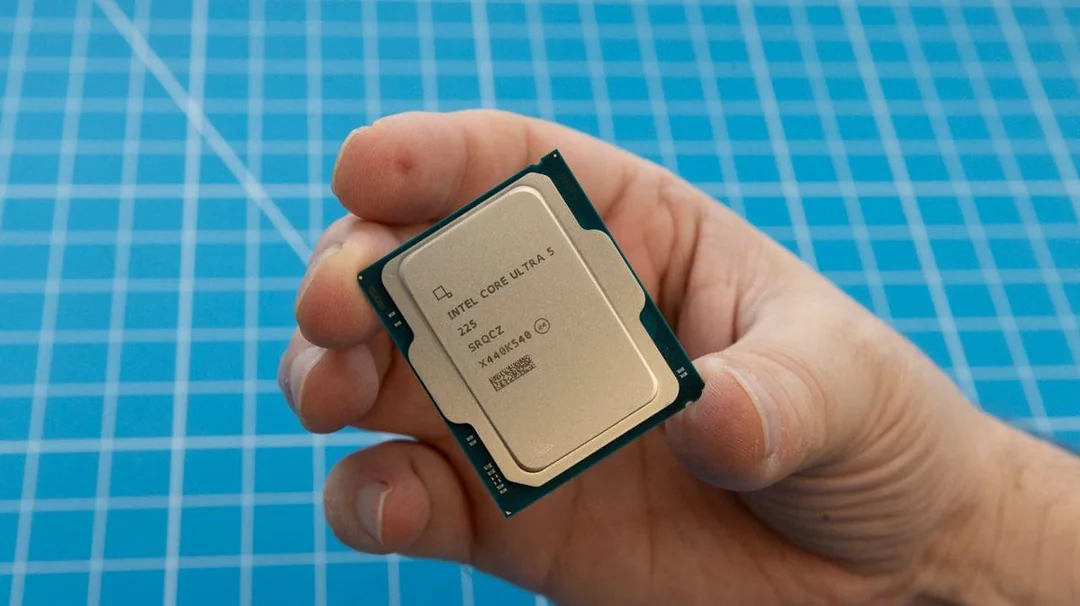
Intel's Core Ultra 5 250K Plus has become one of the more interesting choices around the $200 to $300 segment.
The processor contains 18 cores, split between six performance cores and 12 efficiency cores. It can reach 5.3 GHz and uses Intel's LGA 1851 platform.
In gaming tests, it performs roughly in line with AMD's Ryzen 5 9600X while offering much stronger multithreaded application performance. Some games also benefit from Intel's Binary Optimization Tool, which can provide additional performance in supported titles.
The main drawback is platform longevity. LGA 1851 does not offer the same long term upgrade appeal as AMD's AM5 socket, so buyers planning several future CPU upgrades may prefer AMD.
Ryzen 5 7600X3D offers excellent gaming value
The Ryzen 5 7600X3D remains another strong mid range gaming option, particularly if gaming performance matters more than productivity.
It has six cores, 12 threads and a large cache enabled by AMD's 3D V Cache design. Testing shows it only trails the Ryzen 7 7800X3D by about 4.5% in games while operating at relatively low power.
It also performs within roughly 2% of the newer Ryzen 7 7700X3D. That gives you much of the gaming benefit of AMD's more expensive X3D processors at a lower price.
Its weakness becomes clear in professional workloads. Intel's Core Ultra 5 250K Plus can provide more than twice the multithreaded performance in some tests, so the 7600X3D makes the most sense for a PC focused heavily on gaming.
Ryzen 9 9950X3D2 is for buyers who want everything
At the top end, the Ryzen 9 9950X3D2 combines 16 Zen 5 cores, 32 threads and 3D V Cache on both of its core chiplets.
That gives the processor a total of 192 MB of L3 cache and allows it to combine excellent gaming performance with very strong workstation capability.
It is about 3.9% faster than the regular Ryzen 9 9950X3D in multithreaded applications while delivering similar gaming performance. Compared with Intel's Core Ultra 7 270K Plus, testing showed a 23% advantage in average gaming performance and around 9% in multithreaded workloads.
The problem is price. It launched at $1,000 and has since fallen closer to $900. If you only play games, spending that much makes little sense because the Ryzen 7 9800X3D can provide similar gaming results for substantially less money.
DDR4 still makes sense for some upgrades
High memory and storage costs have made platform price increasingly important in 2026. DDR5 can add significantly to the total cost of a new system, especially when you also need a new motherboard.
That keeps older DDR4 platforms relevant. The Ryzen 7 5800X3D remains a strong choice for people with an existing AM4 motherboard who want more gaming performance without replacing the rest of their platform. The current market has also encouraged manufacturers to continue supporting lower cost DDR4 systems.
For a completely new build, AM5 generally provides the stronger upgrade path. For an existing DDR4 computer, however, replacing only the CPU can still be much cheaper than moving to an entirely new platform.
Gaming PCs also do not require extreme core counts. Performance scaling tends to fall considerably after eight cores for gaming workloads, so spending heavily on a 16 core flagship often provides little additional benefit unless you also perform demanding productivity work.
The Ryzen 7 9800X3D therefore remains the most balanced gaming CPU for most high end builds in 2026. Intel's Core Ultra 5 250K Plus offers strong value for mixed gaming and productivity workloads, while AMD's Ryzen 5 7600X3D gives gaming focused buyers another efficient mid range option.


Discussion (0)
Be the first to comment.