



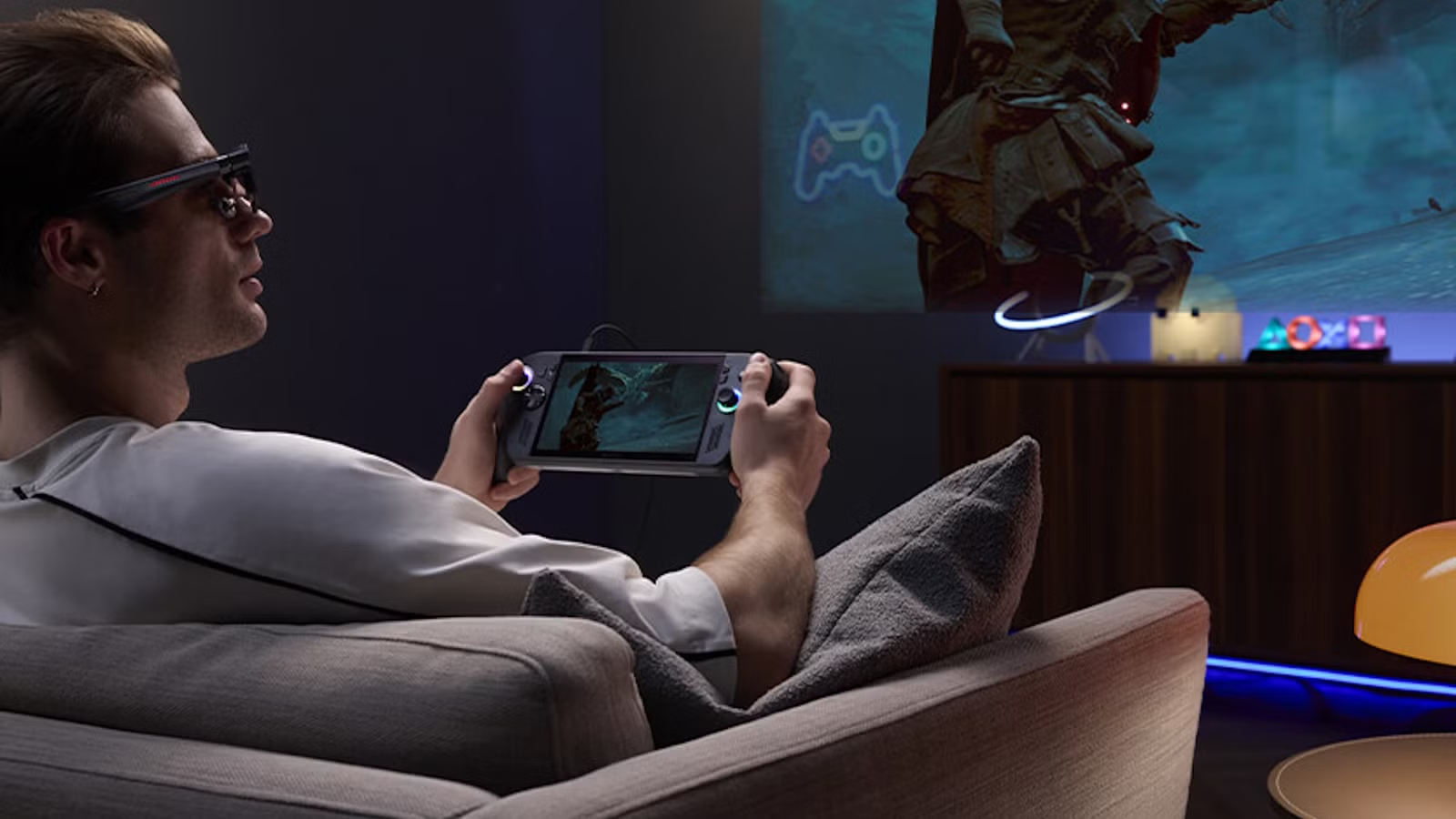
ASUS and XREAL have opened preorders for the ROG XREAL R1, a new pair of gaming focused AR glasses priced at $849. The headset is aimed at handheld PC players, laptop gamers, and anyone who wants a large private display without using a full VR headset.
The ROG XREAL R1 is based closely on the XREAL One Pro, but ASUS has given it a Republic of Gamers design and added features aimed at gaming. The glasses use dual 0.55 inch micro OLED displays, with a 1920 x 1080 resolution for each eye. ASUS says the glasses can create the feel of a 171 inch virtual screen.
The key gaming feature is the claimed 240Hz refresh rate. However, there is an important catch. The glasses normally run at 120Hz when connected directly through USB C. To use the advertised 240Hz mode, you need the included ROG Control Dock. ASUS calls this mode Frame Rate Boost, but it has not fully explained whether this is native 240Hz input, frame interpolation, or another form of motion processing.
| Feature | ASUS ROG XREAL R1 |
|---|---|
| Price | $849 |
| Display type | Dual micro OLED |
| Resolution | 1920 x 1080 per eye |
| Virtual screen size | Up to 171 inches |
| Standard refresh rate | 120Hz |
| Claimed boosted refresh rate | 240Hz with ROG Control Dock |
| Brightness | Up to 700 nits |
| Field of view | 57 degrees |
| Latency | 3ms motion to photon |
| Color coverage | 106 percent sRGB |
The ROG Control Dock adds more ports, including two HDMI 2.0 ports, one DisplayPort 1.4 port, and USB C connections for data and power. It also needs external power to work, so the full 240Hz setup is not as portable as the glasses alone.
ASUS is also promoting stereoscopic 3D support and a new Instant 3D feature that can turn normal 2D games into 3D in real time. The company has not shared much technical detail on how this works, so buyers may want to wait for hands on testing before treating it as a major reason to upgrade.
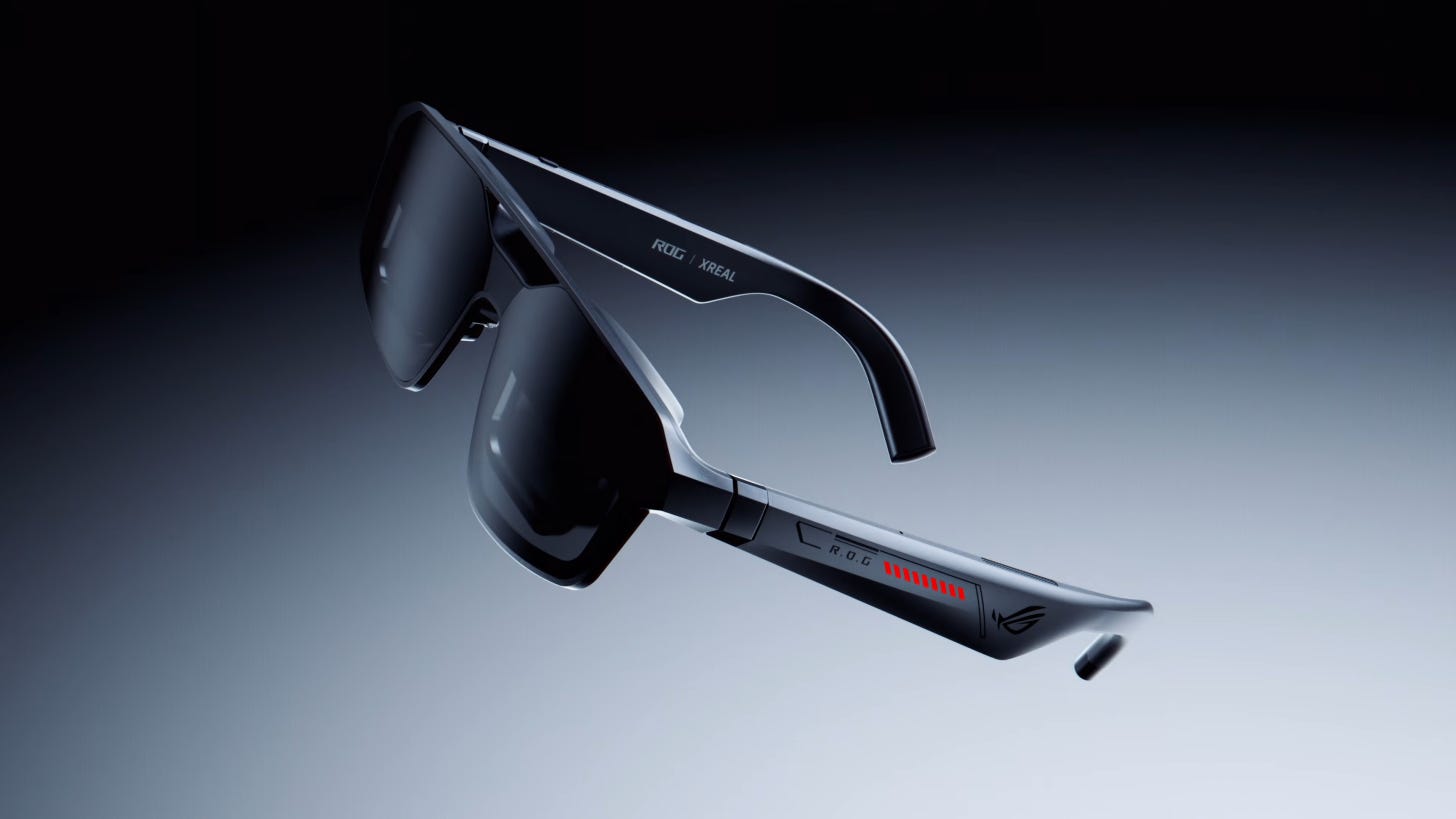
The glasses include electrochromic dimming, which can darken the lens area to improve contrast in bright rooms. ASUS and XREAL are also offering two sizes for different interpupillary distances. Unlike many VR headsets, the IPD cannot be adjusted on the fly, so choosing the right size before buying will matter.
Prescription lens inserts are included in the box, but nearsighted buyers will need an optician to make the lenses. That adds another step for people who cannot comfortably use the glasses without vision correction.
The ROG XREAL R1 sits in a narrow but growing market. It is not a full mixed reality headset, and it is not trying to replace a monitor for every user. It is closer to a wearable gaming display for people who want a large screen experience while traveling, using a handheld PC, or playing privately.
At $849, the price is high, especially when the standard XREAL One Pro costs less. The ASUS version may appeal most to ROG Ally owners and gamers who want the 240Hz dock feature, but the real value will depend on how well Frame Rate Boost works in practice.
Discussion (0)
Be the first to comment.