



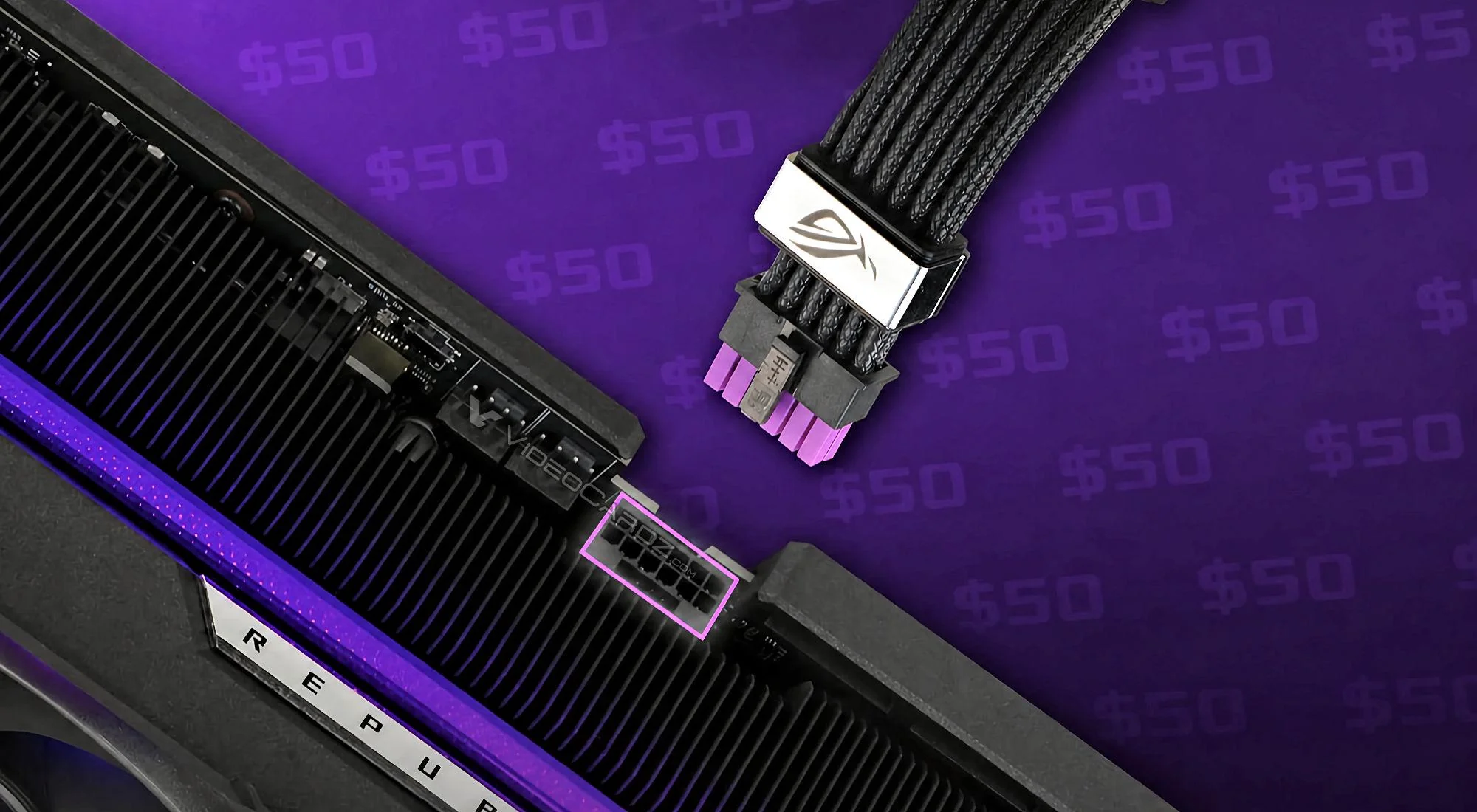
ASUS’s ROG Equalizer 16 pin cable has reportedly suffered its first burn out case, raising fresh concerns around high power GPU connectors and the safety accessories meant to protect them. The cable was marketed as a premium solution for 12V 2x6 graphics card power delivery, but a new image from a forum post appears to show melted plastic and burn marks on several connector pins.
The ROG Equalizer cable launched as a $50 accessory for modern high end graphics cards. ASUS promoted it with features such as balanced power delivery, lower cable temperatures, and higher load bearing capacity. The idea was simple: give owners of power hungry GPUs a safer cable at a time when 16 pin connector failures remain a major concern.
The reported failure does not yet include full details about the graphics card, power supply, system configuration, or how the cable was installed. That means it is too early to say exactly what caused the burn. Still, the image is enough to make buyers cautious, especially because the cable was designed specifically to reduce this kind of risk.
The ROG Equalizer cable was supposed to improve 16 pin power delivery
ASUS built the ROG Equalizer around the newer 12V 2x6 power standard. This standard was meant to improve on earlier 16 pin designs that became controversial after reports of melted connectors on high end GPUs.
The cable includes a distinct purple connector and ROG branding on the cable comb, which also works as an electrical bridge. That design was supposed to help distribute power more evenly across the connector pins.
| Product | ASUS ROG Equalizer cable |
|---|---|
| Connector type | 12V 2x6 16 pin |
| Marketed purpose | Safer GPU power delivery |
| Claimed benefits | Balanced power, lower temperatures, higher load capacity |
| Reported issue | Burn marks and melted connector plastic |
| Price | Around $50 |
| Status | No official ASUS response mentioned yet |
The problem is that the reported image shows damage on at least three main pins, with one area appearing heavily melted. That is exactly the kind of failure users hoped a premium safety cable would prevent.
Prior testing had already raised questions about the design
The reported burn out follows earlier testing that questioned whether the ROG Equalizer design was actually better than a standard cable. Testing from Der8auer reportedly found large current differences between pins, with variances up to 4A on an RTX 5080.
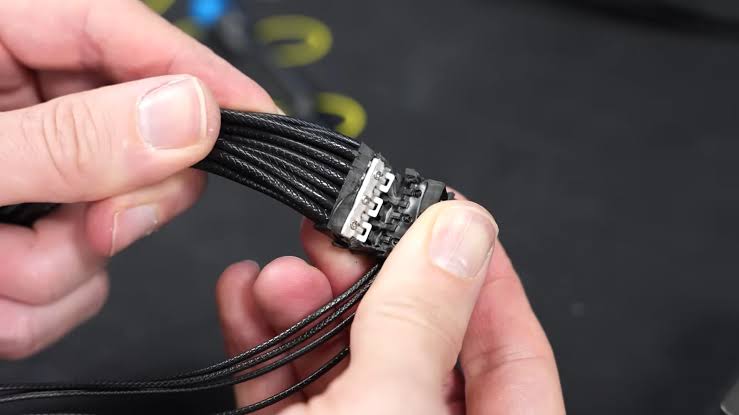
That matters because 16 pin GPU connectors depend on balanced current distribution. If some pins carry more current than others, those pins can heat up more quickly. Over time, higher resistance and heat can damage the connector.
The electrical bridge under the cable comb was also reported to add resistance. If that is accurate, it would weaken the cable’s safety pitch, because additional resistance can contribute to heat buildup under heavy load.
High end GPUs are still dealing with connector concerns
Most 16 pin burn reports have been tied to powerful graphics cards, especially models in the RTX 5090 class. These GPUs can draw large amounts of power, which leaves less room for poor contact, uneven seating, sharp cable bends, or current imbalance.
The 12V 2x6 revision was intended to reduce these risks, but connector safety still depends on more than the standard itself. Cable quality, PSU design, GPU connector design, user installation, seating depth, and cable routing all matter.
This is why the ROG Equalizer case is worrying. Buyers were not just using a random cable. They were using a premium branded accessory sold as a safer option.
Buyers should wait for more details before trusting the cable
At this stage, the safest conclusion is caution, not panic. One reported failure does not prove every ROG Equalizer cable is unsafe. But it does mean users should wait for more investigation before treating it as a guaranteed fix for 16 pin GPU problems.
Anyone using a high power 16 pin GPU should still follow basic safety steps:
| Safety step | Why it matters |
|---|---|
| Fully seat the connector | Poor contact can increase heat |
| Avoid sharp cable bends near the plug | Bends can loosen pin contact |
| Use the correct PSU cable when possible | Native cables are usually preferable to adapters |
| Inspect the connector periodically | Early discoloration can reveal heat issues |
| Avoid mixing unknown cables | PSU cable pinouts can vary |
ASUS has not provided a public explanation in the shared report, so users should watch for an official statement. The company may need to clarify whether this is an isolated case, an installation issue, a cable defect, or a wider design concern.
The 16 pin GPU power problem is not fully solved yet
The reported ROG Equalizer failure shows that the industry still has work to do on high power GPU cabling. Vendors have tried new connector standards, improved adapters, angled cables, monitoring features, and premium accessories, but reports of melted connectors continue to appear.
For now, the ASUS ROG Equalizer no longer looks like a simple answer to the 16 pin problem. It may still prove safe in most systems, but a cable sold as a protection upgrade now has its own reported burn out case.
That puts buyers in a difficult position. High end GPUs need clean and stable power delivery, but users should not have to guess which cable will survive long term use. Until ASUS responds and more evidence is available, the ROG Equalizer is a cable to approach carefully rather than blindly trust.



Discussion (0)
Be the first to comment.