



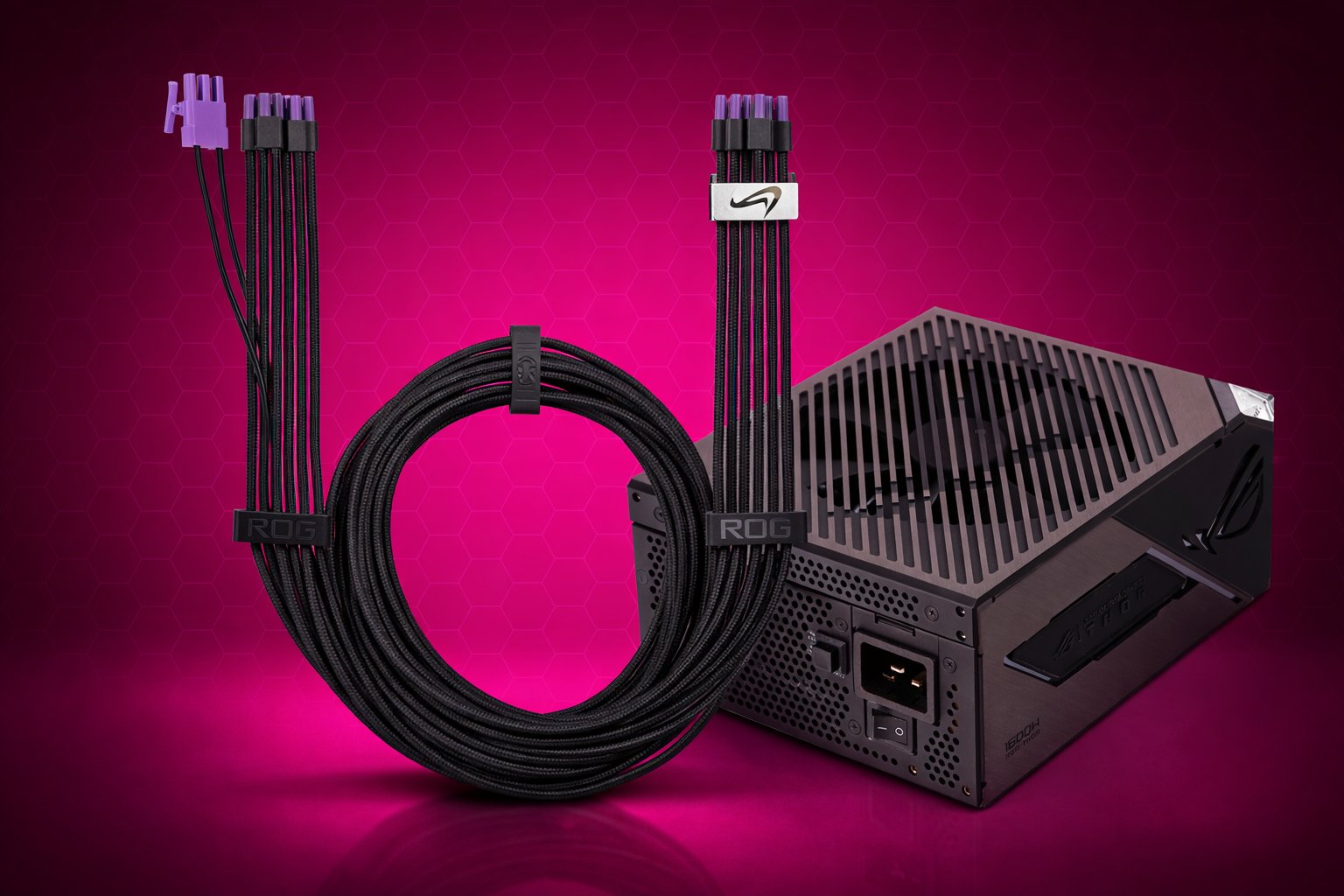
ASUS marketed its ROG Equalizer 12V 2x6 cable as a better solution for balancing power across high end GPUs, but new testing from Der8auer suggests the cable may perform worse than expected.
The test used an RTX 5090 and WireView Pro II to monitor current distribution across the connector pins. Instead of showing cleaner balance, the ROG Equalizer showed uneven current loads. In some reconnect tests, the difference between the highest and lowest loaded pins reached around 4A, enough for WireView Pro II to warn about imbalance.
The cable’s bridge design appears to be the problem
The main issue seems to come from the cable’s internal bridge. What looks like a cable comb is actually an electrical bridge connecting rows of wires. According to Der8auer’s testing, this bridge adds extra resistance to the cable path.
That added resistance appears to hurt current balance rather than improve it. After the bridge was removed and the wires were insulated, the current distribution improved clearly. The highest load pin carried 8.9A, while the lowest carried 7.5A, which is much closer than before.
| Test condition | Result |
|---|---|
| ROG Equalizer with bridge | Up to around 4A difference between pins |
| Bridge removed | Highest pin at 8.9A, lowest pin at 7.5A |
| Main concern | Added resistance and uneven load balancing |
| Extra issue | Stiffer cable near the connector |
The bridge also makes the cable stiffer. That can create another practical problem because 12V 2x6 connectors already need careful handling. A stiff cable can make it harder to bend safely near the GPU, which means you may need more clearance inside your case.
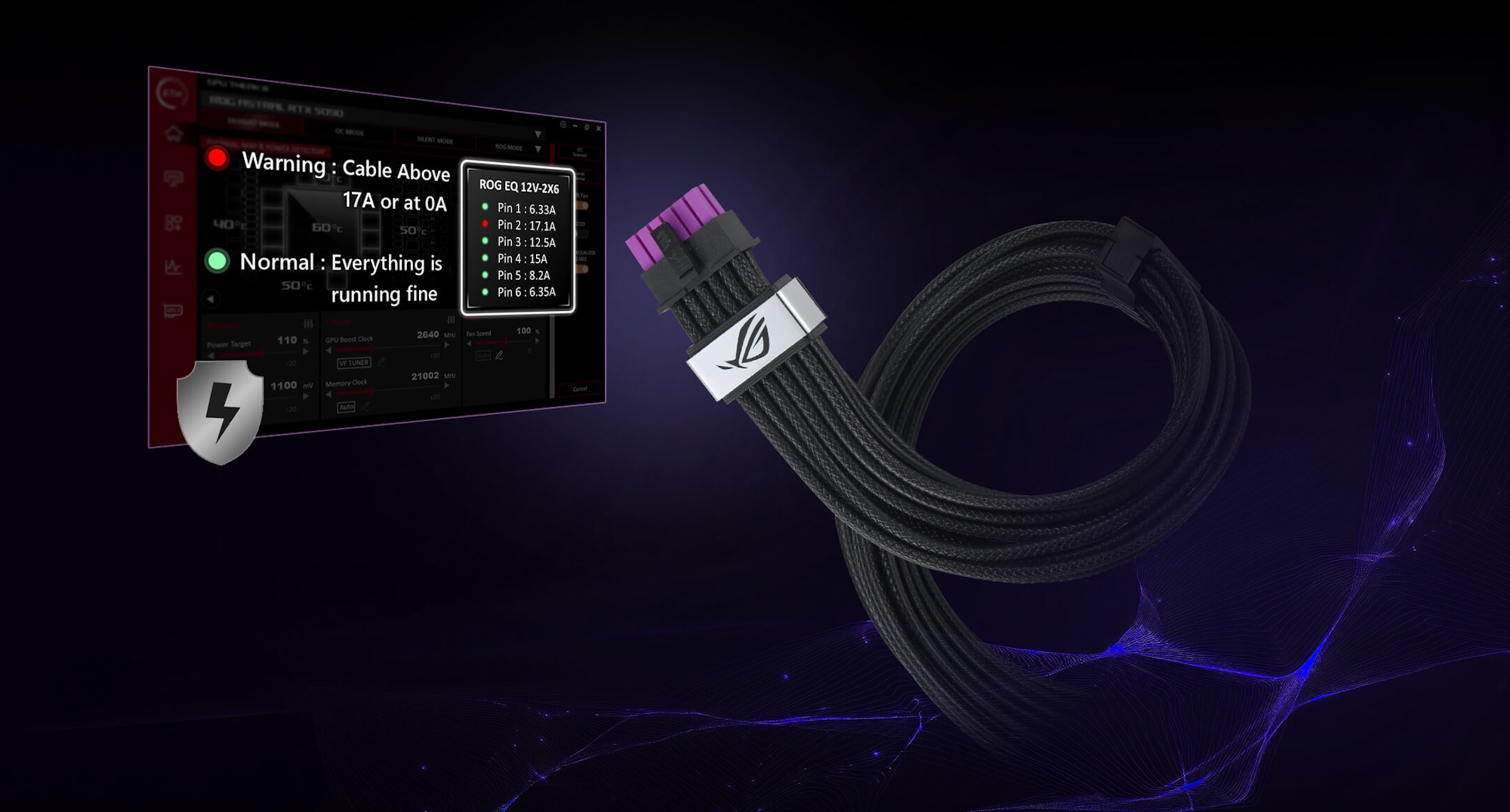
Der8auer also raised a concern about the connector plating. The ROG Equalizer uses gold plated pins, while many 12V 2x6 GPU connectors and standard cables use tin plated contacts. Mixing plating materials can sometimes create contact wear or oxidation concerns over time. Gold plating may sound premium, but it is not automatically better if the matching connector does not use the same material.
This matters because high power GPU connectors have already been under heavy scrutiny. With cards like the RTX 5090 pulling large amounts of power, small issues in fit, resistance, bending, or current distribution can become more serious.
The practical takeaway is simple. Do not assume a branded or premium cable automatically improves safety. If you are using a high power GPU, make sure the connector is fully seated, avoid sharp bends near the plug, give the cable enough clearance, and use a trusted PSU cable designed for your exact power supply.
The ROG Equalizer was supposed to make load balancing better. Based on this testing, its design may introduce new problems instead of solving the old ones.


Discussion (0)
Be the first to comment.