



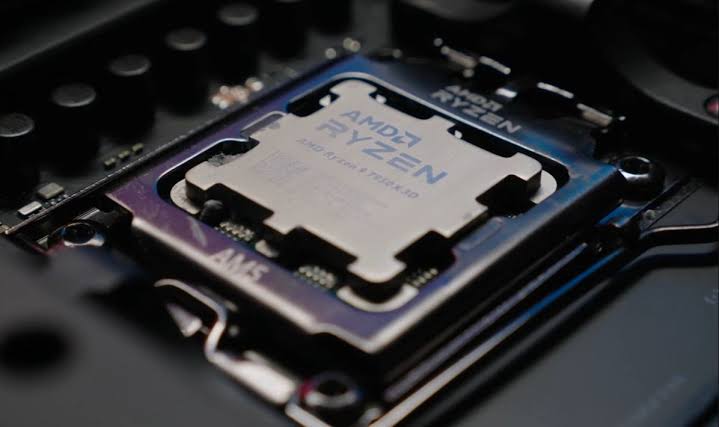
AMD’s Zen 7 architecture could power the final desktop Ryzen processors released for the AM5 socket, while Zen 8 may introduce a new AM6 platform with DDR6 memory and native PCIe 6.0 support.
AM5 launched in 2022 with the Ryzen 7000 series and has since supported Ryzen 8000G and Ryzen 9000 processors. AMD has repeatedly extended its platform commitment, moving from an initial 2025 target to 2027 and now promising new AM5 products and architectures through 2029 and beyond.
That schedule makes Zen 7 a likely candidate for the last major Ryzen architecture on AM5. Zen 6 desktop processors are expected before it, while Zen 7 based consumer chips could follow around 2029 if AMD continues using a roughly two year development cycle.
The move to AM6 remains unconfirmed. However, AMD has previously indicated that it prefers to introduce a new socket when major memory and input output technologies justify the change. DDR6 and native PCIe 6.0 support could provide that reason when Zen 8 arrives around 2030 or later.
| Ryzen generation | Architecture | Expected platform | Memory | Estimated launch |
|---|---|---|---|---|
| Ryzen 7000 | Zen 4 | AM5 | DDR5 | 2022 |
| Ryzen 9000 | Zen 5 | AM5 | DDR5 | 2024 |
| Future Ryzen 10K | Zen 6 | AM5 | DDR5 | First half of 2027 |
| Future Ryzen 20K | Zen 7 | Possibly AM5 | Likely DDR5 | Around 2029 |
| Future Ryzen 30K | Zen 8 | Possibly AM6 | Possibly DDR6 | 2030 or later |
AMD has committed to AM5 support through 2029 and beyond
AMD’s latest public commitment gives AM5 one of the longest expected lifespans of any modern desktop processor socket.
The platform began with Zen 4 and the Ryzen 7000 family. It later received Ryzen 8000G desktop APUs and Zen 5 based Ryzen 9000 processors, along with additional products using newer integrated graphics and AI hardware.
Zen 6 is expected to continue using AM5. The desktop family, reportedly known as Olympic Ridge, could introduce higher core counts, larger caches, improved clock speeds and a newer manufacturing process.
The supplied roadmap suggests a maximum configuration of up to 24 cores and 48 threads, although AMD has not confirmed final retail specifications.
If Zen 6 arrives in early 2027 and AMD maintains its usual cadence, Zen 7 desktop processors could follow around 2029. That timing would fit the company’s promise to deliver new AM5 architectures through 2029.
The wording does not guarantee that every Zen 7 desktop processor will use AM5, but it strongly suggests that the socket will receive at least one more major generation after Zen 6.
Zen 7 appears compatible with the current DDR5 platform
Zen 7 is expected to introduce major architectural and manufacturing changes.
The architecture may use advanced process technologies such as TSMC A16, A14 or a combination of different nodes. It is also expected to support AMD’s ACE extensions and newer memory technologies in certain product categories.
However, AMD’s upcoming Zen 7 server platform reportedly remains connected to SP7 and SP8 sockets that use DDR5. That makes a sudden desktop transition to DDR6 less likely during the same architectural generation.
AMD could theoretically design separate memory controllers for desktop and server products, but doing so would increase development complexity. A continuation of DDR5 for Zen 7 would make AM5 support more practical.
Faster DDR5 variants could also provide useful improvements without requiring a new socket. Technologies such as high speed MRDIMMs and faster LPDDR5X are expected to advance significantly before DDR6 becomes common.
For desktop buyers, this could mean another processor upgrade without replacing the motherboard and memory.
PCIe 6.0 alone may not justify a new consumer socket
PCIe 6.0 is already moving into high end server platforms, but its immediate value for normal desktop systems may be limited.
Current PCIe 5.0 graphics slots provide more bandwidth than most gaming GPUs require. The difference between PCIe 4.0 and PCIe 5.0 has also been relatively small in many consumer workloads.
PCIe 6.0 storage devices are still expected to be several years away from mainstream adoption. Even when they arrive, early products may target servers and professional systems rather than gaming PCs.
AMD could introduce partial or controller based PCIe 6.0 support on AM5 before moving to a fully native implementation with AM6.
That would allow the company to extend the current platform without forcing customers to adopt a new socket for features that offer limited practical benefits at first.
A new platform becomes easier to justify when several changes arrive together, such as DDR6, PCIe 6.0, revised power delivery and a redesigned input output structure.
Zen 8 could introduce AM6 with DDR6 memory
Zen 8 is expected to follow Zen 7 around 2030 or later.
The architecture is likely to coincide with broader changes across AMD’s server and desktop products. The Zen 8 based EPYC family, reportedly known as Ravenna, may also move to new server sockets.
On desktop, this creates a logical point for AMD to replace AM5 with AM6.
DDR6 would be the most important reason for the transition because it requires a different memory controller and new motherboard design. Native PCIe 6.0 support could arrive at the same time.
A new socket could also support changes in power delivery, chiplet communication and future accelerator hardware.
None of these AM6 specifications have been formally announced. The naming, launch timing and supported technologies remain based on roadmap interpretation rather than confirmed product details.
Long socket support gives AM5 owners a clearer upgrade path
AM5’s extended lifespan could benefit people who invested in the platform during its early years.
A customer who purchased an AM5 motherboard with a Ryzen 7000 processor may be able to upgrade through several later generations without replacing the rest of the system.
That can lower the total cost of ownership and reduce electronic waste. It also gives motherboard manufacturers a reason to continue providing firmware updates and compatibility improvements.
Actual support will still depend on individual boards. Older or cheaper models may face limitations involving power delivery, firmware storage or processor support.
AMD and motherboard vendors may also require BIOS updates before newer CPUs can be installed.
Even with those conditions, support through Zen 7 would give AM5 a substantial lifespan. The platform would cover Zen 4, Zen 5, Zen 6 and potentially Zen 7 before AMD begins a new desktop era with AM6 and Zen 8.



Discussion (0)
Be the first to comment.