



AMD had a strong first quarter in 2026, with revenue reaching $10.3 billion, up 38% from the same period last year. The biggest driver was the data center business, where demand for EPYC CPUs and Instinct accelerators continues to grow as AI infrastructure expands.
Data center revenue reached $5.8 billion, up 57% year over year. AMD says EPYC powered cloud instances grew nearly 50% to more than 1,600, with stronger adoption across major cloud providers, enterprises, financial services, healthcare, industrial companies, and digital infrastructure customers.
Agentic AI is making CPUs more important again
AMD CEO Lisa Su says agentic AI is changing how customers plan server infrastructure. These workloads need GPUs and accelerators, but they also need more CPU compute for orchestration, data movement, parallel execution, and head node duties.
That is why AMD has increased its server CPU market forecast. The company previously expected the server CPU market to grow around 18% annually over the next few years. It now expects more than 35% annual growth, reaching over $120 billion by 2030.
| AMD Q1 2026 area | Result |
|---|---|
| Total revenue | $10.3 billion |
| Year over year growth | 38% |
| Data center revenue | $5.8 billion |
| Data center growth | 57% |
| Client and gaming revenue | $3.6 billion |
| Embedded revenue | $873 million |
| EPYC cloud instances | More than 1,600 |
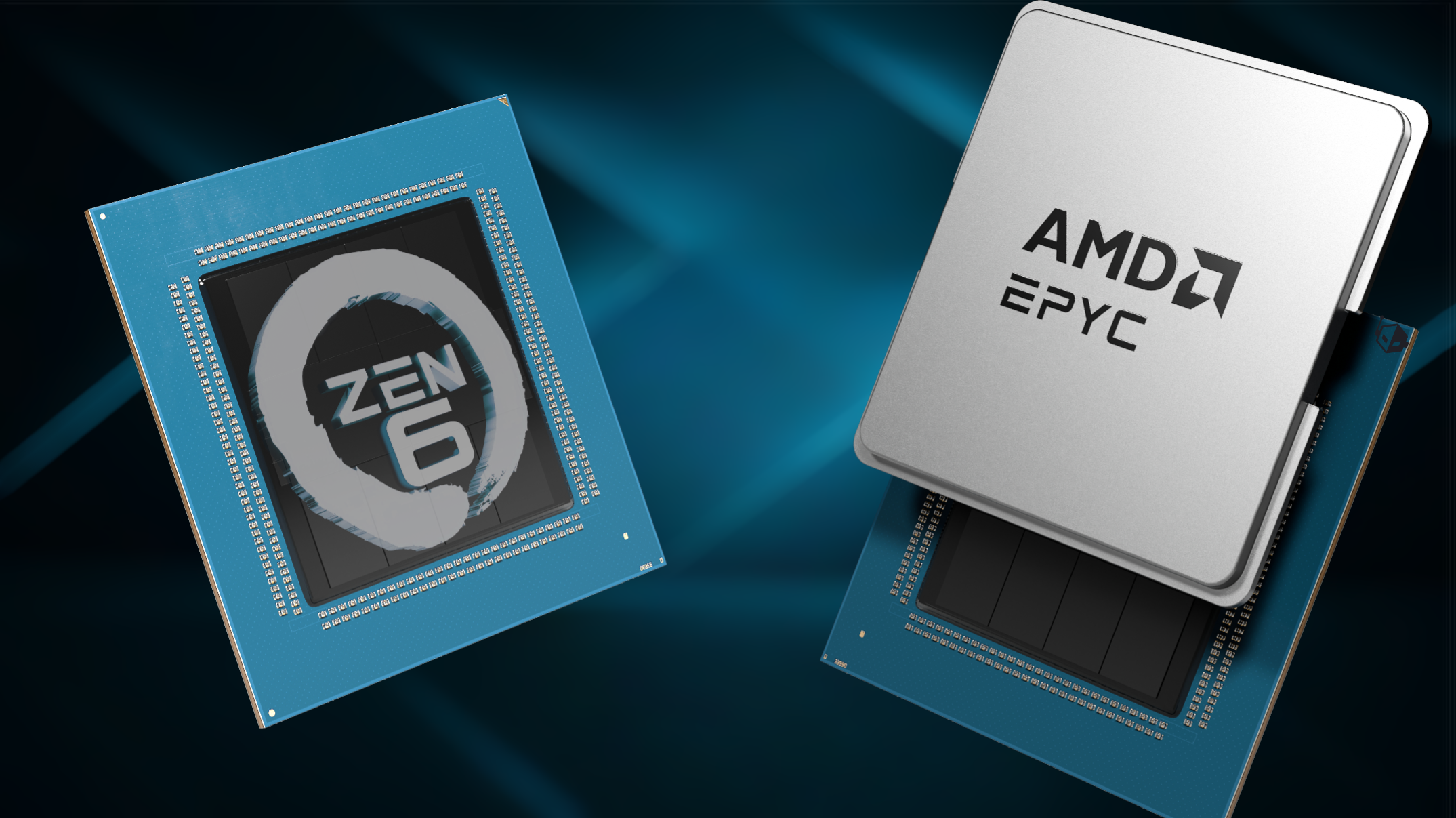
AMD is also preparing its next EPYC generation. Venice will use Zen 6 cores and TSMC’s 2nm process, with versions optimized for throughput, performance per watt, and performance per dollar. Su says Venice remains on track to launch later this year.
The more AI focused part is Verano, which Su described as AMD’s first EPYC CPU purpose built for AI infrastructure. Verano is expected in 2027 and is likely aimed at more cost optimized SP7 platforms.
AMD is also making a direct competitive claim against Arm based AI CPUs. Su says Venice delivers more than 2x throughput per socket compared with leading Arm based AI solutions, while also improving performance per socket and per watt against competing x86 chips.
The larger message is that AMD wants to sell the full AI infrastructure stack: EPYC CPUs, Instinct accelerators, and rack scale systems such as Helios. That matters because AI customers are no longer buying GPUs in isolation. They are planning complete systems with CPUs, accelerators, memory, networking, and software working together.
AMD’s outlook now depends heavily on supply. The company says it is working with partners to increase wafer and backend capacity so it can meet stronger demand through 2026 and 2027.
For now, AMD’s Q1 shows how much AI has changed its business. EPYC is no longer only a cloud and enterprise CPU story. Agentic AI is turning CPUs into a bigger part of AI infrastructure planning, and AMD now sees that market growing much faster than it expected just a few months ago.


Discussion (0)
Be the first to comment.